
Dealers Are Losing Long-Term Profit Due to Broken Office Furniture Procurement Thinking
Stop Buying Office Furniture. Start Thinking in Systems. The Correct Procurement Mindset for Modern Office Projects
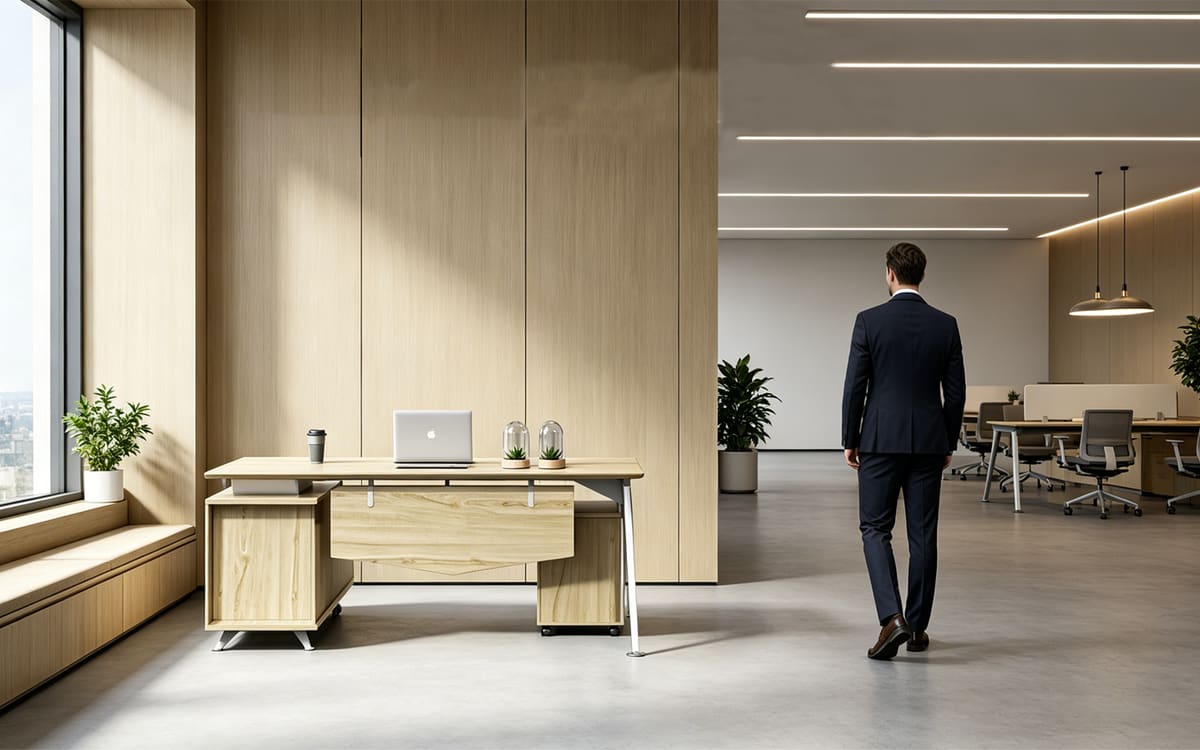
Stop Buying Office Furniture. Start Thinking in Systems. The Correct Procurement Mindset for Modern Office Projects
Introduction: Most Office Furniture Decisions Are Still Wrong
Most office furniture procurement decisions are still made as if offices are static.
A project is defined. Products are selected. Pricing is negotiated. Delivery and installation follow. Then the project is considered complete.
But in reality, an office is never a finished environment.
It is a living structure that continuously evolves with the business.
Companies grow. Teams expand. New departments are created. Branch offices open. Locations change.
And yet, most furniture purchasing decisions are still made as if none of this will happen.
This is where the problem begins.
Because the real issue in office furniture is not what you buy.
It is how you think when you buy it.
This is the foundation of Furniture System Thinking.
1、The Shift From Product Thinking to System Thinking
Traditional office furniture procurement focuses on:
· Unit price
· Immediate project requirements
· One-time delivery
· Short-term availability
System-based procurement focuses on:
· Life cycle of the workspace (3–10 years)
· Reordering continuity
· Structural compatibility
· Design consistency over time
· Expand ability and reconfiguration
In simple terms:
Product thinking solves today’s project. System thinking supports tomorrow’s business.
2、What Is an Office Furniture System?
An Office Furniture System is not a product range.
It is a structured and standardized framework designed to support continuous workspace evolution.
A true system must allow:
· Reordering without redesign
· Expansion without replacement
· Reconfiguration without waste
· Consistency across multiple projects and years
At Xusheng Office Furniture System, this approach is built into the core product architecture.
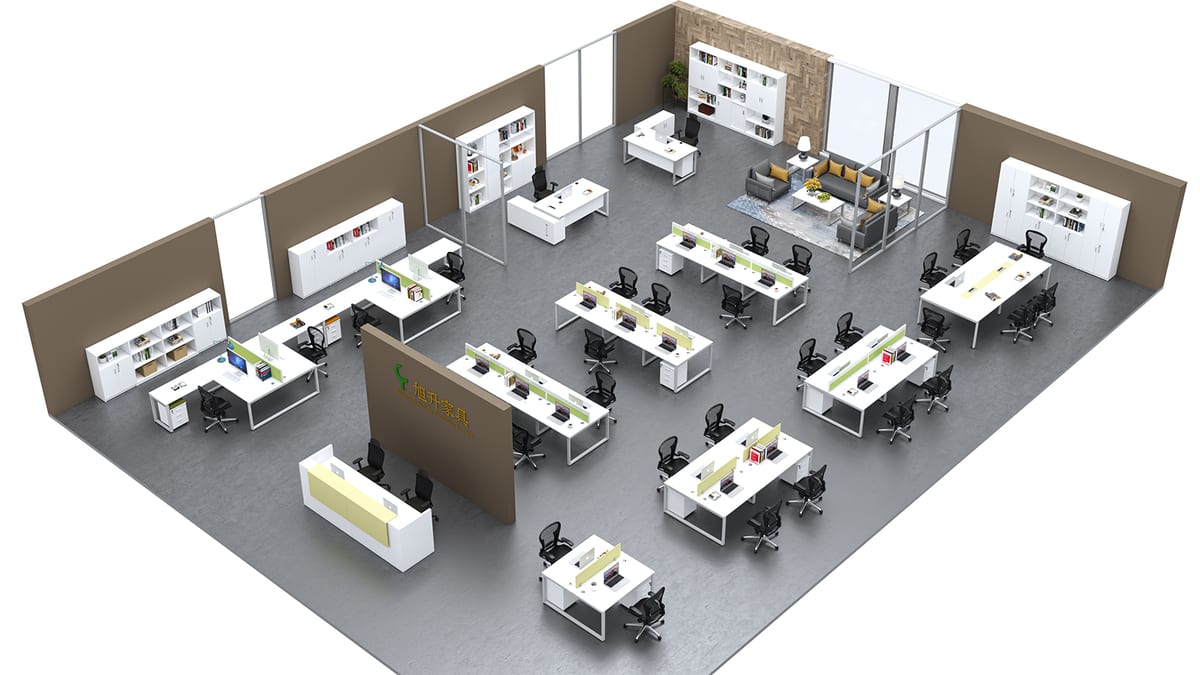
Instead of isolated product categories, the system is designed as a connected structure of:
· Workstations
· Executive desks
· Meeting tables
· Storage systems
· Reception configurations
All built under a unified material, structure, and design logic.
3、The Four Principles of Furniture System Thinking
3.1 Continuity — The Ability to Reorder Over Time
In traditional procurement, products often disappear after a few years.
In system thinking, continuity is essential.
A real office furniture system must ensure:
· Long-term product availability
· Stable dimensions and structural standards
· Consistent design language across time
At Xusheng, most core product lines are designed to support approximately 5 years of reorder continuity under normal market conditions, excluding certain finishes that may be phased out due to regional demand changes.
This ensures that dealers can continue servicing the same client base without redesigning entire projects.
3.2 Flexibility — Adapting to Business Growth
Modern offices are not static environments.
They expand, restructure, and relocate frequently.
A system must support:
· Additional workstations
· Modular expansion of departments
· Reusable storage units
· Reconfiguration layouts
Flexibility ensures that furniture grows with the organization instead of limiting it.
3.3 Consistency — Unified Visual and Structural Language
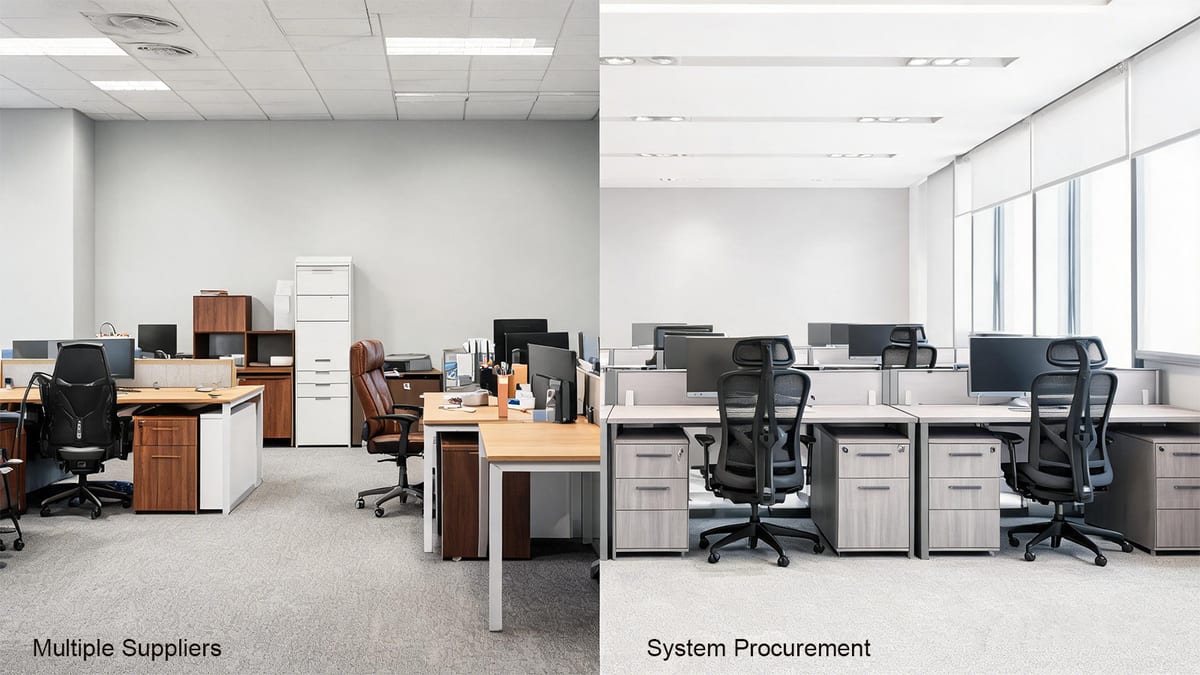
One of the most common issues in multi-year office projects is inconsistency.
Different suppliers. Different materials. Different finishes. Different production standards.
The result is a fragmented workspace that loses visual identity over time.
A system approach ensures:
· Unified color systems (white, wood grain, neutral grays)
· Consistent material selection
· Standardized design language across product categories
Xusheng supports customized finishes tailored to regional preferences while maintaining system-level consistency across all core product lines.
3.4 Scalability — Supporting Business Expansion
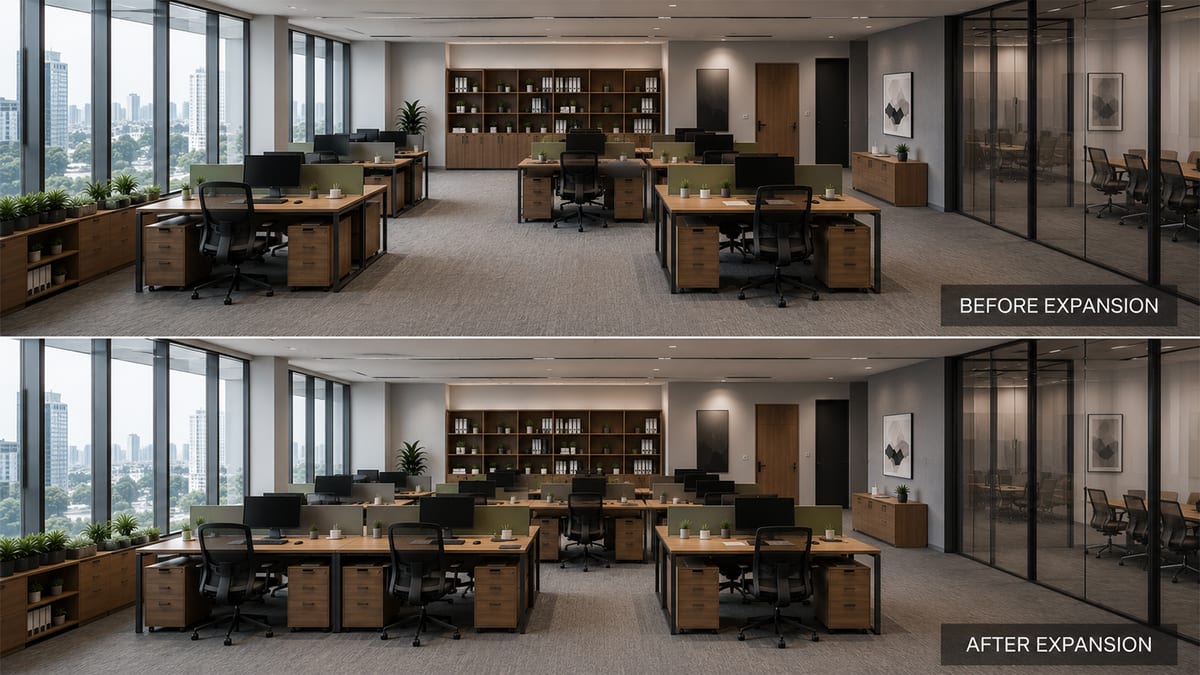
A real office furniture system must support growth without replacement.
For example:
20-seat office → 50-seat office
· Single department → multi-department workspace
· One project → multi-site roll-out
Scalability means:
The system expands. The furniture does not get replaced.
4、The Dealer Perspective: Why System Thinking Changes Profitability
For office furniture dealers, system thinking is not just a design philosophy.
It is a business model shift.
Traditional Dealer Model
· One-time project margin
· Limited reorder visibility
· Constant need for new clients
· High competition on pricing
System-Based Dealer Model
· Initial project installation
· Continuous expansion orders
· Long-term reorder cycles
· Multi-project client development
The key shift:
A single client becomes a multi-year revenue stream.
This is why many dealers working with Xusheng continue receiving repeat orders over extended periods.
Not because the furniture fails.
But because the client continues to grow.
5、Why System Thinking Is More Profitable Than Product Thinking
If procurement is product-driven:
· Price becomes the only decision factor
· Projects are compared line by line
· Suppliers are easily replaced
If procurement is system-driven:
· Long-term value becomes the priority
· Continuity becomes a requirement
· Supplier relationships become strategic partnerships
These are two fundamentally different business models.
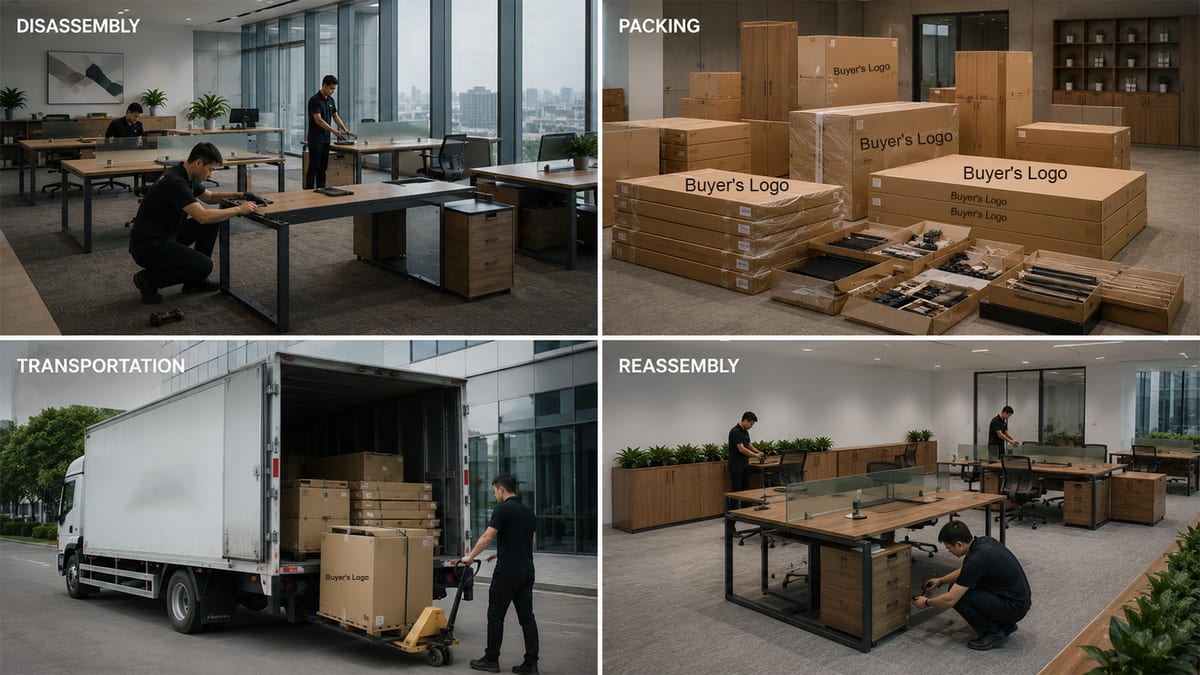
6、The Role of Xusheng Office Furniture System
Xusheng is not positioned as a traditional furniture manufacturer.
We operate as a structured Office Furniture System provider designed for long-term commercial growth.
Our system includes:
· Standardized structural framework across product categories
· Modular design for expansion and reconfiguration
· Unified material and finish system
· In-house steel structure manufacturing for core stability
· Long-term reorder support (approx. 5-year continuity cycle)
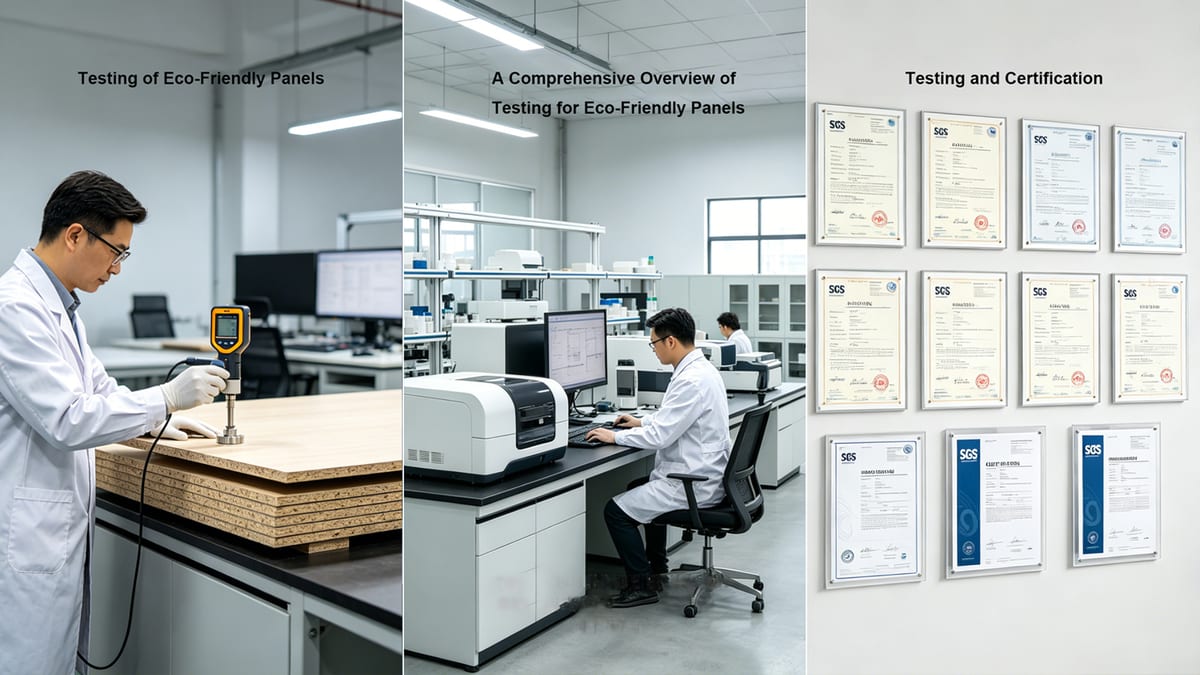
· Proven experience in government and commercial projects across the Middle East, Europe, Australia, and South America
7、The Real Value for Dealers and Project Buyers
For dealers, system furniture creates:
· Higher client retention rates
· Predictable reorder cycles
· Reduced inventory risk
· Increased project lifetime value
· Stronger competitive positioning in large-scale tenders
For project buyers, system furniture ensures:
· Long-term workspace consistency
· Lower relocation cost
· Easier expansion planning
· Reduced redesign waste
Conclusion: Procurement Defines Business Outcomes
The office furniture industry is no longer defined by products.
It is defined by thinking models.
If you still think in products:
· You compete on price
· You win single transactions
If you think in systems:
· You build long-term business relationships
· You generate recurring project revenue
· You support client growth over time
Final Principle Don’t buy office furniture. Buy a system that evolves with your business.
Next in Series
Furniture System Thinking | Chapter 03
Why Office Furniture Dealers Earn More With System-Based Projects
In the next chapter, we will explore:
· How system thinking increases dealer profitability
· Why reorder cycles outperform one-time sales
· Why life-cycle clients generate long-term revenue stability
How leading dealers structure their business around system-based procurement
FAQ
Frequently asked questions
01What is the difference between product thinking and Furniture System Thinking?
Product thinking focuses on unit price, immediate requirements and one-time delivery. Furniture System Thinking considers the workspace lifecycle, reorder continuity, structural compatibility, design consistency, expansion and reconfiguration over roughly three to ten years.
02What are the four principles of Furniture System Thinking?
The article defines them as continuity, meaning reordering over time; flexibility, meaning adapting to growth; consistency, meaning a unified visual and structural language; and scalability, meaning expanding without replacing the system.
03How can system-based procurement improve a dealer’s business model?
Instead of relying on one-time project margins, a dealer can support expansion orders, reorders and multi-project development for existing clients while reducing inventory and supplier-coordination risk.
04What does the Xusheng Office Furniture System include?
The article describes standardized structures across workstations, executive desks, meeting tables, storage and reception configurations, plus modular expansion, unified materials and finishes, in-house steel-structure manufacturing and long-term reorder support.
05How can system thinking help a buyer plan for future growth?
The article’s examples move from a 20-seat office to a 50-seat office and then add meeting tables and storage, showing how a compatible system can add capacity without redesigning the whole workplace.
Looking for a supplier?
Need a product, sample, or project quote?
Use the catalog to choose products, then send the list for manufacturing, dealer, OEM / ODM, or project support.