
How to Source High-Quality Wooden Office Furniture from China
The article, focusing on Chinese wooden office furniture procurement, emphasizes material quality over price due to potential losses from poor - quality products.
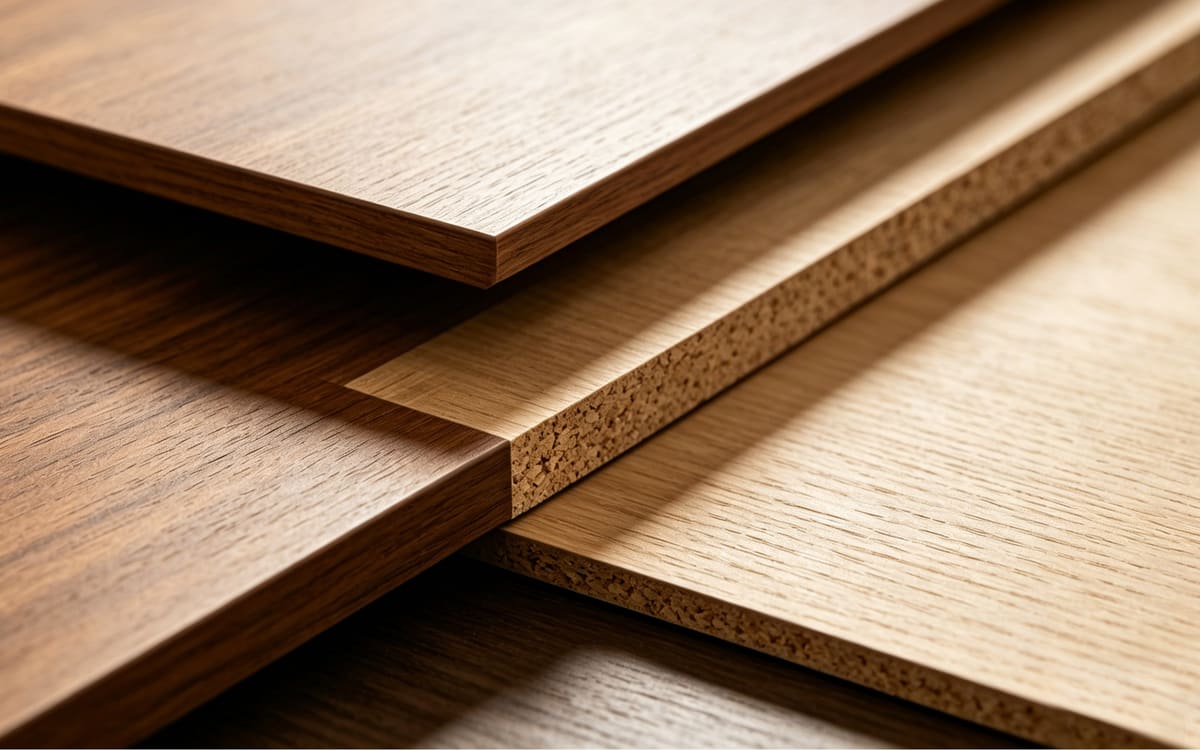
A furniture distributor recently received a shipment of 200 executive desks from a new supplier. The photos and sample looked fine, but when the container was opened, 30% of the desks had peeling edge banding. The melamine surfaces scratched easily with a fingernail, and the formaldehyde smell was strong enough that staff had to ventilate the warehouse.
If you are sourcing wooden office furniture from China, whether as an OEM distributor, a procurement manager, or an importer developing your own product line, this guide will help you evaluate product quality before placing a full order.
Why Material Quality Matters More Than Price
Price often dominates furniture procurement discussions, especially when profit margins are tight. But a low price doesn’t always mean a lower cost. A desk that is 8% cheaper but results in 12% returns ends up costing more. A filing cabinet that saves $3 per unit but fails within 18 months can cost you client relationships.
Poor quality affects business in three ways:
1. Direct losses – returns, replacements, and shipping costs.
2. Client attrition – dissatisfied commercial clients rarely complain; they simply don’t come back. Repeat orders drive profit.
3. Opportunity cost – time spent resolving problems could be spent on sales, design, or building relationships.
Case study: Guangzhou Xusheng Furniture has maintained a spotless record over 10 years, completing 135 orders and 21,564 items with zero defects and zero after-sales issues.
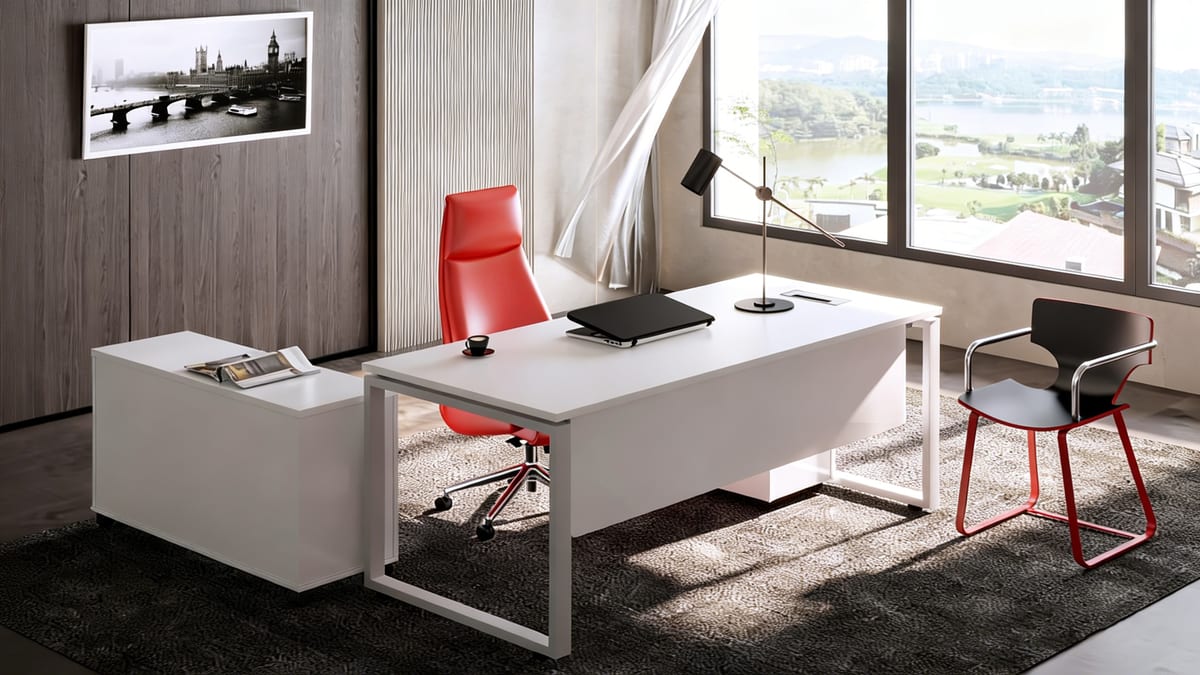
Understanding Core Materials: MDF vs Particle Board
Not all “wooden” furniture is equal. The materials used by manufacturers in China determine durability, appearance, safety, and cost. Understanding the difference between MDF (Medium Density Fiberboard) and particle board is the first step.
Medium Density Fiberboard (MDF)
MDF is the most common core material in office furniture. It’s made from hardwood or softwood residues broken down into fibers, mixed with wax and resin, and compressed under heat and pressure.
MDF is popular because:
· Consistent density and flatness – minimal warping.
· Good adhesion – ideal for melamine or veneer surfaces.
· Precision cutting – edges are smooth and easy to finish.
· Cost-effective at scale – strong and reliable without high cost.
Inspection tips:
· Density – commercial MDF should be 700–800 kg/m³. Lower density boards are softer and prone to dents.
· Thickness – variations over 0.3 mm across a 1.2 m board indicate poor quality control.
· Edge quality – edges should be smooth, not crumbly.
Particle Board
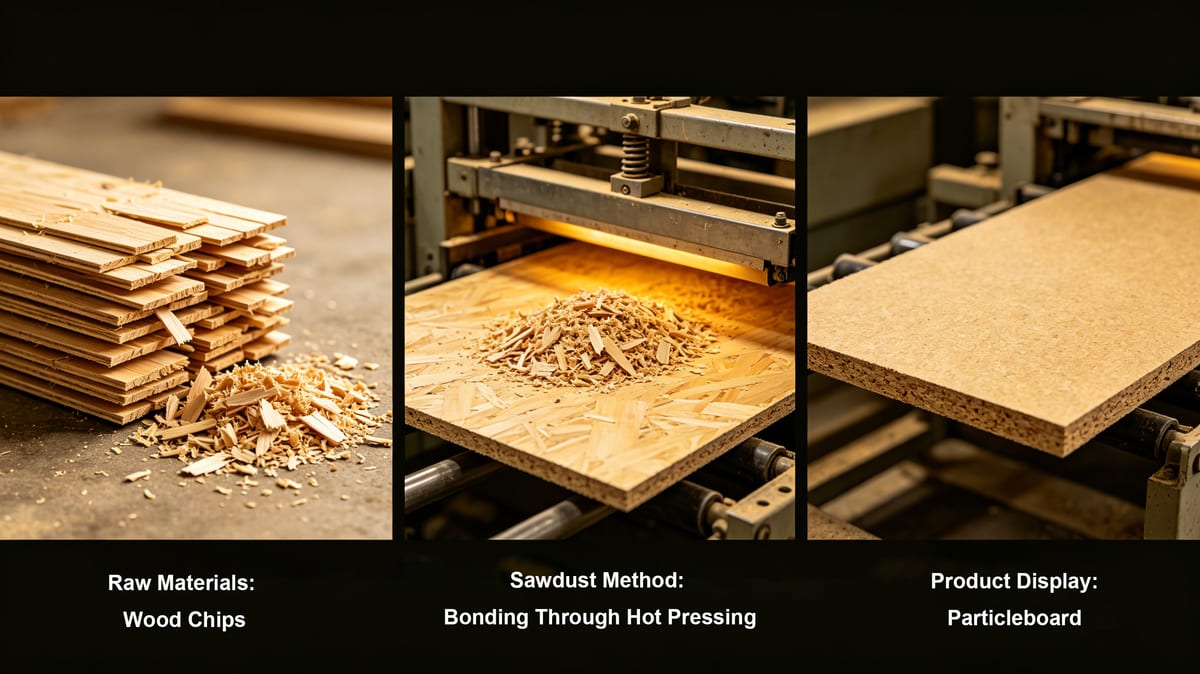
Particle board is made from wood chips, sawmill waste, and sawdust bonded with resin under heat and pressure.
Advantages: low cost, easy to process, stable, environmentally friendly, decorative.
Best for: cabinet bodies, office furniture, and simple furniture.
Not suitable for: furniture that sees frequent use, heavy loads, humid environments, or high-end aesthetics.
Inspection tips:
· Confirm material matches specifications.
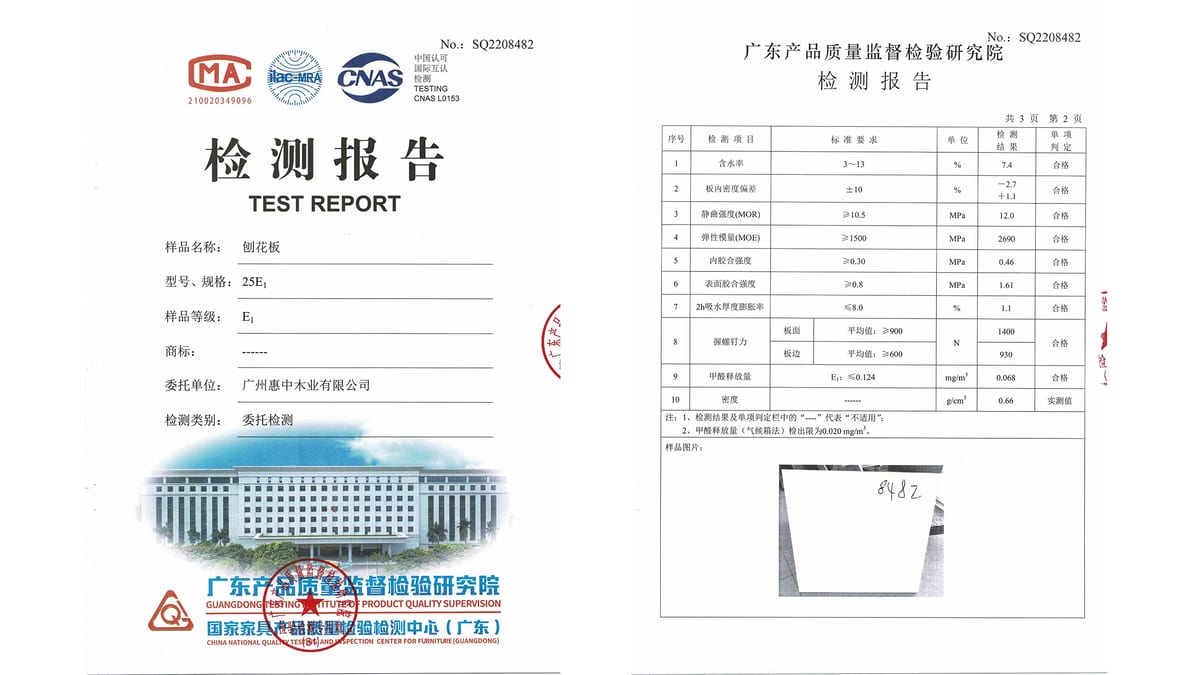
· Look for certifications like E1 and check for o dour.
· Inspect for cracks, scratches, or uneven surfaces.
· Test strength and screw retention.
· Verify dimensions and fire rating if needed.
Veneers and Finishing
· Veneer thickness – 0.5 mm can be sanded and refinished; anything thinner is effectively a surface film. Ask for written confirmation.
· Colour consistency – minor natural differences are fine, but large variations across panels indicate poor selection.
· Joinery – joints should be tight, flush, and well-aligned.
Recommended Material Choices by Product Type
Product | Core Material | Surface Material | Reason |
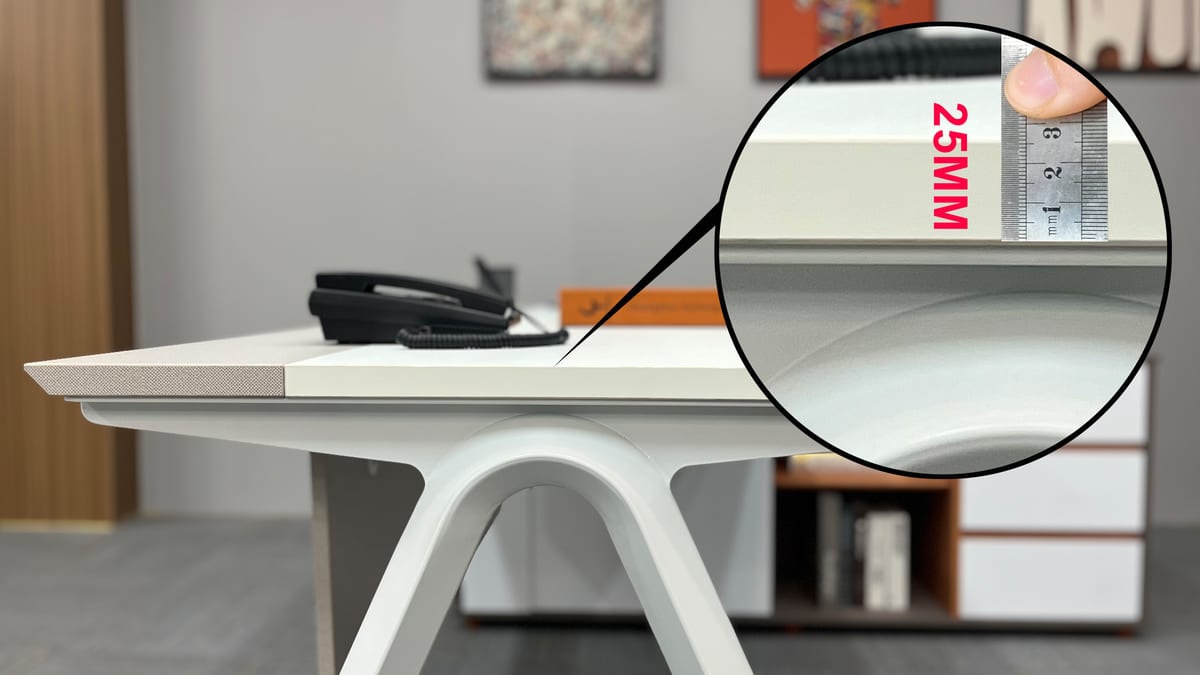
Executive Desk | MDF ≥ 25 mm | Melamine or thin veneer | Flat, strong, looks good |
Manager Desk | MDF 25 mm | Melamine | Durable and cost-effective |
Filing Cabinet | MDF 18 mm | Melamine | Holds hardware better than particle board |
Workstation | MDF 25 mm desktop, MDF 18 mm partitions | Melamine | Stable structure |
Conference Table | MDF 25–40 mm | Melamine or veneer | Prevents sagging on long spans |
Mobile Filing Cabinet | MDF 15–18 mm | Melamine | Supports drawer slides |
Partition Screens | Particle board or MDF 18 mm | Melamine or fabric | Low load, cost-effective |
Environmental and Safety Standards
MDF and particle board use formaldehyde-based resins. Emissions affect both user safety and regulatory compliance. Always check for E1 or equivalent certification for indoor use.
FAQ
Frequently asked questions
01Why does the article say material quality matters more than the lowest price?
Poor materials can create returns, replacements, shipping costs, lost repeat business and time spent on after-sales issues. The opening case describes peeling edge banding, scratch-prone melamine and strong odor after a 200-desk shipment.
02What is the practical difference between MDF and particleboard in the guide?
MDF is described as flat, consistent and easy to finish, while particleboard is a lower-cost, stable option for cabinet bodies and simpler, lower-load applications. The article recommends verifying density, thickness, edge quality, screw retention and certifications.
03Which core and surface materials does the article recommend by product type?
It lists MDF 25 mm or more with melamine or thin veneer for executive desks, MDF 25 mm with melamine for manager desks, MDF 18 mm for filing cabinets, MDF 25 mm desktops and 18 mm partitions for workstations, MDF 25–40 mm for conference tables, MDF 15–18 mm for mobile cabinets and particleboard or MDF 18 mm for partition screens. Specifications still need to be confirmed for the product and project.
04What environmental check should an importer make before ordering?
The guide says MDF and particleboard use formaldehyde-based resins and recommends checking E1 or equivalent certification for indoor office furniture, together with material documentation and finish inspection. Odor is only a warning sign and should not replace a laboratory report.
Looking for a supplier?
Need a product, sample, or project quote?
Use the catalog to choose products, then send the list for manufacturing, dealer, OEM / ODM, or project support.