
Sourcing Office Furniture from China: The Complete Guide for Dealers
Sourcing office furniture from China is not just about price, but choosing a reliable furniture system and supply partner that supports your customers, replenishment and long-term growth.
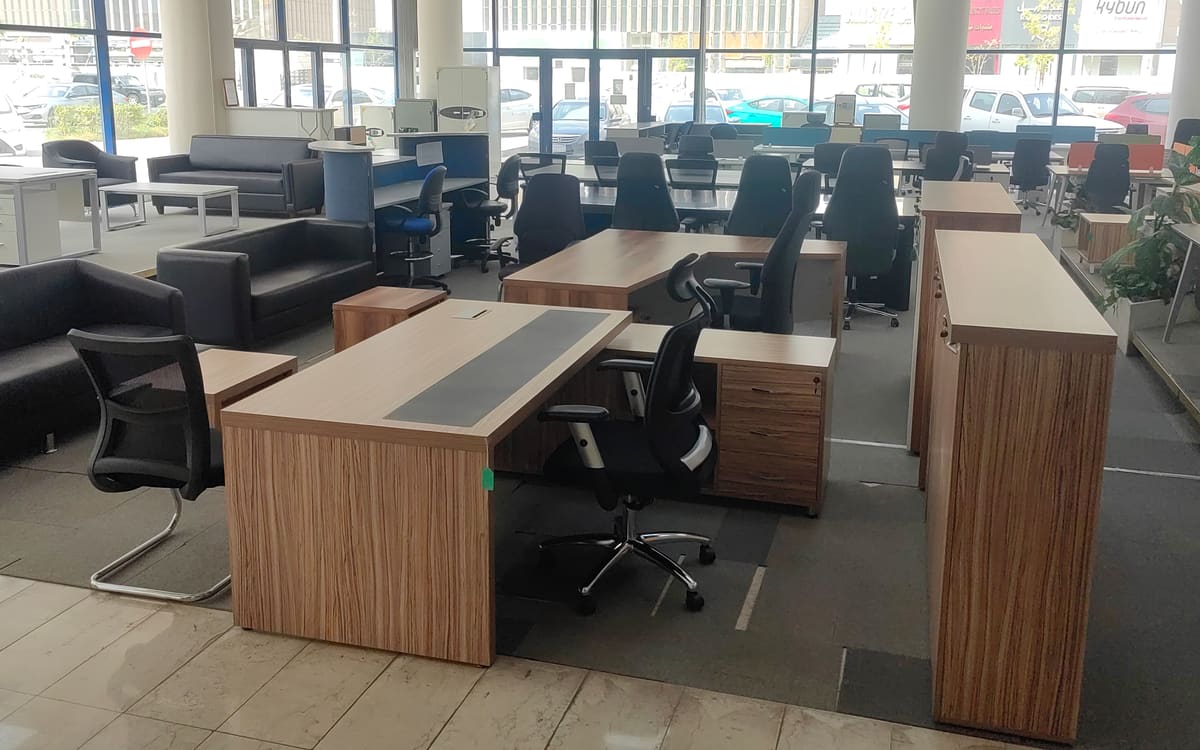
Sourcing Office Furniture from China: The Complete Guide for Dealers
The first office furniture order is rarely where a sourcing decision proves itself.
A desk can look right, the sample can arrive in good condition, the price can fit your market, and the first container can ship without a problem. The more difficult test often comes later — when the same customer needs another 20 workstations, when a replacement panel is required, when a finish has been discontinued, or when a project needs matching meeting tables and storage three years after the original installation.
For an office furniture dealer, this is why choosing a supplier in China should go beyond comparing products and FOB prices.
You are also choosing the supply system behind the furniture you intend to put into your catalogue, showroom, warehouse and customer projects.
The biggest sourcing mistake is not paying too much. It is buying furniture that can fulfil today’s order but cannot support tomorrow’s business.
This guide explains how dealers, importers, wholesalers, local furniture brands and project suppliers can evaluate an office furniture manufacturer in China from a longer-term commercial perspective.
What Should a Dealer Actually Evaluate?
Before the first order | What matters later |
|---|---|
Product appearance | Product continuity |
FOB price | Dealer Total Cost |
Sample quality | Sample-to-Bulk Consistency |
MOQ | Inventory efficiency |
Lead time | Supply reliability |
Product catalogue | Furniture System |
Warranty promise | Actual problem-solving process |
Customisation | Repeatability |
Supplier | Long-term supply partner |
The purpose of sourcing is not simply to complete the next container. It is to build a product range that can continue supporting your customers, projects and stock over time.
1. Is Direct Sourcing from China Right for Your Business?
Direct sourcing from China makes the most sense when office furniture is part of an ongoing commercial operation rather than a one-off purchase.
Dealers, importers, wholesalers, retail chains, private-label brands and project suppliers can benefit from broader product ranges, competitive manufacturing costs, customised specifications and the ability to build long-term product systems.
For a buyer needing only one or two desks, direct factory sourcing is usually less practical. The same applies to buyers without regular import requirements or those whose only objective is to find the lowest possible price for one order.
Factory sourcing brings additional commercial decisions: MOQ, material specification, packaging, quality control, container utilisation, production planning, inventory and future replenishment.
So before asking:
“Which Chinese office furniture factory should I choose?”
ask:
“Am I sourcing furniture for one order, or am I building a product range I expect to continue selling?”
For a professional dealer, the second question usually matters more.
Internal link anchor: should office furniture dealers import directly from China
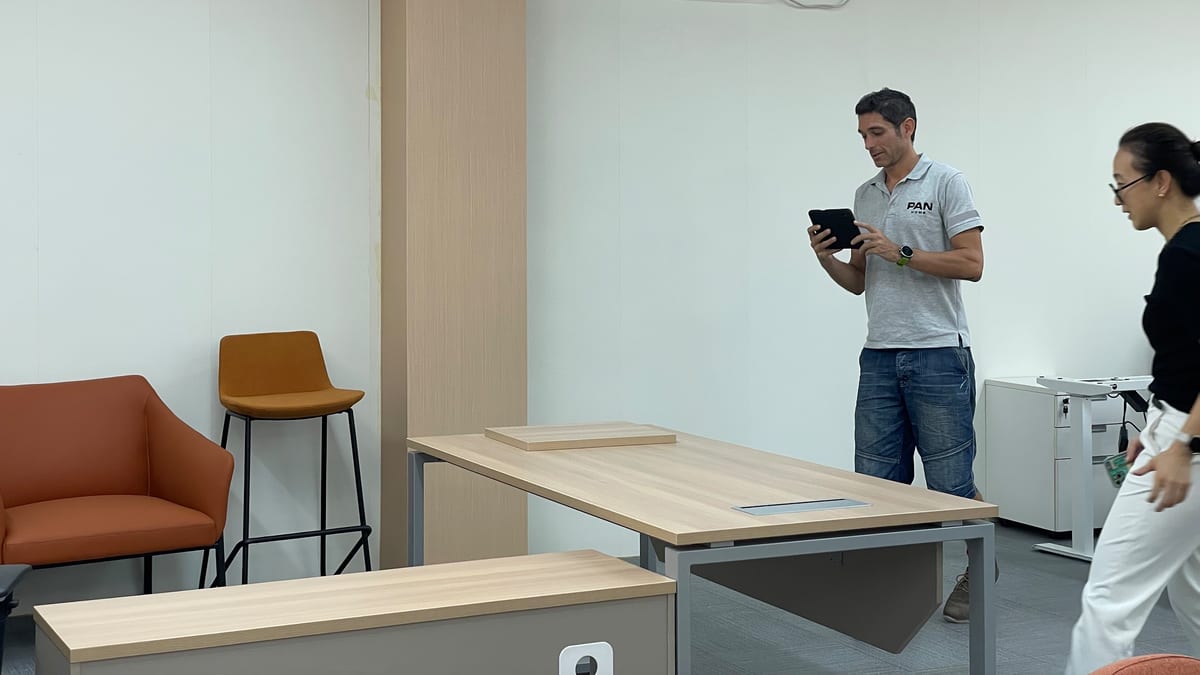
2. Decide Whether You Need Products or a Furniture System
Many sourcing decisions start product by product.
One executive desk from one supplier. A workstation from another. Storage from a third.
This may work for occasional project buying, but it becomes more complicated when a dealer wants to develop repeatable business.
Imagine supplying 40 workstations to a corporate customer. Eighteen months later, the customer employs another 15 people. Then it creates a new meeting room. Later, three managers need separate offices.
If the original furniture was purchased as unrelated SKU, each new requirement may force the dealer to source again.
The desk finish may not match the new cabinets. The workstation frame may use a different design. The meeting furniture may not belong to the same visual family.
This is why we use the term Furniture System Sourcing.
Furniture System Sourcing means selecting a compatible, replenishable and expandable family of office furniture rather than purchasing isolated products for individual orders.
A complete system can extend across workstations, executive desks, manager desks, meeting tables, storage and reception areas while maintaining a consistent design language, finish and construction approach.
The commercial benefit is not simply that the supplier offers more SKU.
It is that the dealer can solve more future requirements for the same customer without rebuilding the supply chain every time.
A single product solves today’s order.
A furniture system gives the customer more reasons to return to the same dealer.
Internal link anchor: product-based vs system-based office furniture sourcing
3. Manufacturer or Trading Company: Focus on Who Controls the Supply
There is little value in reducing this decision to:
Factory = good. Trading company = bad.
A trading company can be useful when a buyer needs many unrelated categories, small quantities or products from several specialist sources.
A direct manufacturer becomes more important when the dealer needs tighter control over product specification, private label, repeated production, project customisation and long-term replenishment.
The better question is:
Who actually controls the product and the supply system behind it?
A dealer should understand who controls drawings, approved samples, board specifications, hardware, quality inspection, replacement components, packaging and repeat production.
If the bulk order differs from the sample, who investigates?
If a finish disappears two years later, who finds the alternative?
If a client wants another 30 matching workstations, who has the information and production control required to reproduce them?
These questions tell you much more about the strength of a supplier than the word “manufacturer” on its website.
Internal link anchor: office furniture manufacturer vs trading company in China
4. Verify the Manufacturer Before You Verify the Price
A professional website and a well-designed catalogue are useful. They are not sufficient due diligence.
Before placing a meaningful order, a dealer should verify the business from several directions.
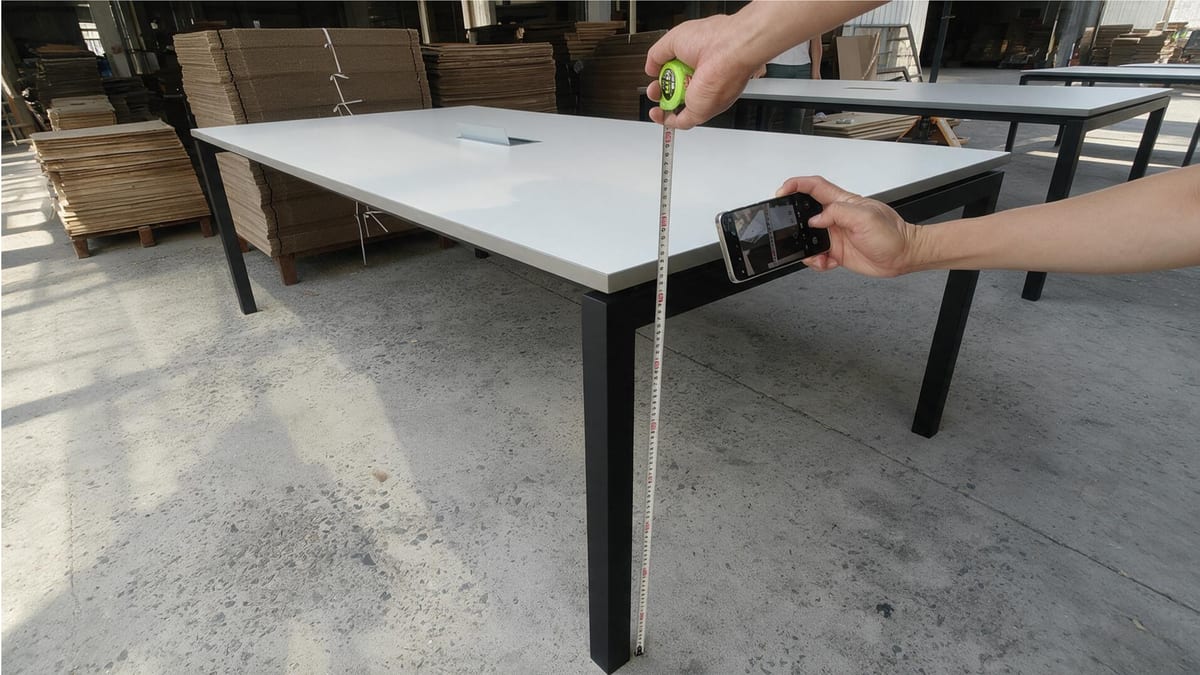
Check what is actually manufactured or processed by the factory. Understand which materials and components come from upstream suppliers. Ask how incoming materials are inspected and where QC happens during production.
Review real export experience, samples, project evidence, testing documentation and long-term customer relationships.
A video factory tour can also be useful. So can production-progress videos or buyer-appointed inspection before shipment.
At Xusheng, for example, buyers can review the production process and product progress rather than relying only on catalogue photographs. Xusheng’s current public company information states that the business has operated since 2008, works from an 11,000 sqm production base, has 200+ partners, has supplied customers across 80+ countries, reports an 87.6% 10-year customer share and exports more than 200,000 furniture units annually.
Those figures are evidence, not a substitute for verification.
The dealer should still ask:
Can I see the product being made?
Can I inspect samples?
Can I understand how quality problems are handled?
Can I verify what is genuinely controlled by this supplier?
A good supplier should make those questions easier to answer, not harder.
Internal link anchors:
verify an office furniture factory in China
Xusheng office furniture quality control process
about Xusheng Furniture
5. Compare the Product Before You Compare the Price
One of the easiest mistakes in office furniture sourcing is comparing photographs instead of specifications.
Two executive desks can look almost identical and still be very different commercial products.
In quotation comparisons seen by Xusheng, visually similar furniture has sometimes used different board thicknesses, different steel specifications, different edge-banding materials and different hardware standards.
For example, one quotation may use an 18 mm panel specification while another uses 15–16 mm. One metal frame may use 1.2–1.5 mm steel, while another visually similar frame may use materially thinner steel.
That does not mean every lower quotation automatically represents poor quality.
It means you cannot know what the price difference means until you normalise the specification.
Use a Like-for-Like Quotation Rule
Check | What to compare |
|---|---|
Board | Grade, thickness, finish |
Edge | Material, thickness, process |
Steel | Section size, wall thickness |
Hardware | Slides, hinges, locks, fittings |
Surface | Powder coating or decorative finish |
Structure | Reinforcement and connection method |
Cable management | Box, grommet, wiring solution |
Packaging | KD/assembled, carton protection |
Branding | Standard or private label |
Testing | What exactly has been tested |
Only after these specifications are aligned does FOB price become commercially comparable.
Lower specifications can eventually affect assembly, fixing strength, load performance, frame stability, edge durability or corrosion resistance.
The difference may be invisible when the quotation arrives.
It may become obvious only after installation.
Appearance is not a specification. Compare the product before comparing the price.
Internal link anchors:
why similar-looking office desks have different prices
office furniture specifications buyers should check
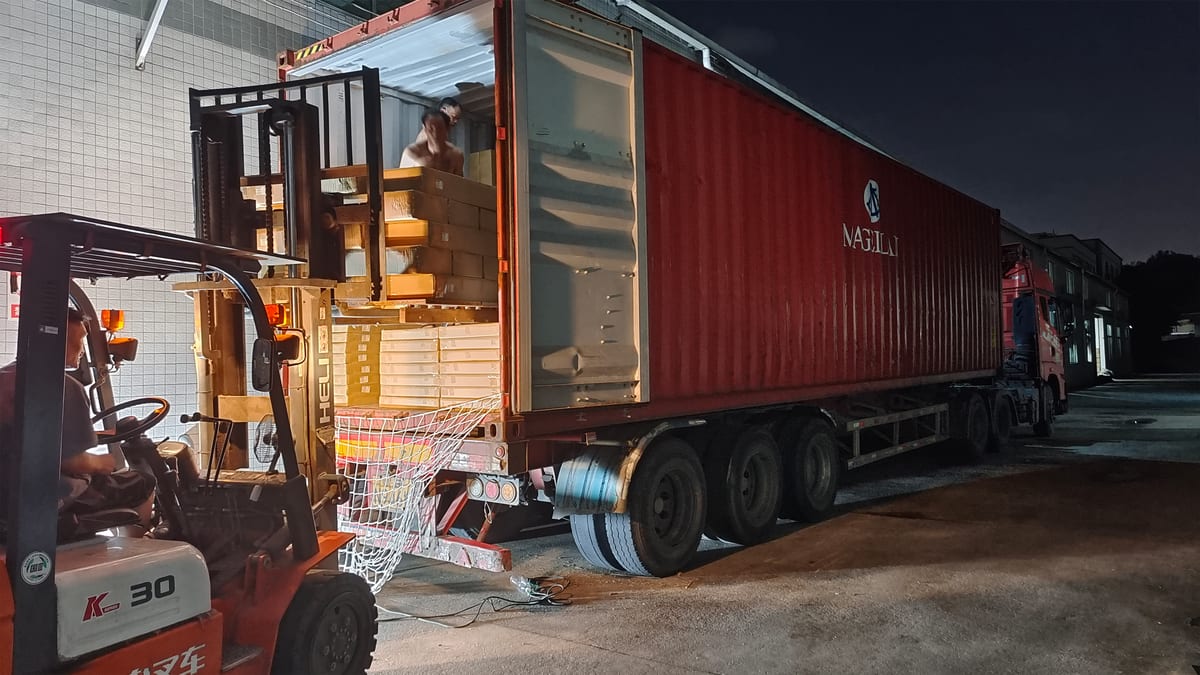
6. Understand the Real Cost Behind the Quotation
FOB price matters. Dealers need margin.
But FOB price is only one part of the commercial cost of carrying and supporting a furniture range.
We use the term Dealer Total Cost.
Dealer Total Cost is the combined commercial cost of purchase price, freight, import costs, inventory, installation, after-sales, replacement and future replenishment risk.
Consider two desks.
Factory A quotes USD 72.
Factory B quotes USD 78.
Factory A is genuinely USD 6 cheaper at the point of purchase.
But imagine that its packaging volume is larger, installation takes longer, replacement components are difficult to obtain and the desk has no compatible storage or meeting range.
The USD 6 saving was real.
It simply was not the whole cost.
The same applies to inventory.
A cheaper product that becomes difficult to replenish or combine with future products can create slow-moving stock.
A slightly higher-priced desk that belongs to a coordinated furniture system may generate more future sales.
This is why experienced dealers should not stop at:
“Which factory is cheaper?”
They should ask:
“Which option leaves me with the better commercial result after the furniture has been imported, sold, installed and supported?”
Lowest FOB price does not necessarily mean lowest Dealer Total Cost.
Internal link anchor: real cost of importing office furniture from China
7. MOQ and the First Order: Start at the Right Level
MOQ is often discussed as if it were simply a factory sales policy.
In reality, it is partly a manufacturing economics question and partly an inventory question.
Different product sizes affect board utilisation. Different finishes can require separate materials. Hardware, metal frames, packaging and customised parts can have their own purchasing thresholds.
A standard board sheet is commonly around 2.4 × 1.2 metres. Change the desk dimensions and the material utilisation changes as well.
At Xusheng, MOQ is therefore model-specific and shown on the quotation. Around 30 units is common for many products, but it is not a universal rule for every model.
From the dealer’s side, however, the lowest possible MOQ is not always automatically the best outcome.
Very small quantities can increase unit cost, fragment the product range and reduce container efficiency.
Very large quantities increase inventory, tie up cash and create a greater risk of slow-moving stock.
The real target is the middle ground.
The right MOQ is not the lowest quantity a factory will accept. It is the quantity that makes sense for both production and the dealer’s market test.
Mixed-category loading can help. A dealer may combine desks, meeting tables, workstations, storage and pedestals in one container when the relevant MOQ for each model is met.
But more SKUs do not always mean better efficiency. Different carton sizes and very small quantities across many models may reduce container utilisation.
A flexible first order still needs planning.
Internal link anchors:
MOQ for office furniture from China
how new dealers should test their first office furniture order
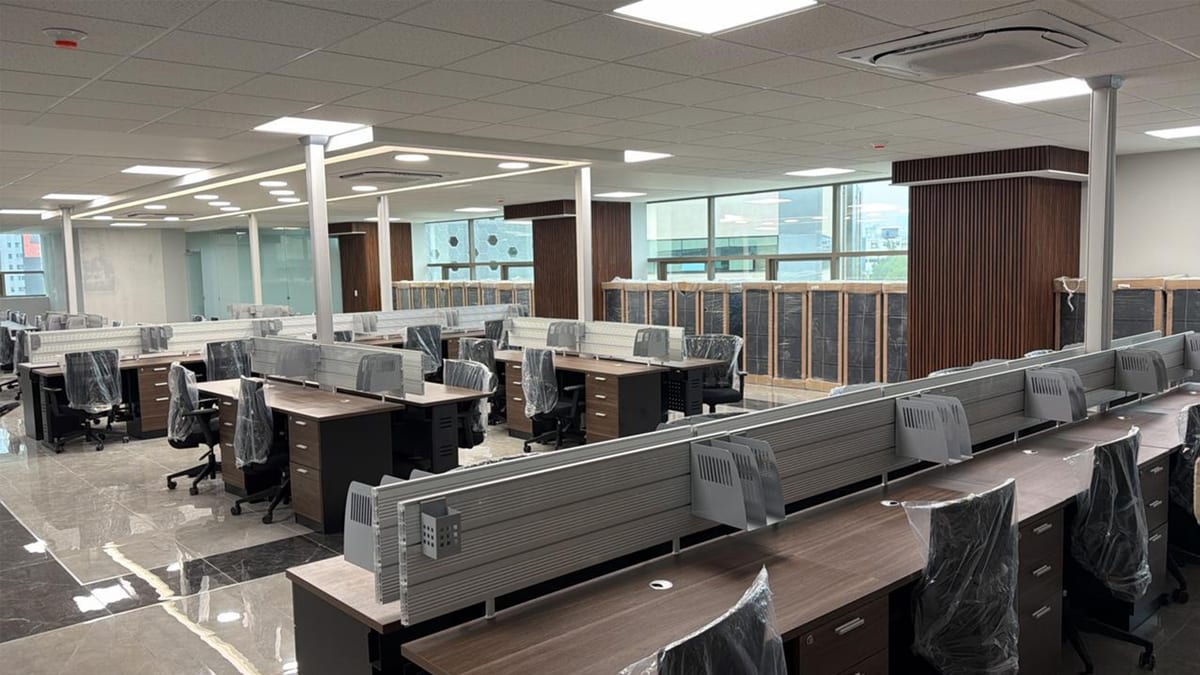
8. The Sample Is Only the Beginning of Quality Control
A good sample proves that the manufacturer can make one good product.
It does not automatically prove that the same result will be repeated across a full production order.
This is where Sample-to-Bulk Consistency matters.
Sample-to-Bulk Consistency is the degree to which mass production continues to match the approved sample in materials, dimensions, finish, structure, hardware and assembly.
Quality control therefore has to happen throughout the production process.
At Xusheng, checks begin with incoming materials such as boards, steel frames and hardware. They continue through cutting, edge banding, drilling, trial assembly, finished inspection, packaging and loading.
A useful question for any supplier is not:
“Do you have QC?”
Almost every supplier will answer yes.
Ask instead:
At which stages do you inspect?
What happens when you find a problem?
How do you distinguish one defective pack from a batch problem?
Do you inspect products after they have already been packed?
One practice used by Xusheng is to randomly select three to five already-packed finished products, unpack them and assemble them in the same condition in which the customer would receive them.
This makes it possible to check more than the furniture itself.
The inspector can also verify packaging, identification, customer branding, protective materials, accessories, hardware and assembly components.
If one pack shows an issue, additional packs of the same model can be inspected to determine whether the problem is isolated or repeated.
That distinction matters.
One missing fitting requires one response.
A repeated packing error requires another.
QC should not exist simply to produce a final inspection report.
It should reduce the chance that the dealer becomes the person who discovers the problem after the container has already crossed an ocean.
Internal link anchors:
how to avoid sample vs bulk production quality differences
office furniture quality control checklist for importers
Xusheng office furniture QC process
9. Lead Time, Packaging and Container Planning
Production speed matters because dealers have warehouse schedules, showroom launches and project deadlines.
But an unrealistic lead-time promise is more dangerous than a realistic one.
For Xusheng’s normal commercial orders, the typical period from final confirmation of specifications, colours and packaging to container-ready shipment is approximately 45 days.
Certain orders may be accelerated to around 30 days depending on the product and actual production capacity.
Samples can also be prioritised because they help a buyer make a purchasing decision sooner.
The more important principle is:
Reliable delivery planning is more valuable than an artificially short promise.
Packaging also affects the commercial result.
Most panel and metal-frame office furniture is suitable for KD — knock-down — packing. Desk frames and panels can be packed separately, while storage is generally shipped disassembled.
Mobile pedestals are often an exception because their assembly is more involved, although KD options can be discussed where required.
Container planning should happen before the products reach the loading bay.
Xusheng can use computer-based loading simulations based on the proposed order and then adjust the product mix using actual loading experience.
This is especially useful for mixed 40HQ orders containing desks, workstations, meeting tables, storage and pedestals.
The goal is not simply to fill the container.
It is to improve the number of commercially useful, sellable products the dealer receives for the freight paid.
Do not optimise only the price per desk. Optimise the landed cost per sellable unit.
Internal link anchors:
office furniture production lead time in China
how much office furniture fits in a 40HQ container
how to plan a mixed office furniture container

10. After-Sales Starts Before the Container Leaves China
Good after-sales service should not begin only when the customer complains.
Part of after-sales cost is created much earlier — through product identification, assembly logic, packaging, accessory control and installation information.
Products should be supplied with clear installation drawings. Packaging and component labels should make it easier to match the correct parts.
Where drawings are not sufficient, installation videos or video-call guidance can reduce unnecessary mistakes.
If a genuine product issue is later reported to Xusheng, the buyer is asked to provide photographs or video. The team confirms the problem and the buyer’s expected resolution, then checks the original order and production information with the workshop.
Where replacement panels, components or products are required, replacement production can be arranged.
The principle is:
Solve the product problem first, then address the further commercial impact.
For a dealer, this matters because an after-sales problem is rarely just the cost of one replacement panel.
It can involve installation labour, transport, communication time and damage to the relationship with the end customer.
A product that is easy to identify, repair and support can therefore be commercially more valuable than one that simply looks attractive in the catalogue.
Internal link anchors:
what happens if imported office furniture arrives damaged
how dealers can reduce office furniture after-sales costs
11. The Risk Most Dealers Discover Too Late: Replenishment
Some sourcing problems appear immediately.
A scratched panel. A missing fitting. A late container.
Others appear years later.
Imagine supplying 100 workstations to a corporate client in 2026.
In 2029, the customer has grown and asks for another 20.
The existing furniture is still working perfectly.
But the original finish has disappeared.
The frame has changed.
The hardware is different.
The matching cabinet is no longer available.
Nothing failed.
But the supply system failed the dealer.
This is Replenishment Risk.
Replenishment Risk is the risk that a dealer cannot obtain compatible products, finishes or components when an existing customer later needs replacement, additions or expansion.
The commercial cost is larger than losing a 20-workstation order.
The dealer may need to source a new range, prepare a new quotation, explain mismatched finishes, redesign part of the office or persuade the customer to replace furniture that did not need replacing.
Existing stock may also lose value because it is no longer part of a supported system.
In the worst case, another dealer solves the expansion requirement and gains access to a customer relationship that the original supplier spent years building.
This is why product continuity should be evaluated before the first order.
At Xusheng, many mature products can still be produced several years after their original supply.
If an upstream board finish or hardware component is discontinued, the first approach is to find a suitable match and submit it to the dealer for confirmation.
If an identical option is unavailable, a suitable alternative or upgrade can be proposed.
No responsible manufacturer should promise that every colour and component will remain identical forever.
Materials change.
Suppliers change.
Markets change.
The real question is whether the manufacturer manages those changes responsibly.
The biggest sourcing mistake is not paying too much. It is buying furniture that can fulfil today’s order but cannot support tomorrow’s business.
Internal link anchors:
why product continuity matters for office furniture dealers
long-term office furniture replenishment
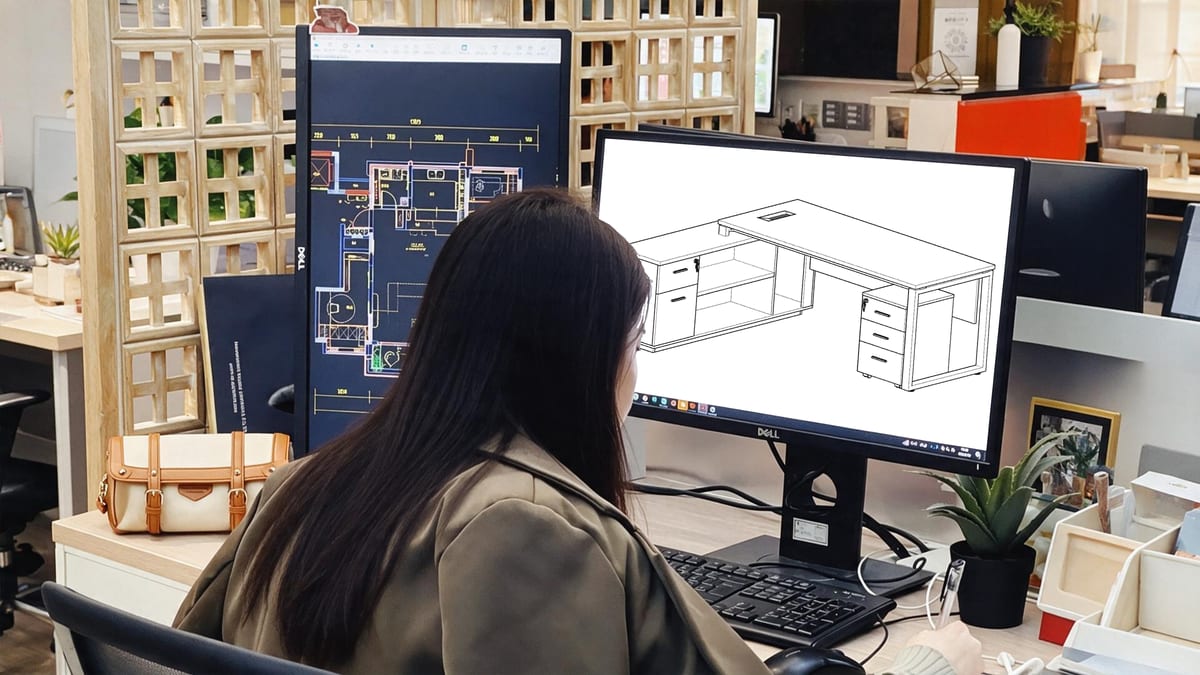
12. Why Furniture Systems Create More Repeat Business
Replenishment is the defensive value of a furniture system.
Repeat business is the growth value.
A customer may begin with 30 workstations.
Later, it needs more employees.
Then manager offices.
Then a larger meeting room.
Then filing and storage.
Then a new branch.
If the original range forms a complete furniture system, the dealer has a stronger chance of winning each of those later requirements.
The commercial value of the system is therefore not the number of SKUs in the catalogue.
It is the number of future customer needs that the dealer can solve without rebuilding the supply chain.
The sequence can look like this:
First project → Expansion → Replacement → New department → New branch → Relocation → Repeat business
The customer does not need to restart the buying process.
The dealer already understands the products.
The manufacturer already knows the relevant finishes, structures and specifications.
New products can remain visually compatible with the existing workplace.
This simplifies quoting, purchasing and project planning.
More importantly, it increases the number of reasons an existing customer has to return to the same dealer.
A single product solves today’s requirement. A complete furniture system gives that customer the opportunity to become years of repeat business.
Internal link anchors:
product-based vs system-based office furniture sourcing
complete modular office furniture system
13. Private Label Raises the Stakes
Private label is often discussed as a branding feature.
Can the factory put the dealer’s logo on the product?
Can it print branded cartons?
Can it customise the label?
Those things matter, but they are not the real commercial issue.
Once furniture carries the dealer’s brand, the manufacturer’s performance becomes part of the dealer’s reputation.
A poor edge finish is no longer simply a factory problem.
A missing fitting is no longer simply a factory problem.
An inconsistent replenishment order becomes a problem with the dealer’s own brand.
Xusheng can support private-label elements including product branding, cartons, shipping marks, installation manuals, labels and marketing images.
But branding makes supplier continuity more important, not less.
When the furniture carries the dealer’s brand, the manufacturer’s quality becomes the dealer’s reputation.
For this reason, a private-label programme should be judged on repeatability, quality consistency, product continuity and replacement support — not only on whether the factory can print a logo.
Internal link anchor: private label office furniture manufacturer in China
14. Commercial Projects Require More Than Product Supply
Many commercial office furniture projects do not begin with a product code.
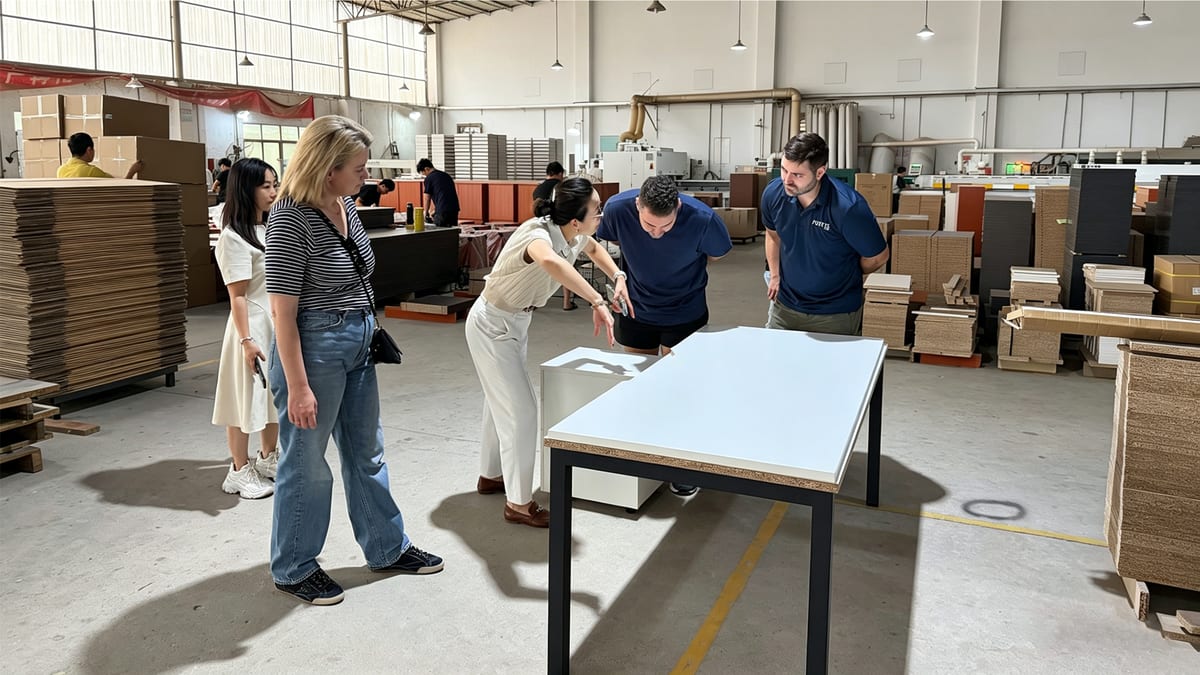
They begin with a floor plan.
For dealer-led projects, a manufacturer should be able to help convert that plan into a manufacturable furniture solution.
At Xusheng, project support can include furniture layout, product selection, size adjustment, CAD planning, 3D visualisation, colour and material coordination, quantity calculations, quotation/BOM preparation, production planning, container planning and installation drawings.
The workflow is closer to:
Office Plan → Furniture Layout → Product Selection → Size Adjustment → CAD → 3D → Materials → Quantity/BOM → Quotation → Production → Container Plan → Installation
Budget is often part of the problem.
A concept may look right but sit above the client’s target.
The easiest response is to quietly reduce material specifications until the quotation fits.
That is not good Value Engineering.
A better approach is to review dimensions, structure, selected hardware, non-critical configurations, product combinations and container efficiency.
The goal is to reduce cost without undermining the basic commercial-use standard.
Cost optimisation should not mean hidden quality downgrading.
The Xiaomi Chile headquarters project is one example of this dealer-led model. The project covered workstations, executive areas, meeting furniture, storage and collaborative spaces while the local dealer remained the market-facing partner.
That distinction matters.
A useful manufacturer should strengthen the dealer’s ability to deliver the project, not compete with the dealer for the end-customer relationship.
Internal link anchors:
commercial office furniture project support
how to source office furniture for commercial projects
15. Look Beyond the Factory to the Supply Chain Behind It
A manufacturer may control production well and still depend on upstream suppliers.
Office furniture relies on boards, metal frames, hardware, edge banding, packaging and other components.
That means a dealer is not only exposed to the factory.
The dealer is also indirectly exposed to the factory’s supplier-management decisions.
At Xusheng, upstream partners provide materials and components such as boards, metal desk frames, hardware, PVC/ABS edging and packaging, while core panel-processing operations such as cutting, edge banding, drilling, trial assembly and final packing are controlled internally.
Supplier management therefore becomes part of product quality.
If an upstream supplier raises prices unexpectedly, the manufacturer should investigate whether this reflects the wider market.
If quality declines, continuing to purchase simply because the supplier is familiar can eventually transfer the problem to the dealer.
If delivery repeatedly becomes unstable, an alternative source may be required.
If a finish or component is discontinued, the manufacturer must find an appropriate replacement rather than quietly substituting something lower in quality.
One principle Xusheng uses internally is:
Quality can be upgraded, but it should not be downgraded.
This becomes particularly important on confirmed orders.
If the original component becomes unavailable and an equivalent cannot be sourced, upgrading the replacement may be commercially safer than reducing the agreed specification simply to protect margin.
A useful sourcing question is therefore:
What happens when your manufacturer’s supplier has a problem?
Because eventually, that upstream problem can become the dealer’s problem.
Internal link anchor: how supplier management affects office furniture quality
16. Choosing a Supplier You Can Build Around for 5–10 Years
By this stage, the supplier decision becomes clearer.
The question is not simply:
“Can this factory complete my current order?”
Ask:
“Would I confidently place this product system in my catalogue, showroom and inventory for the next several years?”
A long-term supplier should demonstrate three forms of continuity.
Product Continuity
Can the furniture range remain compatible and expandable as customers grow?
Quality Continuity
Can future production continue to match the materials, dimensions, finishes and construction originally approved?
Dealer Supply Continuity
Dealer Supply Continuity is a manufacturer’s ability to maintain or responsibly manage the products, specifications, materials, components and production support a dealer depends on over time.
This does not mean nothing will ever change.
It means changes are controlled, communicated and solved rather than simply passed down to the dealer.
Then consider whether the manufacturer can grow with your business.
Can it develop new products?
Can it respond to market changes?
Can it support projects?
Can it recommend products based on your market rather than simply push every new collection?
Can it tell you when a requested dimension, structure, material reduction or delivery commitment is unrealistic?
For an established dealer, these questions matter because the customer relationship is worth more than the margin on a single container.
The real standard is:
Can I safely build future customer relationships around this supplier’s products and supply system?
If the answer is no, a lower quotation does not remove the underlying risk.
Internal link anchor: how to choose an office furniture supplier for the next 5–10 years

15-Point Office Furniture Supplier Checklist
Before committing to a new office furniture manufacturer in China, check whether you can confidently answer these questions:
1.Have I verified who actually controls the product and production?
2.Are material and construction specifications clearly written into the quotation?
3.Have I compared board, steel, hardware and finishing specifications rather than photographs alone?
4.Have finishes and colours been properly approved?
5.Have I tested a sample where the commercial risk justifies it?
6.Can the supplier explain how mass production is checked against the sample?
7.Does the MOQ make sense for both manufacturing and my market?
8.Is the promised production lead time realistic?
9.Has export packaging been considered before production is completed?
10.Has container utilisation been considered when planning the product mix?
11.Do I know what happens if products or components arrive with a genuine issue?
12.Can the range be replenished when my customer expands?
13.Does the product belong to a broader furniture system?
14.Can the supplier support future private-label or project requirements?
15.Would I confidently put this range into my catalogue, showroom and inventory for the next 5–10 years?
If several of these questions cannot be answered before the order, the quotation may not yet contain enough information to make a long-term sourcing decision.
Frequently Asked Questions
Is it cheaper to buy office furniture directly from China?
It can be, particularly for dealers and importers purchasing commercial quantities. However, FOB price should be considered together with freight, import costs, container efficiency, inventory, installation, after-sales and future replenishment. A lower factory price does not automatically result in a lower Dealer Total Cost.
What is the typical MOQ for office furniture from China?
MOQ varies according to product type, dimensions, finish, material utilisation and components. At Xusheng, MOQ is model-specific and shown on the quotation. Around 30 units is common for many products, but this should not be treated as a universal rule.
How long does office furniture production take in China?
Lead time depends on product complexity, quantity, materials and current production capacity. For Xusheng’s normal commercial orders, approximately 45 days after final specification, colour and packaging confirmation is typical. Some orders may be completed in around 30 days depending on actual production conditions.
Should I buy a sample before placing a container order?
For a new supplier or an important product range, a sample can reduce risk by allowing the dealer to verify dimensions, finish, structure, hardware and assembly. Material samples and small trial orders can also be useful intermediate steps before larger-volume purchasing.
How can I verify an office furniture manufacturer in China?
Review production capability, QC processes, supply-chain control, export experience, testing documentation, samples, projects and long-term customer evidence. Video factory tours, production-progress videos and independent inspection can provide additional confirmation.
Can different office furniture products be mixed in one 40HQ?
Yes. Mixed-category loading is possible when the applicable MOQ for each model is met. However, too many different carton dimensions and very small quantities across many SKUs can reduce loading efficiency, so the mix should be planned carefully.
Can I reorder the same office furniture several years later?
Often, but it should never be assumed. Ask about product continuity, finishes, components and how the supplier handles discontinued upstream materials. A responsible supplier should explain how matching, approval and alternative solutions are managed.
What should I send a Chinese manufacturer to receive a useful quotation?
Provide your market, company type, sales channels, product categories, price positioning, expected quantities and purchasing method. Product dimensions, finishes, configurations, current best-sellers and private-label requirements are also useful. For projects, provide the floor plan or BOQ where possible.
A useful quotation should do more than answer:
“What does Model A cost?”
It should help answer:
“What product and order structure makes sense for my market, inventory and future replenishment?”
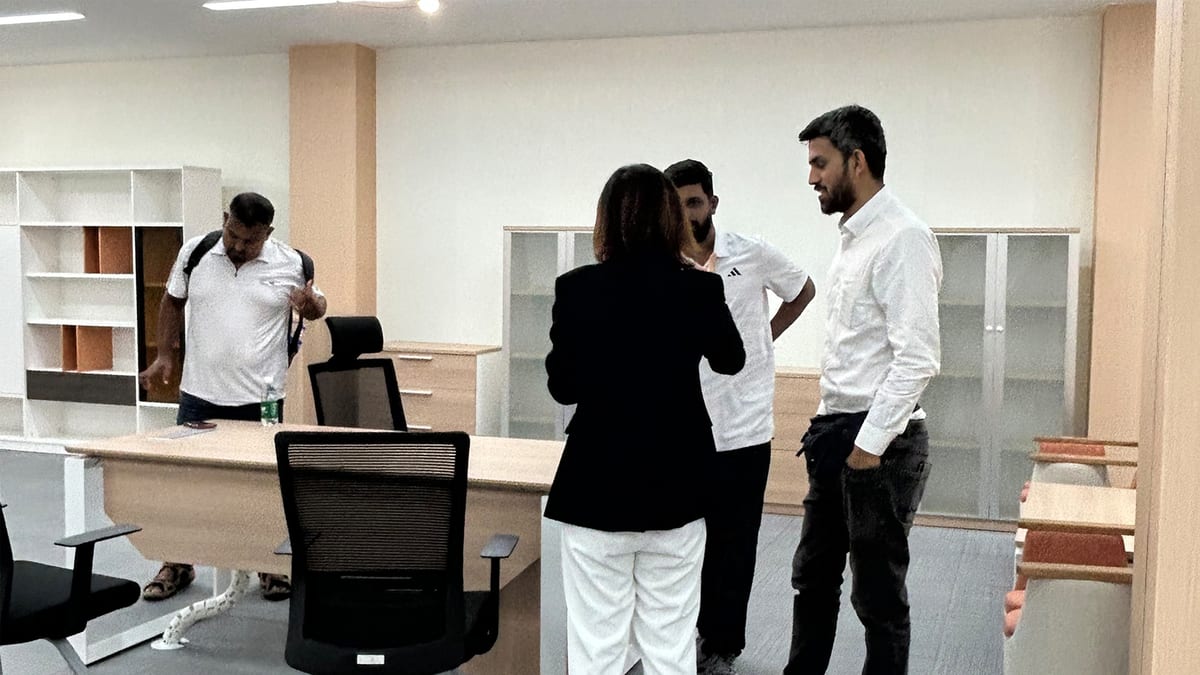
How Xusheng Works with Office Furniture Dealers
The sourcing principles in this guide reflect the way Xusheng has developed its business with overseas dealers, importers and project partners.
Xusheng has operated since 2008 and currently publishes an 11,000 sqm production base, 200+ partners, customers across 80+ countries, an 87.6% 10-year customer share and annual exports of more than 200,000 furniture units.
The importance of those numbers is not simply scale.
For a dealer evaluating long-term supply, customer continuity matters because repeat purchasing is a more demanding test than one successful order.
Product development is also part of that continuity. Xusheng develops at least four new design collections each year, using existing sales data, changing market preferences, successful product structures and feedback from long-term customers.
New products are not intended to be pushed indiscriminately to every dealer.
A useful recommendation should answer three questions:
Why is this product suitable for your market?
What gap does it fill in your existing range?
What additional customer or project opportunity could it help you address?
The same principle applies before the first quotation.
Rather than beginning only with a catalogue, the better starting point is to understand where the dealer sells, who the dealer sells to, what products are already performing well and what the dealer plans to source next.
That information makes product recommendations, MOQ decisions, mixed-container planning and long-term range development more useful.
The dealer knows the local market.
The manufacturer should add production, product-system and sourcing knowledge.
That is the relationship Xusheng aims to build.
Tell Us About Your Market
If you are building or expanding an office furniture range, tell us where you sell, who you sell to and what you plan to source.
We can then discuss suitable furniture systems, specifications, samples, mixed-container planning, private label or project requirements based on your actual business model.
Our first step is not simply to send a catalogue.
It is to understand what you currently sell, who your customers are and what you want to build next.
Primary CTA:
Discuss Your Sourcing Plan
Secondary CTA:
Explore Xusheng Furniture Systems
Because the right sourcing decision should do more than complete the next order.
It should give you confidence that the furniture you sell today can continue creating business for you in the years ahead.
Looking for a supplier?
Need a product, sample, or project quote?
Use the catalog to choose products, then send the list for manufacturing, dealer, OEM / ODM, or project support.