
Why Great Office Furniture Dealers Build Systems, Not Just Products
For decades, the office furniture industry has largely competed on products. Who has the lower price? Who offers more models? Who can deliver faster? Those factors still matter. But they are no longer enough. As…
Chapter 04: The Furniture System Maturity Model
Why Standardization Is the Foundation of a Scaleless Office Furniture Business
For decades, the office furniture industry has largely competed on products.
Who has the lower price? Who offers more models? Who can deliver faster?
Those factors still matter. But they are no longer enough.
As workplaces evolve, businesses expand, and project requirements become more complex, distributors are discovering that long-term growth depends on something far more important than product variety:
The ability to build a business system that can support customers for years, not just complete a single transaction.
That is the central idea behind Furniture System Thinking.
In Chapters 01–03, we explored why office furniture projects often fail after a few years, why distributors are moving from product purchasing to system purchasing, and how office furniture systems create long-term customer value.
Chapter 04 asks a deeper question:
Why do some distributors remain product sellers, while others continue expanding, winning larger projects, and building scaleless businesses?
The answer is not simply better products. It is business maturity. The Real Difference Between Growing and Stagnating
Across global office furniture markets, the contrast is striking.
Some distributors spend twenty years negotiating prices, comparing individual products, and coordinating multiple suppliers for every project.
Others spend their time discussing:
1.How an office will expand over the next three years.
2.How future reorders will remain consistent.
3.How a customer can relocate without replacing furniture.
4.How inventory can be simplified through standardized modules.
The second group is not selling furniture in the traditional sense.
They are selling a system that supports business growth.
To understand this transition, we developed the Furniture System Maturity Model.
The Furniture System Maturity Model
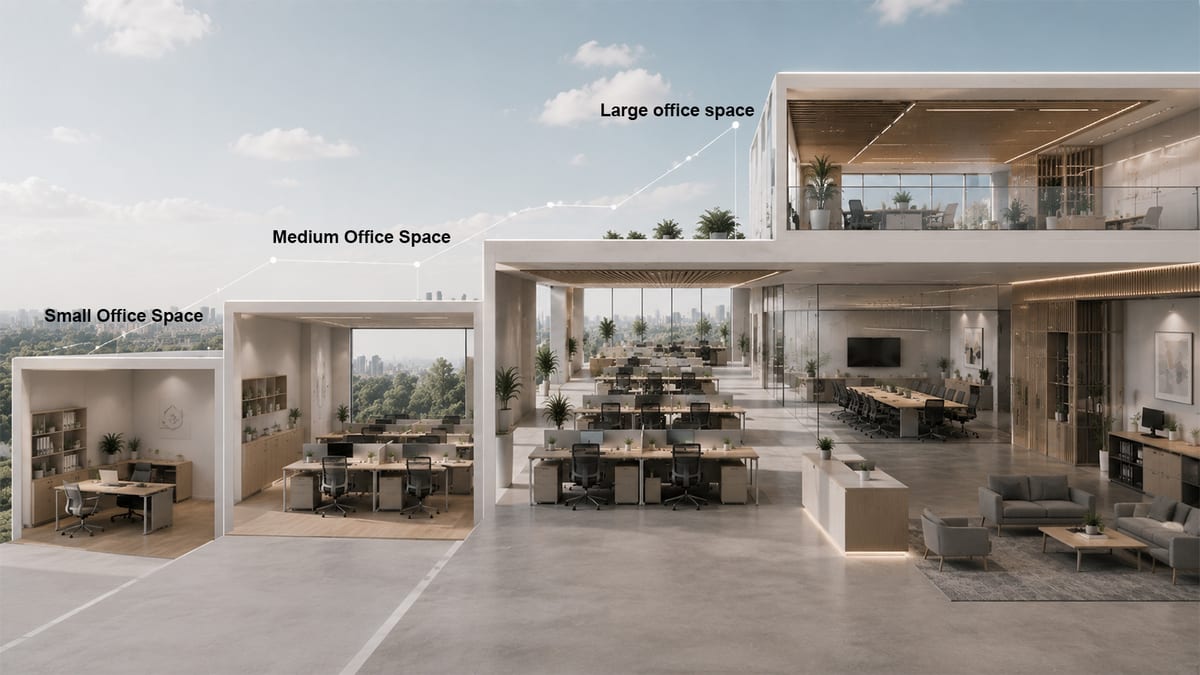
This model is not a measure of company size.
It is a framework for understanding how an office furniture business evolves—and what must change at each stage to achieve sustainable growth.
Level 1:Product Seller (Transactional)
Level 2:Project Supplier (Project-based)
Level 3:Solution Provider (Workspace-focused)
Level 4:Office Furniture System Partner (System-based)
Level 5:Office Furniture System Strategist (Strategic)
Level 1 — Product Seller
This is where most businesses begin.
Success is measured by:
1.Product price
2.Order volume
3.Short-term margin
4.Fast transactions
Every project starts from zero. When the customer's purchase is complete, the relationship often ends with it.
The business can generate sales, but it struggles to create lasting competitive advantage.
Level 2 — Project Supplier
As experience grows, distributors begin handling office projects rather than individual product orders.
They coordinate multiple product categories and participate in space planning.
However, each project still requires:
1.New sourcing decisions
2.New supplier coordination
3.New specifications
4.New delivery management
The business becomes larger, but not necessarily simpler.
Level 3 — Solution Provider
At this stage, the conversation shifts from furniture to workspace solutions.
Distributors begin designing:
1.Reception areas
2.Executive offices
3.Open work spaces
4.Meeting rooms
5.Storage zones
Customers receive a more coordinated office environment.
But without standardization, future expansion, replenishment, and maintenance can still become difficult.
Level 4 — Office Furniture System Partner
This is where the true power of system thinking begins.
Products are built on shared standards:
1.Consistent design language
2.Consistent materials
3.Consistent color systems
4.Consistent modular structures
Customers can add workstations, cabinets, meeting spaces, or new departments years later while maintaining a unified workspace.
For distributors, this creates three major advantages:
1.Easier reordering
2.Simpler inventory management
3.Stronger long-term customer relationships
A project is no longer a one-time sale.
It becomes an ongoing partnership.
Level 5 — Office Furniture System Strategist
This is the highest stage of maturity envisioned by Furniture System Thinking.
Here, the distributor is no longer focused primarily on furniture.
Instead, they help customers build:
1.Workspace standards
2.Product systems
3.Procurement frameworks
4.Expansion strategies
5.Long-term operational consistency
The customer is not buying products.
They are investing in a sustainable workplace platform.
And the distributor is no longer competing for a single order—they are participating in the customer's future growth.
Why Standardization Changes Everything
Many people assume that standardization reduces flexibility.
In reality, effective standardization reduces complexity.
It creates a stable foundation that makes flexibility possible.
For distributors, standardized office furniture systems deliver three strategic benefits.
1.Lower Operational Risk
Traditional sourcing often means:
1.Different suppliers
2.Different specifications
3.Different colors
4.Different production standards
Years later, when a customer needs additional furniture, the original products may be unavailable, discontinued, or impossible to match.
Standardized systems protect against these problems by maintaining continuity over time.
That means fewer after-sales issues, fewer customer complaints, and stronger trust.
2.Faster Product Portfolio Expansion
Many distributors try to grow by adding more and more products.
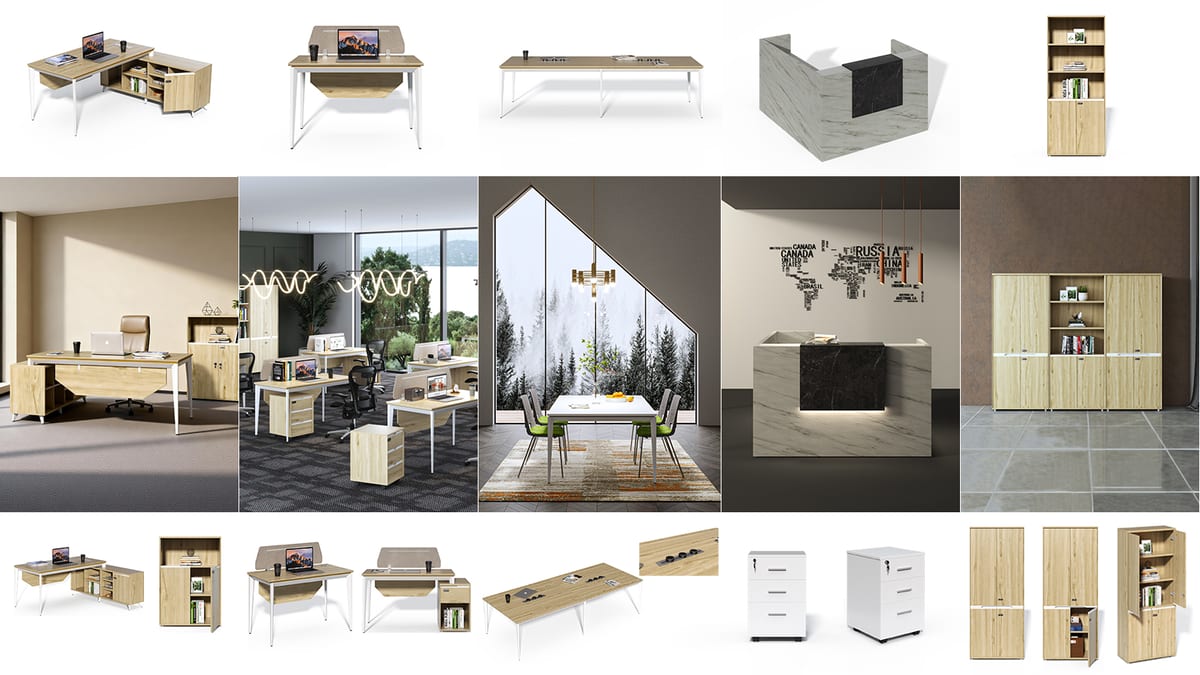
A better approach is to build a portfolio around compatible modules.
The same desk components, storage units, connectors, and accessories can be configured into:
1.Executive office
2.Manager office
3.Open work-space
4.Meeting room
5.Collaborative area
6.Reception zone
The number of SKU grows slowly.
The number of solutions grows rapidly.
3.Stronger Project Competitiveness
Large commercial customers increasingly prefer:
1.One supplier
2.One design language
3.One procurement process
4.One coordinated delivery
Standardized office furniture systems make this possible.
For distributors, the result is clear:
Instead of competing for individual products, they can compete for entire office projects.
And larger projects create larger opportunities.
A Practical Comparison
×Traditional Dealer
①Year 1: Sell products ②Year 2: Find new customers ③Year 3: Compete on price ④Year 5: Replace lost accounts
√System Dealer ①Year 1: Complete a workspace project ②Year 2: Find new customers ③Year 3: Compete on price ④Year 5: Replace lost accounts
Both businesses sell furniture. Only one builds recurring opportunity.
Why Xusheng Continues Investing in Office Furniture Systems
At Xusheng Furniture, we could have focused solely on manufacturing desks, cabinets, and meeting tables.
Instead, we listened to the questions distributors and project buyers kept asking:
"Can we reorder the same product in three years?"
"Can the office be expanded without changing the design?"
"Can furniture be relocated and reused?"
"Can one supplier support the entire workspace?"
Those questions are not about individual products.
They are about systems.
That is why we continue developing the Xusheng Office Furniture System through modular design, standardized production, consistent material platforms, long-term replenishment capability, and internationally compliant quality and environmental standards, including SGS-tested panels.
Our goal is not simply to be an office furniture manufacturer.
Our goal is to become an Office Furniture System Strategist for distributors and commercial projects worldwide.
The Future Belongs to System Businesses
The next decade of office furniture competition will not be won by the companies with the largest catalog.
It will be won by the companies that make business easier.
Distributors who continue thinking only about products will always face price competition.
Distributors who build systems will create continuity, expansion, and long-term customer value.
That is the real meaning of Furniture System Thinking.
It is not a new furniture category.
It is a new way of building an office furniture business.
Products solve today's requirements. Systems support tomorrow's growth. Strategy builds businesses that last.
Next Chapter
Chapter 05 — How Office Furniture Systems Help Dealers Win Larger Commercial Projects
In the next chapter, we will explore why large corporations, government institutions, and commercial projects increasingly prefer suppliers with system-based product capabilities—and how distributors can use office furniture systems to compete for larger, higher-value projects.
FAQ
Frequently asked questions
01What are the five levels in the Furniture System Maturity Model?
The article describes Product Seller, Project Supplier, Solution Provider, Office Furniture System Partner and Office Furniture System Strategist. The levels describe business maturity, not company size.
02What distinguishes an Office Furniture System Partner from a product seller?
A system partner uses shared design, material, color and modular standards so customers can add workstations, cabinets, meeting spaces or departments later while keeping a unified workplace.
03Does standardization make office furniture less flexible?
The article argues the opposite: effective standardization reduces complexity and creates a stable foundation for flexible configurations, reordering and expansion.
04How can compatible modules expand a dealer’s product portfolio?
The article says shared desk components, storage units, connectors and accessories can be configured into executive, manager, open-workspace, meeting, collaborative and reception areas, allowing more solutions without unrelated SKUs.
05Why does Xusheng say it is investing in office-furniture systems?
The article says distributors asked whether products could be reordered, offices expanded, furniture relocated or reused and one supplier support the whole workplace. Xusheng responds with modular design, standardized production, consistent material platforms and replenishment capability.
Looking for a supplier?
Need a product, sample, or project quote?
Use the catalog to choose products, then send the list for manufacturing, dealer, OEM / ODM, or project support.