
Why Product Continuity Matters for Office Furniture Dealers
Why Product Continuity Matters for Office Furniture Dealers
An office furniture order can be delivered successfully and still turn out to be a poor sourcing decision three years later.
Imagine you supplied 100 workstations to a corporate client. The furniture was delivered on time, installation went smoothly and the customer has been using it without any serious quality problems.
Three years later, the company expands and asks for another 20 workstations.
It should be an easy repeat order.
Instead, you discover that the original board finish has been discontinued. The supplier has changed the metal frame. The matching storage range is no longer available. Even the screen system uses different fittings.
Nothing is wrong with the original furniture.
But you can no longer support the customer in the way they expected.
For an office furniture dealer, this is why product continuity matters. The real value of a product range is not only whether you can sell it today, but whether you can continue to replenish, expand and support it as your customers' businesses change.
A product can complete today's order. Product continuity helps protect tomorrow's business.
This is one of the long-term risks dealers should consider when sourcing office furniture from China, alongside price, quality, MOQ and lead time.
Product Continuity Is More Than Keeping the Same Model Number
When dealers ask whether a product will still be available in three or five years, the answer is rarely as simple as yes or no.
A model number may remain in a catalogue while important parts of the product have changed.
The board colour may be slightly different. A metal frame may use a revised profile. Drawer slides, locks or cable boxes may come from another supplier. A matching cabinet may have been redesigned.
For a dealer, therefore, product continuity should mean more than keeping a SKU alive.
It is the ability to maintain — or responsibly manage changes to — the parts of a furniture system that matter when a customer comes back.
That includes:
· board colours and decorative finishes;
· metal-frame structures and finishes;
· dimensions and connection methods;
· hardware and functional components;
· screens and cable-management systems;
· storage configurations;
· replacement panels and parts;
· production drawings and specifications.
This leads to a broader concept we use when evaluating long-term sourcing relationships:
Dealer Supply Continuity is a manufacturer's ability to maintain or responsibly manage the products, specifications, materials, components and production support a dealer depends on over time.
The word manage is important.
No manufacturer can honestly guarantee that every colour, fitting and upstream component will remain unchanged indefinitely.
The real question is what happens when something changes.
The Problem Usually Appears After the Supplier Has Already Been Paid
Immediate quality problems are relatively easy to understand.
A panel is scratched.
A fitting is missing.
A dimension is wrong.
A container arrives late.
The buyer sees the problem and asks the supplier to solve it.
Continuity problems are different because the first order can be completely successful.
The furniture may still be working perfectly when the sourcing problem appears.
Consider the same 100-workstation project.
Initial project — 2026
The dealer supplies:
100 workstations
100 mobile pedestals
matching screens
storage cabinets
The client is satisfied.
Expansion — 2029
The client recruits 20 additional employees and contacts the same dealer.
The request is simple:
“Please add another 20 desks to match what we already have.”
But the supplier can no longer reproduce the original combination.
Now the dealer has to find the closest colour, explain the difference to the customer, prepare a new sample or possibly propose replacing more furniture than the customer actually needs.
The furniture did not fail.
The supply system failed the dealer.
That is a very different type of sourcing risk.
We Call This Replenishment Risk
For dealers, one of the most useful ways to think about product continuity is through Replenishment Risk.
Replenishment Risk is the risk that a dealer cannot obtain compatible products, finishes or components when an existing customer later needs replacement, additions or expansion.
The cost of that risk is rarely limited to the products that cannot be supplied.
If 20 matching workstations are unavailable, the dealer may need to:
search for a replacement range;
request new samples;
produce another quotation;
prepare new drawings;
explain colour or structural differences;
carry incompatible stock;
replace furniture that is still usable;
or bring another supplier into an existing customer account.
That last point is particularly important.
The dealer may have spent years developing the relationship with the end customer. If another supplier or competitor is needed every time the customer expands, part of the commercial value of that relationship is lost.
This is why replenishment should be considered before the first container, not after the customer asks for the second one.
Product Continuity Changes the Economics of Repeat Business
A corporate furniture customer rarely remains static.
Companies hire people.
Departments expand.
Managers are promoted.
Meeting rooms are added.
Storage requirements change.
Businesses relocate.
New branches open.
Furniture is damaged and needs replacing.
For the dealer, each change can become another order.
Suppose the first sale is 40 workstations.
Over the following years, the same customer may need:
40 workstations
→ 12 additional workstations
→ 3 manager offices
→ 1 meeting room
→ additional storage
→ a new branch office
The value of the original workstation range is therefore not limited to the margin on the first 40 desks.
It can become an entry point into years of repeat business.
But that only works if the dealer can continue solving the customer's requirements.
The commercial value of a furniture system is not the number of SKU in the catalogue. It is the number of future customer requirements the dealer can solve without rebuilding the supply chain.
This is where product continuity begins to affect Customer Lifetime Value.
A dealer with a stable, expandable furniture system has more reasons to return to the same manufacturer — and the end customer has more reasons to return to the same dealer.
This Is Why We Prefer Furniture Systems to Isolated SKU
Buying isolated products can work when the requirement is purely transactional.
But it becomes less efficient when dealers want repeat sales.
A workstation that belongs to a broader furniture family gives the dealer more options.
The same finish might also be available across manager desks, executive desks, meeting tables and storage. The same structural language can continue across different areas of an office.
So when the customer's requirements change, the dealer does not necessarily need to start again.
This is the difference between Product Sourcing and Furniture System Sourcing.
A strong office furniture system should ideally be:
Reorderable — the dealer can return for additional quantities.
Expandable — the range can support additional workplace requirements.
Combinable — related products work together visually and commercially.
A catalogue containing 300 unrelated products is not automatically a stronger system than a carefully developed range containing fewer but compatible products.
For a dealer, compatibility creates commercial leverage.
Recommended internal link: product-based vs system-based office furniture sourcing
Product Continuity Also Protects Inventory
The same issue applies to stock.
Imagine a dealer still has 12 desks in the warehouse when the supplier changes the matching cabinet, frame finish or board colour.
Those 12 desks are not defective.
But they have become harder to sell as part of a complete office solution.
Their commercial value has fallen.
This is one reason dealers should look beyond FOB price when comparing suppliers.
We use a broader model called Dealer Total Cost:
Dealer Total Cost = Purchase Price + Freight + Import Costs + Inventory + Installation + After-Sales + Replacement + Replenishment Risk + Product Discontinuation Risk
Suppose Supplier A saves the dealer USD 8 per workstation.
That saving is real.
But if the range is discontinued quickly and the remaining stock becomes difficult to combine with new furniture, the original saving may no longer represent the lowest commercial cost.
This does not mean dealers should ignore price.
Price matters.
It means price should be evaluated alongside the future cost of owning and supporting the product range.
The lowest factory quotation does not necessarily produce the lowest dealer cost.
Recommended internal link: how to calculate the real cost of imported office furniture
Not Every Product Carries the Same Continuity Risk
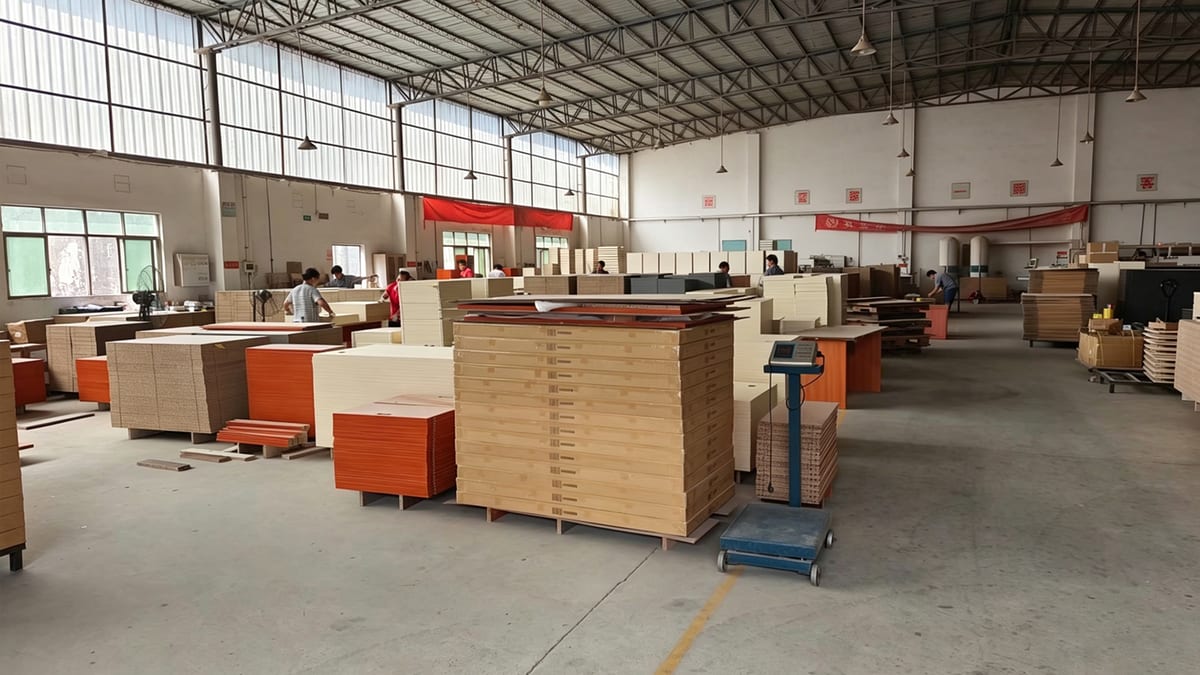
Some office furniture is naturally easier to replenish than others.
A highly fashion-driven desk using an unusual decorative finish, proprietary fitting and short-lived design language may carry more continuity risk than a modular range built around relatively stable components.
This does not make unusual designs bad products.
They may sell extremely well.
The dealer simply needs to understand the trade-off.
The same principle applies to suppliers.
A manufacturer that frequently changes board suppliers, hardware specifications or production structures without maintaining clear records makes future matching more difficult.
So when evaluating a range for long-term sales, look beyond appearance.
Ask what sits behind the design.
For dealers planning to put a series into a showroom, catalogue or local inventory, this matters even more.
Once you actively promote a product family, you are effectively telling your market:
“This is a range I am prepared to support.”
Your supplier's continuity therefore becomes part of your own promise to the customer.
Do Not Ask a Factory to “Guarantee Five Years”
This is where supplier evaluation needs to become more realistic.
A dealer might ask:
“Can you guarantee this exact colour and hardware for five years?”
A confident salesperson may simply say yes.
But that promise is difficult for any manufacturer to control completely.
The factory may not manufacture the decorative board itself.
It may not manufacture the drawer slides, locks or cable boxes.
An upstream supplier can discontinue a colour.
A hardware manufacturer can close.
Regulations can change.
A component can be replaced by a newer version.
For this reason, a better question is:
“How do you manage replenishment when an original material or component is no longer available?”
Then go deeper.
Does the manufacturer keep the original order specifications?
Can it identify the board colour used?
Are drawings retained?
Can previous hardware specifications be traced?
Will an alternative be sent for approval before production?
What happens if no close match exists?
These questions tell you much more than an unsupported five-year guarantee.
A credible continuity policy explains how change is managed. It does not pretend change will never happen.
How Xusheng Handles an Older Product When Something Has Changed
This situation is not theoretical for a manufacturer that works with long-term dealers.
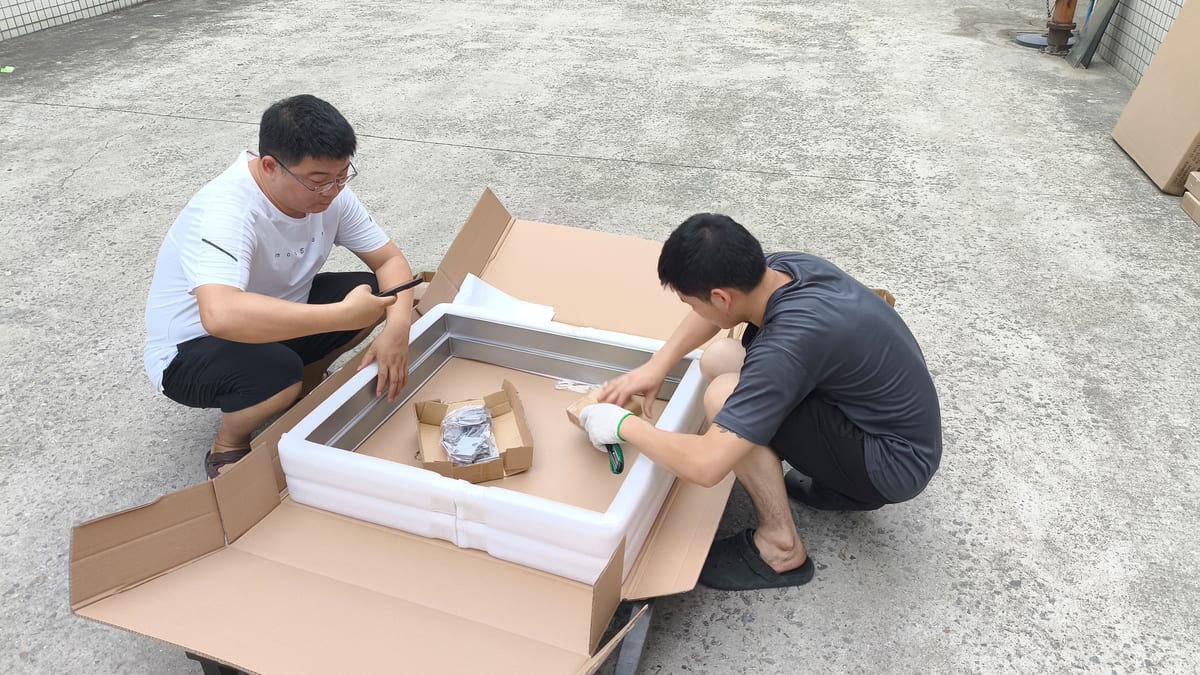
At Xusheng, customers sometimes return several years after an original order and request the same or related products.
Where the original board finish, hardware and components remain available, the product can usually move back into production according to the previous specification.
The more difficult case is when an upstream supplier has discontinued something.
Our first step is not to quietly replace it.
We look for the closest suitable board finish, hardware or component and compare it with the original requirement.
The proposed alternative is then provided to the customer for confirmation.
If there is no sufficiently close match, we discuss another suitable solution based on the customer's existing furniture and market.
There are also situations where an upgraded component is more appropriate than substituting something cheaper simply to preserve the old price.
Our principle is:
Quality can be upgraded, but it should not be downgraded.
This does not mean we promise that every material will remain identical indefinitely.
We do not think a manufacturer should make that promise.
What matters is preserving the customer's ability to make an informed decision when the supply chain changes.
For a dealer, a visible, approved change is much easier to manage than discovering an unannounced substitution after the goods arrive.
Product Development Should Not Destroy Product Continuity
There is another side to the issue.
Dealers do not want a supplier that keeps exactly the same catalogue forever.
Markets change.
Office layouts change.
Colours change.
Workstations become more modular.
Cable management improves.
New price segments emerge.
A manufacturer needs to continue developing products.
The challenge is balancing continuity with evolution.
At Xusheng, product development is influenced by existing sales performance, changing aesthetics in different markets, successful commercial structures and feedback from long-term customers about gaps in their ranges.
The objective should not be:
“Launch something new, discontinue everything old.”
Nor should it be:
“Never change anything.”
A stronger approach is to maintain commercially useful systems where reasonably possible while introducing new ranges that help dealers respond to changing demand.
For the dealer, this creates two advantages:
existing customers remain supportable;
and the product portfolio can still evolve.
Seven Questions to Ask About Product Continuity Before Ordering
Before committing a product family to your catalogue, showroom or warehouse, ask the supplier:
1. Can previous order specifications and drawings be traced several years later?
2. Which parts of this range depend on proprietary or unusual components?
3. How stable are the main board colours and frame finishes?
4. What happens if a board colour or hardware component is discontinued?
5. Will replacement materials be sent for my approval before production?
6. Does this product belong to a wider range of compatible desks, workstations, meeting tables and storage?
7. Can replacement panels or components be produced without replacing the entire product?
You are not looking for seven perfect answers.
You are trying to understand whether the supplier has thought seriously about what happens after the first sale.
A Simple Way to Evaluate Continuity Risk
Supplier / Product Situation | Continuity Risk |
Stable specifications + traceable previous orders + complete furniture family | Lower |
Stable product but limited related categories | Moderate |
Frequent finish/hardware changes | Higher |
Highly proprietary components with no replacement plan | Higher |
Supplier cannot trace previous specifications | High |
Supplier promises “always available” but cannot explain how | Warning sign |
This is not a formal certification system.
It is a practical dealer decision tool.
The more your business depends on local inventory, repeat corporate customers and multi-stage projects, the more weight product continuity deserves in the supplier decision.
The Real Test of a Long-Term Office Furniture Supplier
The first order tells you whether a supplier can manufacture furniture.
The next few years tell you whether you can build a business around that supply.
Before adding a new series to your catalogue, ask yourself:
Would I still feel comfortable recommending this system if I knew the customer might call me three years from now asking for another 20 workstations?
If the answer depends entirely on hoping the product still exists, there is a risk you have not yet priced into the order.
If the supplier keeps specifications, maintains broader product systems, manages upstream changes and has a clear replenishment process, the dealer is in a stronger position.
This is ultimately why product continuity matters.
A good office furniture supplier should not only help you complete today's order.
It should reduce the risk of having to disappoint the same customer tomorrow.
For a broader framework covering supplier verification, specifications, MOQ, quality control, shipping and long-term supply, read our complete guide to sourcing office furniture from China.
Internal link → Pillar Page:
Anchor: sourcing office furniture from China
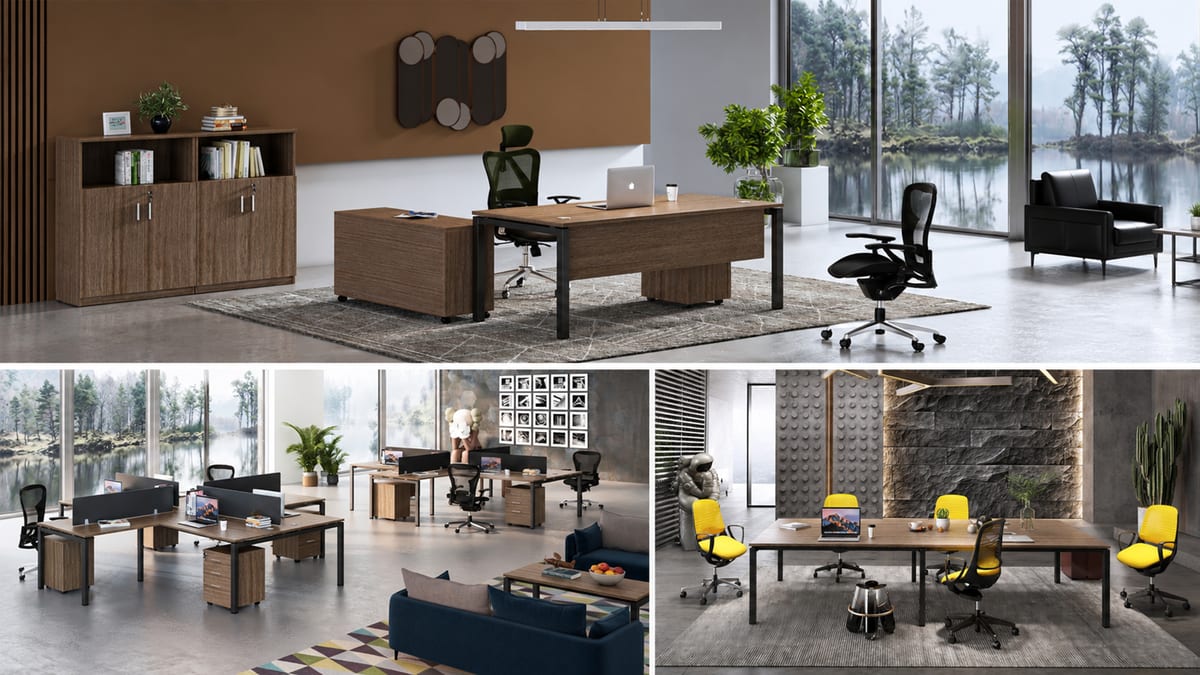
Looking for a Furniture System You Can Continue Selling?
If you are evaluating a new office furniture range, tell us about your market, current products, customer groups and normal replenishment model.
Before recommending a series, Xusheng can discuss the product system, specifications, samples, mixed-container requirements and how the range may support future expansion.
Primary CTA
Discuss Your Product Range
Secondary CTA
Explore Xusheng Furniture Systems
Looking for a supplier?
Need a product, sample, or project quote?
Use the catalog to choose products, then send the list for manufacturing, dealer, OEM / ODM, or project support.