
How to Plan a 40HQ Office Furniture Container: A Practical Guide for Dealers Importing from China
A practical guide to 40HQ office furniture planning. Learn how dealers assess demand, calculate CBM, balance product mix, arrange loading, track stock and plan replenishment, using Xusheng’s real three-container case.
How to Plan a 40HQ Office Furniture Container: A Practical Guide for Dealers Importing from China
Introduction: A Full Container Does Not Always Mean a Good Purchase
For an office furniture dealer importing from China, ordering a 40HQ container is a major purchasing decision.
You need to decide which products to buy, how many units to order, how much warehouse space they will occupy and whether the selected products are likely to sell in your local market.
There is also the practical question of loading.
A container may have unused space even after the initial product combination has been calculated. But filling that space with products that your customers do not need can create another problem: excess stock and tied-up capital.
At Xusheng Furniture, we believe container planning should start with the dealer's business rather than the factory's product catalogue.
Before recommending a product combination, we want to understand the customer's market, existing stock, warehouse capacity, purchasing budget, sales channels and project requirements.
We then consider product dimensions, carton sizes, CBM, weight, loading arrangements and future replenishment.
The objective is not simply to fill a 40HQ container.
It is to make the best possible use of the available space while selecting products that support the dealer's sales and long-term business.
In this guide, we explain how to plan an office furniture container, from the first customer discussion to product selection, CBM calculation, warehouse preparation, loading and future replenishment.
We will also share a real Xusheng customer case involving three 40HQ containers and a long-term overseas furniture dealer.
1. Understand the Dealer's Business Before Planning the Container
The first step is not calculating CBM.
It is understanding who will sell the furniture and what their market actually needs.
Two dealers may operate in neighbouring countries but have very different purchasing requirements.
One may focus on office furniture retail showrooms, while another may mainly supply corporate projects, government departments or educational institutions.
Their product combinations should not automatically be the same.
What should a manufacturer understand first?
At Xusheng, we consider several areas before recommending a container plan.
Area | Information to understand |
|---|---|
Target market | Country and local office furniture market |
Business model | Retail, wholesale, distribution or project supply |
Customer base | Individual businesses, corporate buyers, government or education |
Existing products | Furniture categories currently sold |
Warehouse | Available storage space and current stock |
Sales performance | Fast-moving and slow-moving products |
Purchasing budget | Available purchasing funds and capacity |
Replenishment | Monthly or quarterly purchasing plans |
Project business | Existing and expected furniture projects |
Business stage | Established dealer or new office furniture entrant |
Product strategy | Desired product range and market positioning |
These discussions help establish whether the customer needs a broad furniture range, more of their existing bestsellers or a smaller selection of products for testing.
Why the first container needs particular attention
For a dealer entering the office furniture market for the first time, the first container can determine how easily they build their initial product range.
Buying too many different products may spread the budget too thinly.
Buying too many units of one product may create stock pressure.
A better approach is to establish which products are essential, which are likely to sell regularly and which are mainly needed to complete the range or support specific projects.
For an established dealer, historical sales and inventory records provide another useful starting point.
The purchasing plan should reflect actual business performance rather than assumptions about what might sell.
2. Build the Right Product Mix for a 40HQ Container
Once the dealer's business situation is understood, the next step is selecting the furniture categories.
This is where experience with office furniture distribution becomes important.
A container containing ten different product categories is not automatically better than one containing five.
The right combination depends on the dealer's local demand, available stock, budget and intended customers.
Which products should a dealer consider?
For a small or medium-sized office furniture dealer, Xusheng generally gives particular attention to the following categories.
Product category | Purchasing role |
|---|---|
Straight office desks | Main sales products |
Mobile pedestals | Important supporting products |
Side cabinets | Complementary furniture |
Manager desks | Mid-range office furniture |
Executive desks | Higher-positioned product options |
Meeting tables | Supporting product category |
Reception desks | Project and showroom requirements |
Workstations | Corporate office requirements |
Filing cabinets | Essential storage products |
Other storage furniture | Completes the product range |
Why straight desks are often a priority
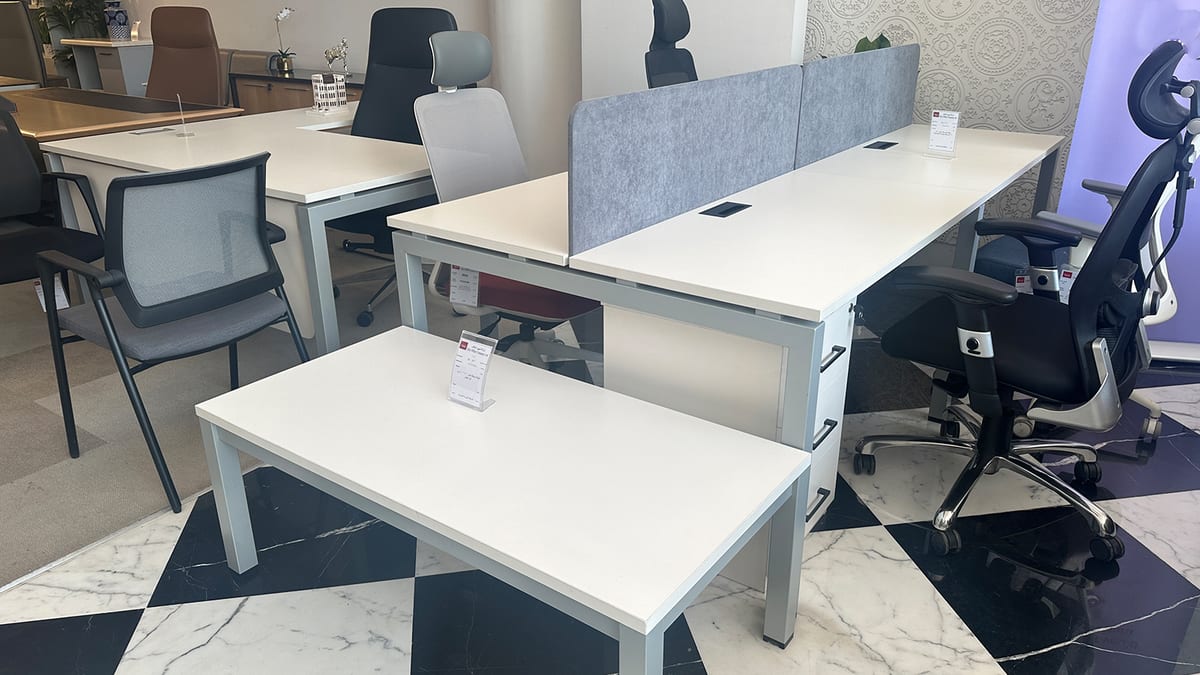
A straight office desk is one of the more flexible products in an office furniture range.
It can be sold independently as a supervisor's desk.
It can also be combined with a mobile pedestal to create a manager's desk arrangement, or paired with a side cabinet to create a more substantial executive workspace.
This gives dealers several selling possibilities using a relatively straightforward product category.
For this reason, we generally recommend that smaller dealers consider purchasing more straight desks and suitable supporting cabinets when planning their first container.
Mobile pedestals and side cabinets are also useful because they can be sold separately or together with desks.
Why some categories should be purchased in smaller quantities
Meeting tables and reception desks are important parts of an office furniture range, but their sales volumes are not necessarily comparable with straight desks.
For example, a small company may need only one or two meeting tables.
A dealer may therefore sell several desks and storage units before selling another meeting table.
This does not mean meeting tables or reception desks are unimportant.
It means their purchasing quantities should reflect their actual role in the dealer's market.
The same applies to workstations, executive furniture and project-specific products.
A balanced product range should include the products dealers sell regularly, along with the products they need to complete larger customer requirements.
3. Calculate Product CBM Before Confirming the Order
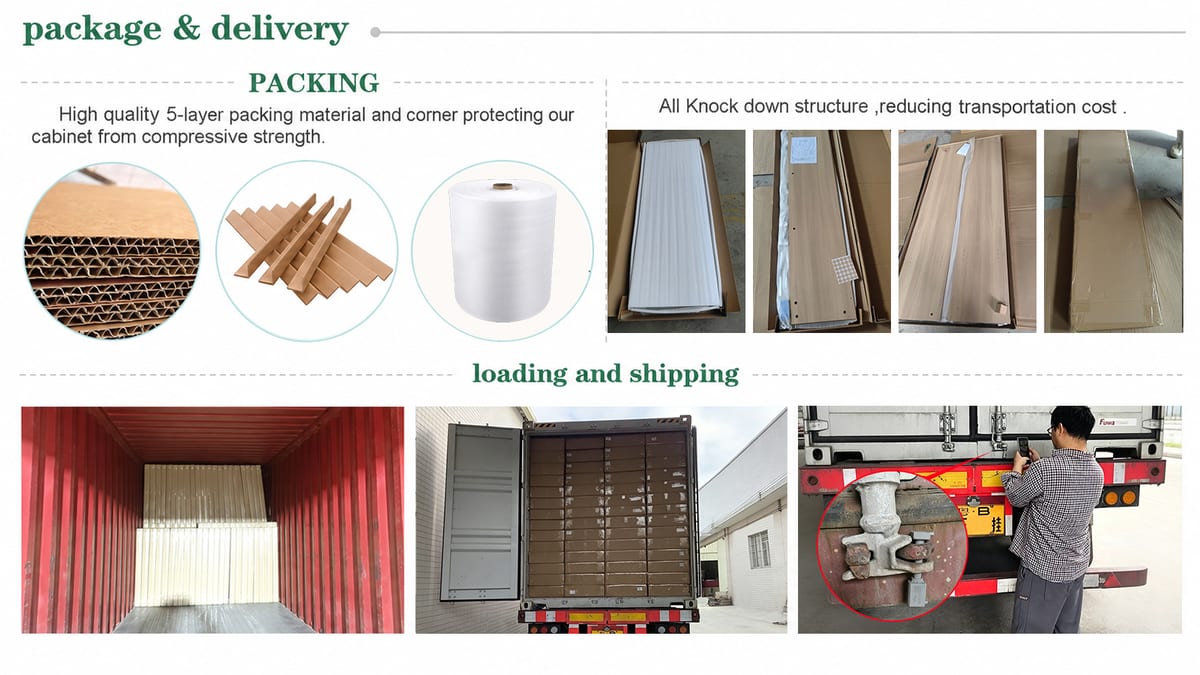
After selecting the initial product combination, Xusheng calculates the packaging volume.
This is an important step because the factory purchase quantity and the actual container loading requirement are not the same thing.
A product may have a relatively small furniture structure but require a large carton.
Another product may have a higher unit price but occupy less packaging space.
Dealers therefore need to consider the carton dimensions of each product.
How to calculate CBM
For a rectangular carton, the basic formula is:
CBM = Length × Width × Height ÷ 1,000,000
Use centimetre for all three measurements.
For example:
Measurement | Size |
|---|---|
Length | 160 cm |
Width | 75 cm |
Height | 18 cm |
The carton volume is:
160 × 75 × 18 ÷ 1,000,000 = 0.216 CBM
If the order contains 50 cartons with the same dimensions:
50 × 0.216 = 10.8 CBM
This calculation can be repeated for every product category.
Xusheng actual calculation process
We generally follow this sequence:
1.Confirm the packaging length, width and height of each product.
2.Calculate the CBM of each carton.
3.Multiply the carton volume by the required carton quantity.
4.Calculate the total CBM for each product category.
5.Add the product categories together to obtain the preliminary order volume.
6.Check the total product weight and loading requirements.
7.Compare the proposed combination with the available container space.
8.Adjust the product quantities and combination according to the actual loading arrangement.
The preliminary calculation gives both parties a clearer picture of the proposed order.
However, the total CBM is only a starting point.
Why CBM alone is not enough
Two orders can have the same total CBM but require different loading arrangements.
This is because cartons have different:
● Lengths and widths.
● Heights.
● Shapes.
● Weights.
● Stacking limitations.
● Protection requirements.
For example, a long desktop carton cannot always be arranged in the same way as a compact hardware carton.
The final arrangement needs to consider the actual carton dimensions and the available space.
This is why Xusheng combines preliminary CBM calculations with practical loading experience.
4. Improve Container Space Utilization Without Creating Unnecessary Stock
After the initial CBM calculation, there may still be unused space in the proposed container plan.
This is where the product combination may need to be adjusted.
However, we do not believe that every remaining space should automatically be filled with additional furniture.
What does Xusheng do when space remains?
Our actual approach is straightforward.
First, review the existing loading arrangement.
We look at the carton dimensions, shapes and weights to see whether the current products can be arranged more efficiently.
This may involve changing the positions of certain products or adjusting their stacking arrangement.
Second, inform the customer if space is still available.
We do not simply add extra products without discussing the change.
The customer should know that the proposed container still has room for additional goods.
Third, recommend suitable products if additional space remains.
We generally prioritize products that already sell well in the customer's local market.
For example, if the dealer regularly sells straight desks and mobile pedestals, increasing those quantities may be more commercially sensible than adding another product category that has not yet been tested.
What if there is not enough space for another suitable product?
Then we do not force the issue.
A container does not become a better commercial purchase simply because every available space has been occupied.
The dealer may be better off keeping the existing combination rather than buying unnecessary stock.
We would rather leave some space than encourage a dealer to buy products they may struggle to sell.
A practical way to review the remaining space
Before adding products, consider:
Question | Why it matters |
|---|---|
Does the product sell regularly? | Reduces unnecessary inventory risk |
Is there existing demand? | Helps justify the additional quantity |
Does the carton fit the remaining space? | Improves loading efficiency |
Is the weight suitable? | Supports safe loading arrangements |
Does the dealer already have enough stock? | Avoids excessive inventory |
Will the product complete an existing range? | Maintains sales flexibility |
The best additional product is not necessarily the smallest carton.
It is the product that makes commercial sense and can also be loaded safely and efficiently.
5. Consider Product Weight, Carton Shape and Loading Order
Container loading needs to be planned before the goods arrive at the loading area.
At Xusheng, we prepare an initial loading arrangement according to the product characteristics.
The actual sequence is then adjusted by the loading team according to the conditions on site.
What affects the loading arrangement?
Several factors need to be considered together:
● Carton dimensions.
● Product weight.
● Carton shape.
● Packaging protection.
● Stacking suitability.
● Loading sequence.
● Available container space.
Large and heavy products need suitable positions.
Products with packaging that requires additional protection should not be subjected to unsuitable pressure.
Smaller accessory cartons also need to be identified and positioned so that they can be located later.
Why the loading sequence matters
If the loading order is not considered in advance, certain products may become difficult to position once the container is partly full.
This can create unused spaces and make it harder to load the remaining products safely.
Preparing the loading plan beforehand gives the team a clearer starting point.
However, the plan should not be treated as completely fixed.
The loading staff may need to make practical adjustments according to the actual carton arrangement and available space.
The important thing is to maintain the agreed product quantities and protect the goods while making sensible use of the container.
6. Follow a Clear Container Loading Process
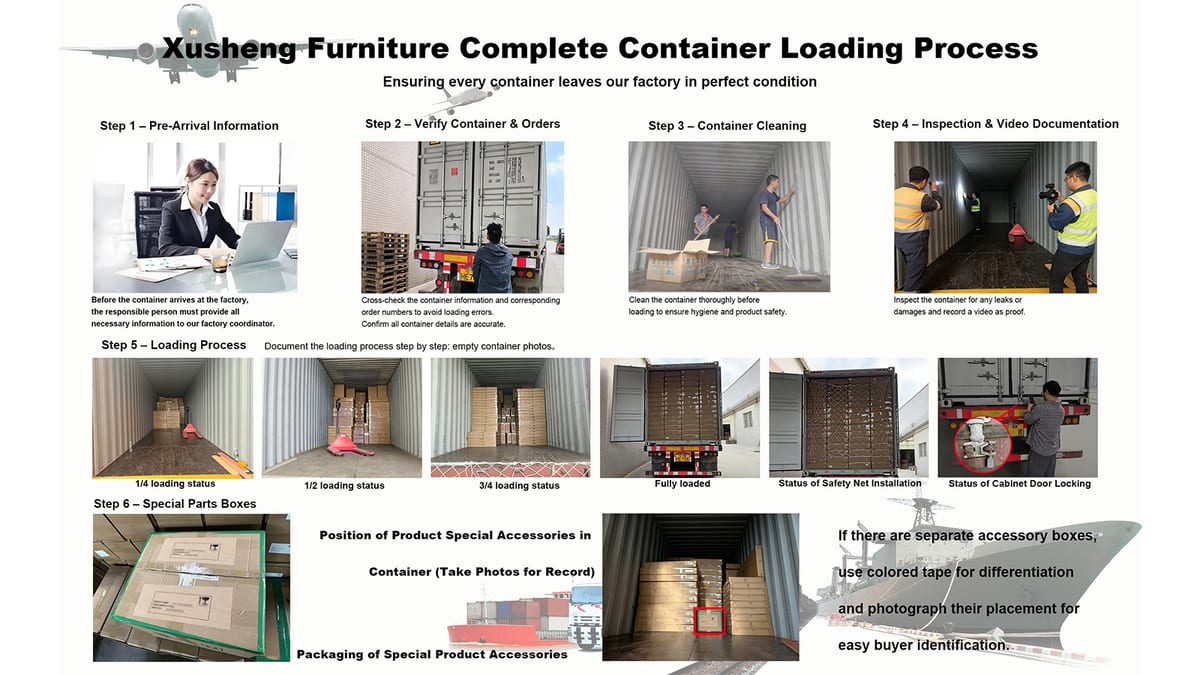
At Xusheng, container loading is managed through a defined process.
It begins before the container arrives and continues until the doors are closed.
The purpose is to make sure the correct container is prepared, the goods are checked and the loading process is properly documented.
Step 1: Prepare before the container arrives
Before the container reaches the factory, the responsible person provides the necessary information to the factory coordination team.
This allows the relevant departments to prepare for the loading arrangement.
Step 2: Verify the container and order information
The team checks the container information and corresponding order numbers.
This helps ensure that the correct goods are assigned to the correct shipment.
Step 3: Clean the container
The container is cleaned before loading.
A clean and suitable loading environment is important for protecting the furniture packaging.
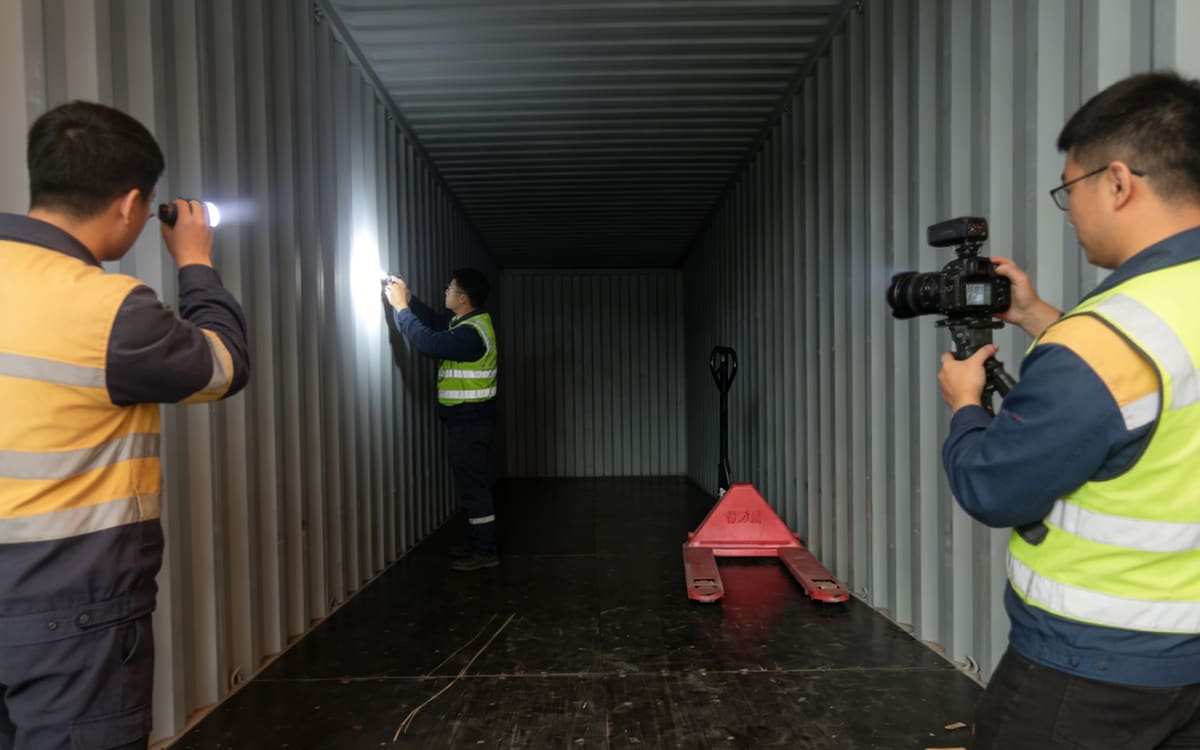
Step 4: Inspect the empty container
The team checks the container for:
● Water leakage.
● Visible damage.
● Other conditions that may affect the goods.
A video is recorded to retain evidence of the container's condition before loading.
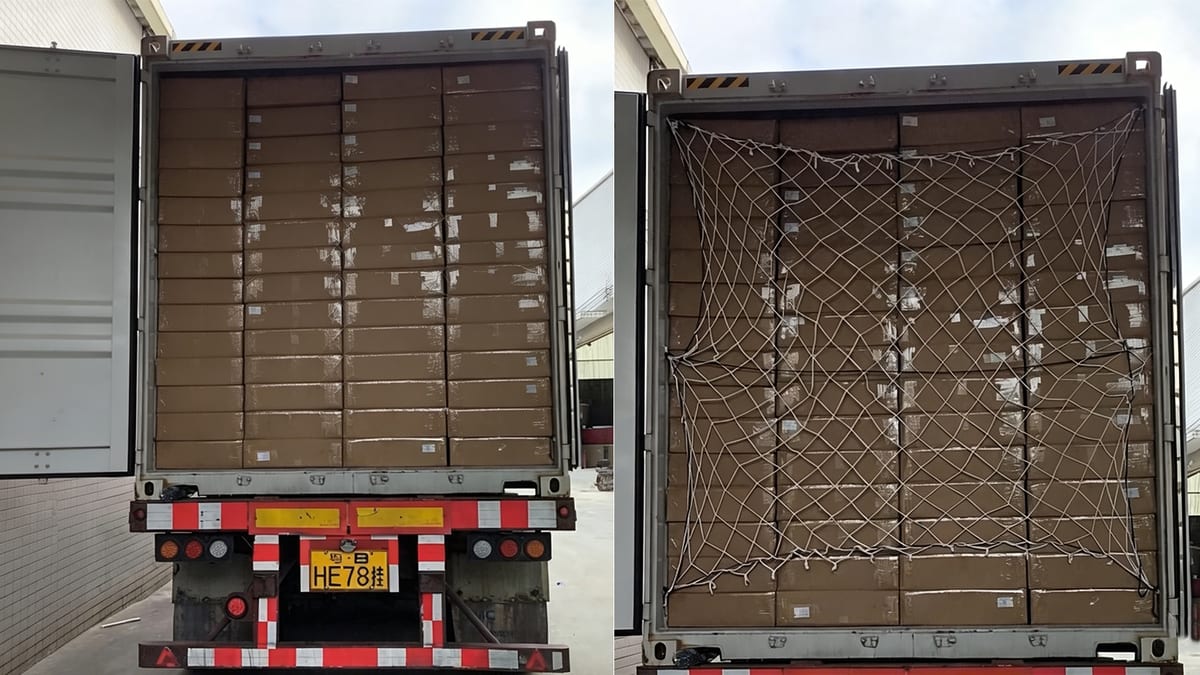
Step 5: Record the loading progress
Photographs are taken at several stages:
● Empty container.
● Approximately one-quarter loaded.
● Approximately half loaded.
● Approximately three-quarters loaded.
● Fully loaded container.
The safety net installation and container door locking are also recorded.
These photographs and videos provide a visual record of the loading process.
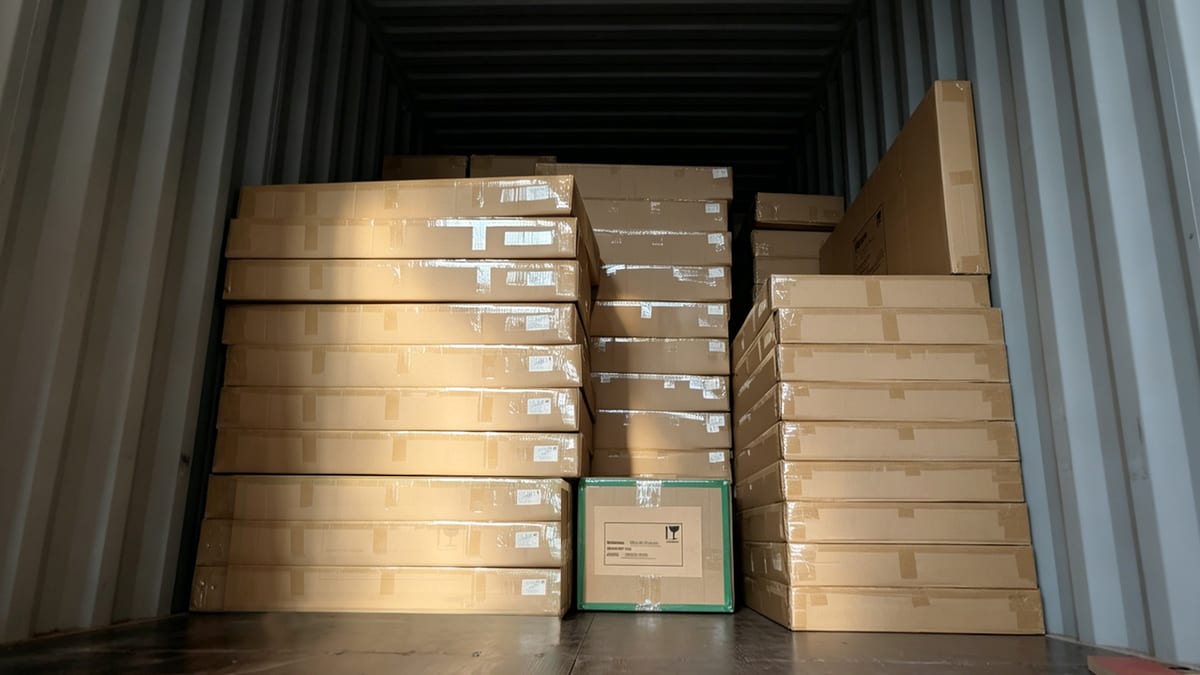
Step 6: Identify special accessory boxes
Some orders contain accessory boxes that require particular attention.
Xusheng uses different coloured tape to distinguish these boxes.
In the long-term dealer case discussed later in this article, special accessory boxes were sealed with green tape.
Their positions were photographed after loading and shared with the customer.
This makes it easier for the dealer to identify the boxes when the container arrives.
Why loading records matter
A container loading record is not simply a collection of factory photographs.
It helps answer practical questions:
● Was the container inspected before loading?
● How did the loading progress?
● Were special accessory boxes included?
● Where were these boxes positioned?
● What did the completed container look like?
These records give the customer a clearer understanding of the shipment before it reaches the destination.
7. Prepare the Warehouse and Delivery List Before Loading
A good loading plan can still fail if the wrong products are picked from the warehouse.
This is why product checking and warehouse preparation are important parts of container planning.
At Xusheng, the business team prepares the delivery list according to the customer's confirmed order.
The warehouse team then uses the list to count and organize the products before loading.
The warehouse checking process
1.Prepare a detailed delivery list according to the customer order.
2.Check each product by model and quantity.
3.Arrange different products in separate areas according to their models or categories.
4.Compare the actual quantities with the confirmed order.
5.Investigate any shortages or model differences before loading.
6.Provide the final list to the loading team.
7.Record the products and quantities actually loaded.
This process helps prevent products from being missed, mixed up or assigned to the wrong container.
Why product identification matters
Office furniture orders often contain many similar-looking products.
A shipment may include several desk models, different cabinet sizes, mobile pedestals and separate hardware boxes.
Clear product identification makes it easier for warehouse staff to check the order and for the dealer to receive and organize the goods.
The same principle should continue through the packaging and carton labeling process.
The dealer should not have to open every carton just to identify which product it contains.
8. Plan the Next Order Before the Current Stock Runs Out
Container planning should not stop when the shipment leaves the factory.
For an established dealer, the next purchasing decision should be connected to the sales performance of the previous order.
A product that sells quickly may need replenishment before the remaining stock reaches zero.
Another product may still be sitting in the warehouse.
The next container should reflect these differences.
What does Xusheng track after shipment?
We retain information about:
● Product models.
● Ordered quantities.
● Product specifications.
● Colour.
● Materials.
● Hardware configurations.
● Product specifications.
We also communicate with customers to understand their actual sales performance.
The key questions include:
● Which products are selling quickly?
● Which products have already sold out?
● Which products still have sufficient stock?
● Have new projects created additional demand?
● Are certain colour or configurations performing better?
● Does the dealer need to adjust the next purchasing combination?
Plan replenishment around the production and shipping timeline
Xusheng normal production lead time is approximately 45 days, depending on the order and production conditions.
International shipping and destination-side transportation also take time.
Therefore, dealers should not wait until their popular products have completely sold out before starting the next purchasing discussion.
We use historical order information and the customer's sales situation to help plan replenishment in advance.
The objective is to reduce the risk of stock shortages while avoiding unnecessary purchases.
Adjust the next container using real sales information
A repeat order should not automatically copy the previous order.
If straight desks have sold well, their quantities may be increased.
If meeting tables are moving more slowly, their quantities may be reduced.
If the dealer has secured a new office project, the next order may need additional specific products.
This is how container planning becomes part of an ongoing purchasing relationship rather than a one-off shipping arrangement.
9. What If the First Container Does Not Sell as Expected?
Not every product combination performs exactly as planned.
A dealer may discover that certain products sell more slowly than expected.
Some colour may not suit local customer preferences.
A particular furniture category may occupy more warehouse space than anticipated.
This does not mean that the entire product range needs to be abandoned.
It means the next purchasing plan should be reviewed.
How Xusheng helps adjust the next order
Our approach includes:
Increase proven bestsellers.
If certain desks or storage products have performed well, we can consider increasing their quantities in the next order.
Reduce slow-moving products.
Products that have not sold as expected should be reviewed rather than automatically reordered.
Review colour and accessories.
Some markets may prefer different board colour, modern finishes or updated accessories.
For example, certain European and American markets show interest in height-adjustable desks and functional accessories such as wireless charging.
Depending on the dealer's market, these products or configurations can be introduced in small quantities to test demand.
Keep the necessary supporting products.
Reducing slow-moving stock does not mean removing every complementary product.
A dealer still needs a reasonably complete product range to respond to different customer requirements.
Plan around new projects.
If the dealer has secured a new office furniture project, specific products can be added to the next purchasing plan.
Test before increasing quantities.
When introducing a new model, colour or configuration, we may recommend starting with a smaller quantity.
If the product sells well, the dealer can increase the quantity in future orders.
The next container should reflect what actually happened
The important point is to use sales information rather than repeat the same purchasing plan without review.
This helps the dealer improve stock turnover and use purchasing funds more effectively.
10. Balance Container Space, Purchasing Budget and Dealer Profitability
A container plan should consider more than the number of products that can be loaded.
It should also consider how much the dealer spends and whether the products are suitable for their intended selling prices.
A product may fit perfectly into the remaining container space but still be a poor purchase if its local retail price is too low or its sales potential is limited.
At Xusheng, we consider the customer's market positioning and target selling price when discussing product configurations.
Different configurations can create different price options
For the same general product style, different configurations may be available.
For example, the dealer may compare:
● Different steel frame structures.
● Different hardware options.
● Different accessories.
● Different product finishes.
● Different product configurations.
These choices can affect the quotation and the product's market positioning.
We can provide different quotation options so that the customer can compare the specifications, costs and commercial implications.
We do not simply choose the more expensive option on the customer's behalf.
The final decision should reflect what the dealer wants to sell and what their customers are prepared to pay.
Compare the commercial value of the proposed container
Before increasing quantities, consider:
Factor | What to evaluate |
|---|---|
Product purchase value | Total factory purchasing cost |
Product quantities | Whether the proposed quantities match demand |
Total CBM | Whether the products fit the proposed container plan |
Product weight | Whether the loading arrangement is suitable |
Freight allocation | |
Local selling price | Whether the products fit the target market |
Stock turnover | How quickly the products are expected to sell |
Cash flow | Whether the additional purchase is financially sensible |
Future replenishment | Whether the product range can be maintained |
We also consider the dealer's overall business rather than focusing only on the purchasing budget.
If increasing the order would put unnecessary pressure on the customer's cash flow, we may recommend keeping the original quantities.
If the customer's budget does not match the product quality or positioning they want, we explain the difference and discuss more suitable alternatives.
Sometimes the right decision is to reduce the order.
A larger order is not automatically a better order.
The purpose of container planning is to support the dealer's business, not simply increase the factory's sales value.
11. Real Case: How Xusheng Planned and Delivered Three 40HQ Containers for a Long-Term Dealer
Our experience with overseas dealers has taught us that successful container planning is about more than loading furniture efficiently.
It also involves understanding the customer's business, organizing a large product order and making the goods easier to identify and handle after delivery.
One of our long-term customers provides a good example.
About the customer
The customer is a well-known office furniture dealer in their local market, operating approximately five to six large furniture stores.
Xusheng and this customer have worked together for around 12 years.
Over this period, we have developed a long-term working relationship and a clear understanding of their product and delivery requirements.
The actual order
For one of the customer's large purchasing orders, the product combination included nine categories.
Product | Quantity |
|---|---|
Manager Straight Desks | 180 |
L-shaped Executive Desks | 60 |
16-person Conference Tables | 8 |
Coffee Tables | 20 |
6-person Dining Tables | 30 |
Low Filing Cabinets | 80 |
Tall Filing Cabinets | 50 |
Five-tier Display Cabinets | 20 |
Three-drawer Mobile Pedestals | 150 |
Total | 598 units |
The reported purchasing value was more than USD 328,000.
The order required three 40HQ containers to complete the shipment.
This was not a simple order containing only desks.
It included executive furniture, meeting tables, dining tables, filing cabinets, display cabinets and mobile storage.
How the three containers were arranged
Rather than loading every product category randomly, Xusheng organized the shipment according to furniture types.
One container was mainly allocated to office desks.
Another was mainly used for filing cabinets and storage furniture.
The remaining products were distributed according to their carton dimensions, weights and the available container space.
The loading positions were adjusted to improve space utilization.
This approach helped organize the different product categories while allowing the loading team to make practical adjustments.
Warehouse checking before loading
Before loading, Xusheng sent the customer the delivery list.
The warehouse team then:
1.Counted the products according to their models and quantities.
2.Arranged different furniture categories in separate areas.
3.Checked the actual quantities against the confirmed order.
4.Verified any differences before loading.
5.Used the final delivery list to allocate products to each container.
6.Recorded the products and quantities loaded.
This provided a clear reference for the loading team and reduced the risk of missing or incorrectly assigned products.
Special accessory identification
Some accessory boxes required particular attention.
Xusheng sealed these boxes using special green tape so that they could be distinguished from the other packages.
After the boxes were loaded, we photographed their positions and shared the pictures with the customer.
This small detail made it easier for the customer to identify the relevant accessory boxes when the containers arrived.
Loading records and shipment updates
All three containers were loaded as planned.
The actual loaded quantities matched the customer's confirmed order list.
Xusheng also provided the relevant loading photographs and videos, including the special accessory box records.
The customer could therefore see how the goods were loaded and how the specially marked packages were positioned.
What did the customer say after receiving the goods?
The customer raised no objections regarding the product quantities.
They also praised the packaging design and printing, as well as the protective measures used during transportation.
One detail was particularly important to them.
The different product categories could be identified easily from their packaging during unloading.
This made it much easier to count and organize the goods after arrival.
The clear packaging and identification also saved the customer's time, labour and resources during unloading and stocktaking.
For a dealer operating several large furniture stores, this kind of practical detail can make a real difference to warehouse operations.
A long-term working relationship
The customer has continued working with Xusheng to the present day.
For us, this case demonstrates why container planning should consider the complete delivery process.
It is not only about how many products fit inside a container.
It is also about whether the products are correctly counted, clearly identified, properly protected and easy for the customer to receive.
Good container planning should make the dealer's work easier before, during and after delivery.
12. A Practical 40HQ Office Furniture Container Planning Checklist
Before confirming a 40HQ order, dealers and manufacturers should review the following areas together.
Planning stage | What to check |
|---|---|
Dealer background | Market, business model and customer base |
Existing inventory | Warehouse capacity and remaining stock |
Sales performance | Bestsellers and slow-moving products |
Project requirements | Existing and expected project orders |
Purchasing budget | Available funds and purchasing capacity |
Product selection | Main products and supporting categories |
Product quantities | Quantity of each model |
Packaging dimensions | Length, width and height of each carton |
CBM calculation | Volume by product and total order |
Product weight | Total weight and loading requirements |
Container planning | Proposed 20HQ or 40HQ arrangement |
Space optimization | Carton shape, stacking and loading positions |
Warehouse preparation | Product identification and quantity checking |
Loading process | Container inspection, cleaning and loading records |
Special accessories | Separate identification and location records |
Shipment documents | Packing list, container number and seal number |
Replenishment | Production lead time and shipping schedule |
Future purchasing | Adjustments based on actual sales performance |
Not every order requires the same product combination or loading method.
The checklist should be adapted to the customer's actual requirements.
Conclusion: Plan the Container Around the Dealer's Business
A 40HQ container represents a significant purchasing commitment for an office furniture dealer.
The decision should therefore involve more than selecting products and calculating CBM.
Dealers need to consider what their local market buys, how much stock they already hold, which products sell regularly and what they need to support future projects.
The manufacturer should then help translate those requirements into a practical product combination, calculate packaging volume, review weight and loading arrangements, and prepare the warehouse and delivery list.
At Xusheng, we also believe that container planning continues after shipment.
We keep product and order records, communicate with customers about sales performance and use that information to help plan future replenishment.
If some products sell faster than expected, we can discuss increasing their quantities.
If others move more slowly, we can review the product mix and consider more suitable colour, accessories or configurations.
Our aim is not to persuade customers to buy as much as possible in one order.
It is to help them purchase the right furniture, manage their inventory and build a product range they can continue selling.
A container should be measured not only by how much it carries, but also by how well the products inside support the dealer's business.
At Xusheng, we want every container to be a sensible step towards the customer's next successful order.
Discuss Your Next Office Furniture Container with Xusheng
Planning your first 40HQ office furniture order from China, or looking to improve the product mix of your next shipment?
Share your product requirements, target market, current inventory and purchasing plans with our team.
Xusheng can help review the product combination, calculate packaging CBM, discuss loading arrangements and prepare a purchasing plan based on your business needs.
Guangzhou Xusheng Furniture Co., Ltd.
WhatsApp / WeChat: +86 159 9966 3767
Email: [email protected]
CTA: Discuss Your Office Furniture Specifications
Your success is our success. When your products sell well and your business grows, Xusheng has the opportunity to grow with you.
Primary CTA:
Discuss Your Sourcing Plan
Secondary CTA:
Explore Xusheng Furniture Systems
FAQ
Frequently asked questions
011. How many office furniture products can fit into a 40HQ container?
There is no single fixed quantity. It depends on the carton dimensions, product types, weight, packaging structure and loading arrangement. A proper plan should be calculated using the actual packaging information of each product.
022. How do you calculate CBM for office furniture?
Multiply the carton length, width and height in centimetres, then divide by 1,000,000. Calculate each product's carton volume and multiply it by the required quantity to obtain the preliminary total CBM.
033. Should dealers fill every available space in a 40HQ container?
Not necessarily. Additional products should only be considered if they suit the dealer's market and purchasing needs. Buying unnecessary stock simply to fill the container can create inventory and cash-flow pressure.
044. Which office furniture products should a new dealer prioritise?
Straight desks, mobile pedestals and side cabinets are useful starting categories. Meeting tables, reception desks, workstations and other products should be added according to local demand and the dealer's target customers.
055. How does Xusheng improve container loading efficiency?
Xusheng calculates preliminary CBM, reviews carton dimensions and weight, plans the loading sequence and adjusts product positions according to actual conditions. If space remains, we inform the customer and may recommend suitable bestsellers.
066. Does Xusheng help customers plan mixed office furniture containers?
Yes. We consider the dealer's market, product requirements, inventory and budget before recommending a combination of office desks, storage, meeting furniture, workstations and other suitable products.
077. What loading records does Xusheng provide?
Depending on the order, records include empty-container inspection photos and videos, loading progress at different stages, final loading photographs, safety-net and door-locking records, special accessory box positions, the packing list, container number and seal number.
088. How should dealers plan their next container after receiving the first shipment?
Review sales speed and remaining stock by product. Increase proven bestsellers, reduce slow-moving items and consider new products or configurations in smaller quantities before expanding them. The next order should reflect actual sales performance.
099. When should a dealer start planning the next replenishment order?
Dealers should consider their sales speed, remaining stock, Xusheng's normal production lead time of approximately 45 days and the additional international shipping time. It is better to start planning before popular products run out.
1010. Can Xusheng help a dealer adjust the product mix to fit a target budget?
Yes. Xusheng can discuss different product configurations, steel frames, hardware and accessories, then compare their costs and suitability. The objective is to find a sensible combination for the dealer's market rather than simply increase the order value.
Looking for a supplier?
Need a product, sample, or project quote?
Use the catalog to choose products, then send the list for manufacturing, dealer, OEM / ODM, or project support.