
Mixed-Container Orders for Office Furniture Dealers: How to Build a Better Product Range and Reduce Stock Risks
Mixed-container orders help office furniture dealers test products, manage stock risks and grow complete ranges. Learn how Xusheng supports smarter purchasing through a 13-year partnership with a Costa Rican dealer.
Mixed-Container Orders for Office Furniture Dealers: How to Build a Better Product Range and Reduce Stock Risks
Introduction: Why Mixed-Container Orders Matter to Office Furniture Dealers
For many office furniture dealers, importing from China is not simply about finding products at the right price. It is about deciding what to buy, how much to buy and whether those products will actually sell in their local market.
This becomes particularly important when working with a new manufacturer or introducing unfamiliar furniture ranges.
Buying a full container of one desk model may seem straightforward, but it also means putting a large part of the purchasing budget into a single product. If local demand is weaker than expected, the dealer may end up holding stock for longer than planned.
A mixed-container order offers another approach.
Instead of purchasing one product type in large quantities, dealers can combine different office furniture models, series and categories within the same shipment. This allows them to test more products, serve different customer groups and gradually build a broader product range.
However, mixed purchasing is not simply about putting as many products as possible into one container. Each product still needs to meet reasonable MOQ, production, material, packaging and loading requirements.
At Xusheng, we support dealers in planning mixed orders around their actual market demand, existing stock and business development plans.
For dealers who are still evaluating their sourcing strategy, our guide to Sourcing Office Furniture from China provides a broader look at supplier selection and long-term purchasing considerations.
In this article, we explain how mixed-container orders work in practice, what dealers should consider before placing an order and how a Costa Rican dealer developed a broader office furniture business through a gradual purchasing approach.
1. What Is a Mixed-Container Office Furniture Order?
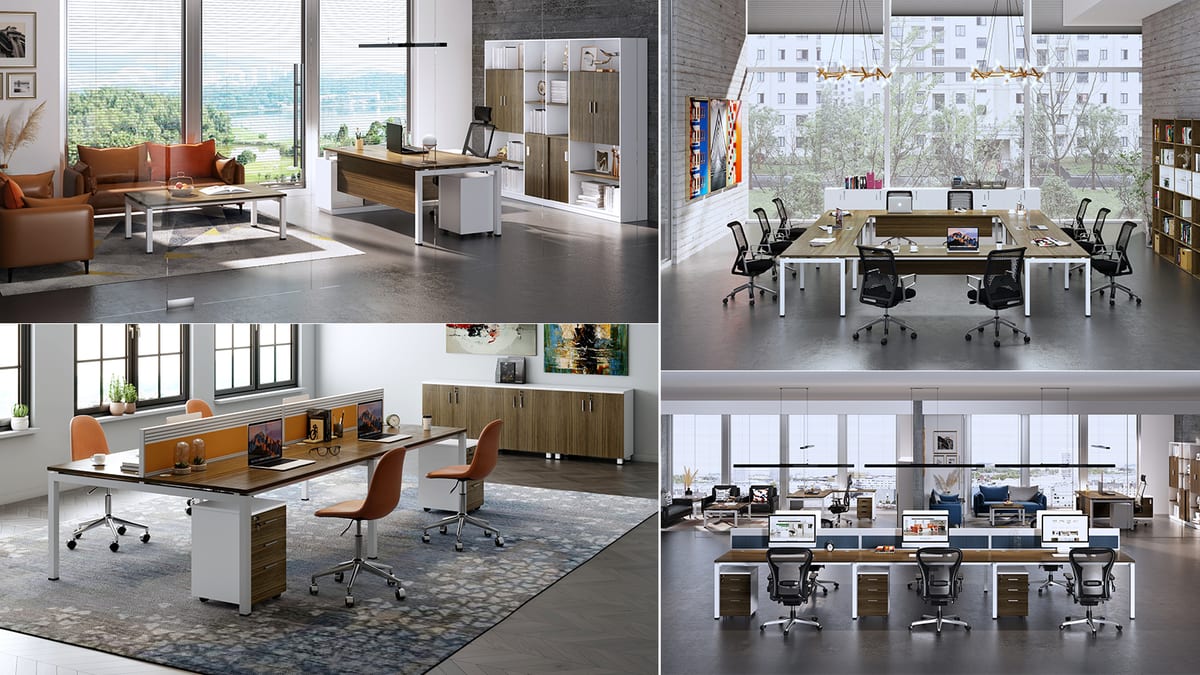
A mixed-container order means purchasing different office furniture products within one shipping container rather than filling the entire container with a single model or product category.
Depending on the customer's requirements and production conditions, a mixed order may include:
● Executive desks
● Manager desks
● Straight office desks
● L-shaped desks
● Individual workstations
● Multi-person workstations
● Meeting tables
● Filing cabinets
● Mobile pedestals
● Office chairs
Dealers can also combine different product series, sizes, colours and configurations.
For example, a dealer may want to purchase straight desks from two different series, add matching mobile pedestals, and include several filing cabinets and workstations.
This allows the dealer to introduce a broader selection without committing all their purchasing budget to one product.
At Xusheng, we support mixed orders involving panel furniture, steel furniture and office chairs, subject to product MOQ, production arrangements and packaging requirements.
The important point is that mixed-container purchasing provides flexibility, but it does not remove every production limitation.
2. Can Different Office Furniture Models Be Mixed in One Container?
Yes. Different office furniture models and categories can be combined in one container, provided the order is commercially and technically workable.
For example, customers may combine:
Product Category | Possible Products |
|---|---|
Executive Furniture | Executive desks and side cabinets |
Manager Furniture | Straight desks and L-shaped desks |
Workstations | Single and four-person workstations |
Storage | Low and tall filing cabinets |
Accessories | Mobile pedestals |
Seating | Office chairs |
Customers can select products according to their local market, customer groups and existing product range.
However, there are several points to consider before confirming the order.
First, product compatibility.
Different products may require different materials, hardware, production processes and packaging arrangements.
Second, production feasibility.
Some products may share similar structures or manufacturing processes, making it possible to negotiate quantities more flexibly. Others may require separate production arrangements.
Third, colour consistency.
Although different models can be mixed, producing too many colours in small quantities can increase material waste, production changes and purchasing costs.
Finally, container planning.
Every product needs to be considered in terms of carton dimensions, weight, shape and stacking requirements.
A good mixed order should be planned before production begins, rather than leaving all decisions until the loading stage.
3. Understanding MOQ When Mixing Different Products
One of the first questions dealers ask is whether they can order fewer units of each product when placing a mixed-container order.
At Xusheng, the normal MOQ for a standard SKU is 30 units.
However, this does not mean every mixed order must follow exactly the same arrangement.
Depending on the circumstances, we may evaluate different options.
Order Situation | Xusheng Approach |
|---|---|
Standard products | Normally 30 units per SKU |
Similar product structures | MOQ may be negotiated |
Long-term customers | Flexibility may be considered |
Project orders | Calculated according to drawings and specifications |
Quantities below MOQ | Production costs and feasibility are evaluated |
Impractical quantities | Order adjustments may be recommended |
For example, two products from the same series may have similar structures and manufacturing requirements. Depending on the actual situation, we may assess whether their quantities can be arranged more flexibly.
For long-term customers, we also consider the cooperation history and the overall order.
However, we do not promise to produce quantities that are not commercially or technically reasonable simply to accommodate a mixed order.
Dealers should also understand that a full container does not automatically mean every individual SKU can be produced without MOQ restrictions.
4. How to Choose the Right Product Mix for Your Local Market
A mixed container should be built around what the dealer can realistically sell, not simply the number of products available from the manufacturer.
Before recommending a product combination, we consider several aspects of the customer's business:
● Local market demand and popular furniture styles.
● Existing stock and warehouse capacity.
● Purchasing budget and financial capability.
● Main customer groups.
● Whether the dealer handles office projects.
● Expected replenishment frequency.
We generally divide the product range into three groups.
Core Products
These are products that dealers are more likely to sell regularly.
For smaller and medium-sized office furniture dealers, straight desks and mobile pedestals are often important products.
A straight desk can be sold individually or combined with other furniture.
Supporting Products
These products help dealers offer more complete furniture combinations.
Examples include:
● Executive side cabinets
● Manager desks
● Filing cabinets
● Storage furniture
They allow dealers to offer more than an individual desk.
Products for Market Testing
Some products may have lower sales frequency or less predictable demand.
Meeting tables, reception desks and newly introduced furniture models may be included in smaller quantities initially.
This does not mean these products are unsuitable. It simply means their purchasing quantities should reflect actual local demand.
A dealer who handles office projects may need a different combination from a retailer who mainly sells individual desks to local customers.
The right product mix should therefore reflect the dealer's business, rather than follow a fixed container formula.
5. How Xusheng Calculates Prices for Mixed Orders
When a customer selects several product models, each SKU needs to be quoted according to its confirmed specifications.
At Xusheng, we calculate each product separately based on:
1. Confirmed product dimensions and specifications.
2. Board materials and thickness.
3. Steel frame specifications.
4. Hardware and accessories.
5. Product colours and configurations.
6. Order quantities.
7. Packaging requirements.
Material purchasing costs may change, so each product is quoted according to the relevant costs at the time of quotation.
After calculating the individual products, we combine them into one complete order quotation.
We also provide relevant packaging information, including carton dimensions, product weight and CBM, to support container planning.
If the customer changes only two or three SKUs, we normally recalculate the affected products rather than automatically changing the entire quotation.
For example, if a customer changes the colour of one desk model but keeps the remaining products unchanged, the revised quotation focuses on the affected item.
This makes it easier for dealers to adjust their product combinations without unnecessarily restarting the whole quotation process.
We can also provide FOB quotations according to the customer's requirements.
Import duties, customs clearance and destination port charges are normally handled by the customer or their appointed agent. Dealers should therefore confirm these costs separately when calculating their overall purchasing budget.
For a more detailed understanding of purchasing expenses, read our guide to the real cost of importing office furniture.
6. Why Material and Colour Consistency Matter in Mixed Orders
One common mistake when planning a mixed container is trying to introduce too many colours across too many product models in a relatively small order.
At first, this may seem like a good way to offer more choices. In practice, it can make production considerably less efficient.
At Xusheng, different models may have different steel frame designs, but we generally recommend using the same steel frame colour within one production batch.
We also recommend keeping board materials and colours consistent wherever possible.
Why?
Because small quantities combined with multiple colours and models can increase:
● Material purchasing complexity.
● Production changeover time.
● Material waste.
● Labour costs.
● Production costs.
● Overall purchasing costs.
For a typical 40HQ order, we generally recommend keeping the main colour scheme consistent.
If the customer needs several colours, we can evaluate the quantities and arrange production in separate batches where practical.
Larger orders, such as two or more 40HQ containers, may provide more opportunities to consider the same model in different colours, depending on the actual quantities and production requirements.
This is not a restriction on customisation. It is a way to help dealers achieve their preferred product appearance without unnecessarily increasing production costs.
7. Coordinating Production Across Different Product Categories
A mixed order often includes products that follow different manufacturing processes.
For this reason, Xusheng prepares an overall production plan based on the final confirmed purchasing list.
Different products are then arranged according to their manufacturing requirements.
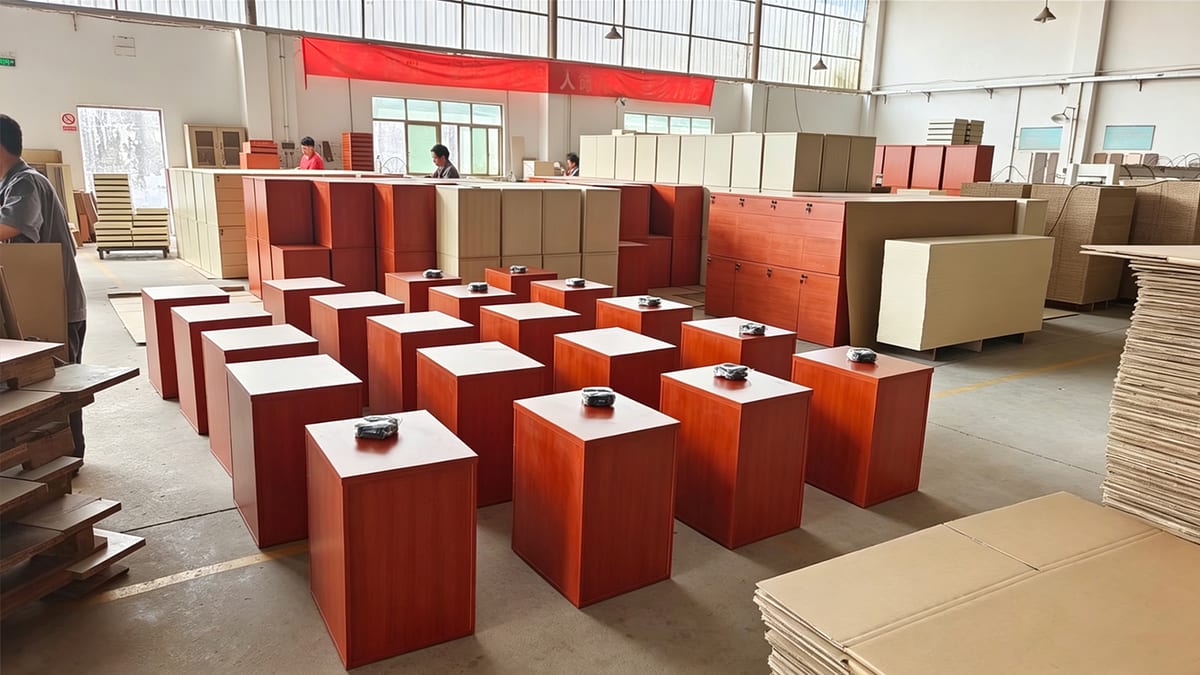
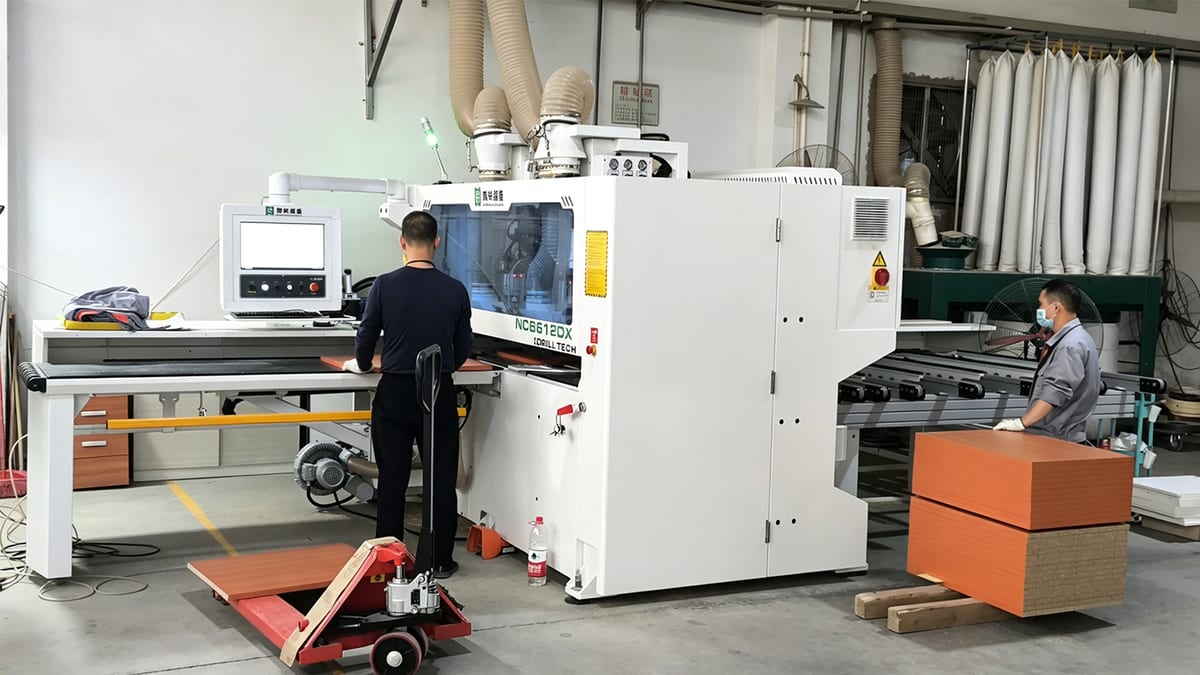
Panel Furniture
Typical production stages include:
● Board cutting
● Edge banding
● Drilling
● Trial assembly
● Quality inspection
● Packaging
Steel Frames
Steel frame production may include:
● Tube cutting and preparation
● Welding
● Grinding
● Surface treatment
● Powder coating
● Inspection
Office Chairs and Other Accessories
These products are coordinated through our established supply partners according to their production arrangements.
Not every SKU needs to start production at exactly the same time.
Different products can be completed in batches, while the overall production schedule is coordinated around the agreed order delivery plan.
Once products pass inspection and packaging checks, they are classified and stored in the warehouse until the remaining products are ready.
Before shipment, we carry out a final check against the complete order list to reduce the risk of missing products or accessories.
8. Product Inspection and Customer Updates Before Shipment
For a mixed order, it is important that customers know the status of different products before everything is loaded into the container.
At Xusheng, completed products are subject to sampling inspections and assembly tests.
Our sales team also takes photographs and videos to update customers.
These records include:
● Completed and packaged products.
● Carton appearance and packaging information.
● On-site product assembly.
● Assembly and functional testing.
● Product information and quantity checks.
● Progress updates and completed verification records.
These records are retained and shared with customers.
This gives dealers a clearer picture of what has been produced, inspected, tested and packed.
Once the product updates and order information have been confirmed, we communicate the final shipment details with the customer.
The customer can then prepare the remaining balance payment, while Xusheng arranges the final loading and shipment preparations.
9. Packaging and Packing Lists for Mixed Orders
When a container includes many different SKUs, clear carton identification becomes particularly important.
Without proper labelling, dealers may find it difficult to identify products during unloading, warehouse stocktaking and subsequent delivery.
Xusheng provides packaging arrangements according to the structure of each product.
Our actual packaging and identification practices include:
● Five-layer corrugated cartons.
● EPE, protective corners and other internal protection materials.
● Separate packaging for panels, steel frames and hardware.
● Product model identification on cartons.
● Customer logos, labels and shipping marks where required.
● Corresponding hardware packs and assembly instructions.
● Separate identification of special accessory boxes.
● Packaging checks before shipment.
Where requested, different-colour labels or other markings can be used to distinguish product categories.
We also provide customers with a detailed Packing List.
The Packing List includes product models, quantities and carton counts, allowing dealers to check incoming goods more efficiently.
For dealers handling several furniture categories, this is particularly useful when receiving a mixed container containing numerous different models.
10. Loading a Mixed Container: Product Safety Comes First
Mixed-container loading requires more planning than loading one product type.
Before loading begins, Xusheng calculates the CBM of each product according to its packaging dimensions.
We then plan the loading arrangement based on:
● Carton dimensions.
● Product weight.
● Carton shape.
● Stacking requirements.
● Product protection needs.
● Overall container space.
The loading plan is prepared in advance, but our on-site loading team can make practical adjustments according to the actual conditions.
Different product categories are arranged in an organised way.
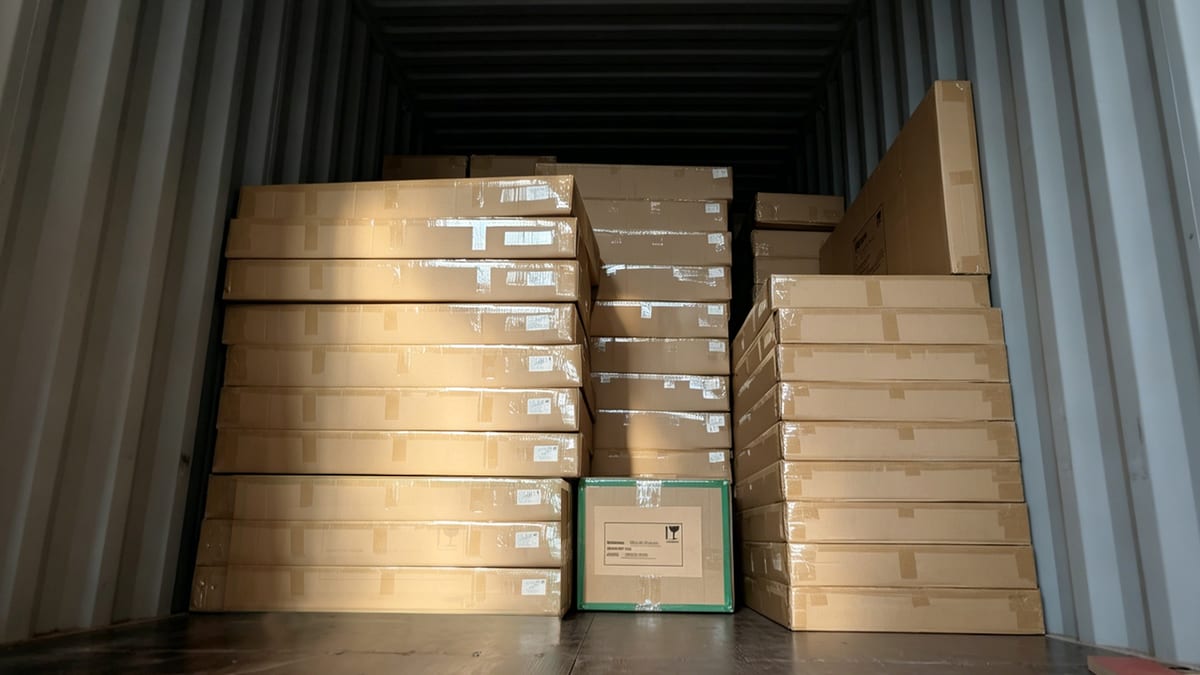
Special accessory boxes are marked separately using distinctive green tape, and their positions are recorded so that they can be identified later.
We also photograph and record the loading process, including:
● Empty container condition.
● Approximately one-quarter loaded.
● Half-loaded.
● Three-quarters loaded.
● Fully loaded container.
● Final container and seal information.
However, there is one principle we do not compromise on:
We will never sacrifice product protection just to fit more goods into a container.
Most of our furniture cartons are rectangular and relatively straightforward to arrange.
If a particular carton shape is unsuitable for stacking, we adjust its position to protect the product.
We do not change the protective packaging or force cartons into unsuitable spaces simply to increase container utilisation.
If the remaining space cannot be used safely, we would rather leave it unused than risk damaging the customer's goods.
11. Real Case: How a Costa Rican Dealer Built a Broader Office Furniture Business
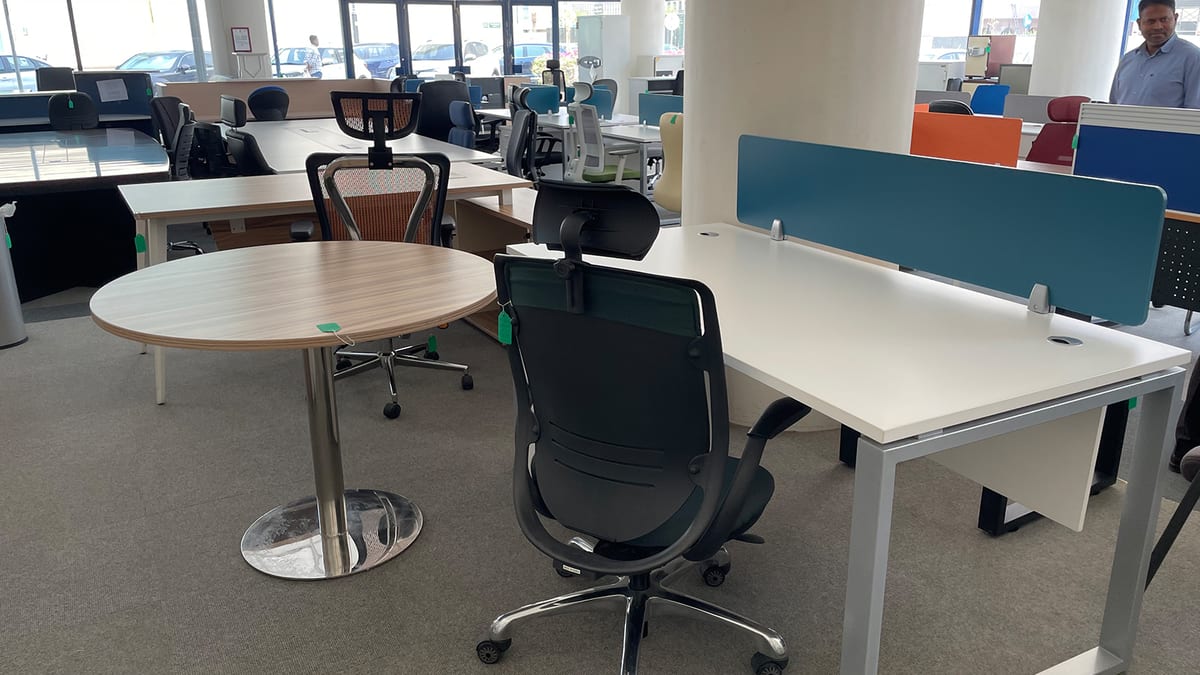
One of our long-term partners in Costa Rica provides a good example of how mixed-container purchasing can support the development of an office furniture dealer.
The customer operates approximately four to five furniture stores locally and has worked with Xusheng for around 13 years.
When we first started working together, the customer was already an established office furniture dealer.
He understood his local market and was looking for an additional manufacturer because his existing suppliers could no longer fully meet his furniture supply requirements.
For him, introducing Xusheng products was an opportunity to expand his existing product range.
First Order: Testing Two New Furniture Series
The customer initially selected two series:
● LEQI Series
● SINER ONE Series
He wanted to start with familiar and relatively straightforward products rather than introduce too many new categories at once.
His first order included:
Product | Quantity |
|---|---|
Straight Desks (both series combined) | 120 |
Mobile Pedestals (40 per series) | 80 |
Executive Side Cabinets | 80 |
Total | 280 units |
Shipment: 1 × 40HQ container.
Initially, the customer only intended to purchase straight desks from the two series as a way of testing their local market potential.
However, we suggested adding executive side cabinets.
The reason was straightforward.
A straight desk could already be sold individually, but adding a side cabinet created another product combination that could appeal to customers looking for a more complete manager's workspace.
The customer could therefore continue selling individual desks while also offering a more functional combination.
We did not recommend introducing the entire office furniture system immediately.
We wanted the customer to test the products first and see how the market responded.
Second Order: Expanding the Product Range
The first market test went well.
Both desk series sold successfully, and the mobile pedestals were also selling well alongside the desks.
The executive side cabinets created additional sales opportunities, and the customer found that combination furniture was considerably easier to sell than relying only on individual straight desks.
This was an important development.
A straight desk could still serve individual buyers, while a desk combined with a side cabinet could be offered to smaller and medium-sized offices.
The dealer was beginning to move beyond individual product sales and explore opportunities in office furniture projects.
Following the initial success, we recommended expanding the existing two series with additional system furniture products.
The second order continued with LEQI and SINER ONE, without introducing new series at that stage.
It included the following additional products:
Additional Products | Quantity |
|---|---|
Single Workstations | 60 |
Four-person Workstations | 60 |
L-shaped Office Desks | 80 |
Tall Filing Cabinets | 100 |
Low Filing Cabinets | 120 |
Additional product total | 420 units |
Shipment: 3 × 40HQ containers. The 420 units above represent the listed additional product categories, not the complete second-order quantity.
We deliberately kept the customer focused on the two series that had already shown promising market performance.
The next step was not to introduce everything at once, but to make the existing product range work more smoothly.
From Individual Sales to Office Furniture Projects
As the product range expanded, the customer began to explore more corporate office furniture opportunities.
When the customer secured their first corporate furniture project, Xusheng helped review the project drawings and plan the required furniture combination.
But instead of recommending that the entire project be purchased as new furniture from Xusheng, we took a different approach.
We first considered the customer's existing stock.
Products already available in the customer's warehouse were prioritised wherever they could meet the project requirements.
We then arranged additional purchases only for the remaining products needed to complete the project.
This approach helped the customer:
● Reduce unnecessary purchasing expenditure.
● Make better use of existing inventory.
● Meet the project's furniture requirements.
● Maintain consistency across the overall furniture arrangement.
● Avoid purchasing products they already had in stock.
For the customer, this was more useful than simply receiving another quotation for a completely new furniture order.
It also demonstrated why we believe long-term cooperation should go beyond product supply.
We want to help our dealers sell more effectively, manage their stock and develop their businesses.
Today, after around 13 years of cooperation, the customer continues to purchase from Xusheng, combining regular stock replenishment with project-related purchasing.
This is what we believe a long-term manufacturing partnership should look like.
12. Common Mistakes Dealers Should Avoid When Planning Mixed Orders
Mixed-container purchasing provides flexibility, but poor planning can still create unnecessary costs and stock pressure.
Based on our experience working with overseas dealers, we recommend avoiding the following mistakes.
1. Introducing Too Many SKU at Once
A large number of product models may look attractive in a catalogue, but every additional SKU needs to be considered in terms of MOQ, production and stock management.
Start with products that have a clear market purpose.
2. Ignoring MOQ Requirements
Do not assume that a mixed container removes the minimum order quantity for every product.
Discuss quantities and production feasibility with your manufacturer before confirming the order.
3. Choosing Too Many Colours in Small Quantities
Different colours and configurations can increase production complexity.
Where possible, keep the main materials and colour scheme consistent within the same production batch.
4. Buying Products Just to Fill the Container
A full container is not necessarily a profitable container.
If a product has little demand in your market, purchasing more simply to use the remaining space may create a bigger inventory problem later.
5. Ignoring Existing Stock
Before placing a new order, check what is already available in your warehouse.
Some products may be suitable for existing customer orders or upcoming projects.
6. Treating Every Product as an Independent Sale
A desk, pedestal and side cabinet may each be sold individually, but together they can provide a more complete workspace solution.
Think about how different products can work together.
7. Failing to Plan Future Replenishment
A product that sells well today may need to be reordered before the warehouse runs out.
Consider the manufacturer's production lead time, which is normally around 45 days at Xusheng, together with international shipping time.
8. Choosing a Supplier Without Product Continuity
A mixed order may be the beginning of a longer product range.
Make sure your manufacturer can retain the approved product specifications, materials, colours, hardware and packaging records for future orders.
Our office furniture specifications checklist explains what dealers should confirm before placing an order and why consistent specifications matter.
13. How to Plan Your First Mixed-Container Order
If you are considering your first mixed-container order from China, we recommend following a practical sequence.
Step 1: Review Your Market
Identify the furniture categories and models that your customers are most likely to buy.
Step 2: Check Your Existing Inventory
Understand what you already have and which products need replenishment.
Step 3: Select Your Core Products
Prioritise established products with clearer sales potential.
Step 4: Add Supporting Products
Consider furniture that can be sold alongside your core products or help you serve more customer groups.
Step 5: Test New Products Carefully
Introduce unfamiliar products in manageable quantities rather than committing too much stock at the beginning.
Step 6: Confirm MOQ and Specifications
Check product quantities, materials, colours, hardware and production feasibility with your manufacturer.
Step 7: Review the Complete Quotation
Understand the individual product prices, packaging information and overall purchasing requirements.
Step 8: Plan Production and Loading
Confirm the production schedule, Packing List and container loading arrangements before shipment.
Step 9: Review Sales Performance
After receiving the goods, monitor which products sell well and which require adjustments.
Step 10: Plan the Next Order
Use actual sales and inventory information to improve your next mixed-container order.
A mixed-container order should not be treated as a one-off purchasing decision. It should be part of a continuous process of product selection, market testing, replenishment and product range development.
Conclusion: A Mixed Container Should Support Your Business, Not Just Fill Your Warehouse
For office furniture dealers, the value of mixed-container purchasing goes beyond combining different products in one shipment.
It provides an opportunity to introduce new furniture ranges, test local demand, reduce dependence on a single product and gradually develop a more complete product offering.
The experience of our Costa Rican partner demonstrates why this approach can work.
The relationship began with a relatively simple order of two furniture series in one 40HQ container. As the products performed well, the customer gradually expanded the range, moved into combination furniture sales and began serving more corporate office projects.
Over time, the relationship developed into a long-term purchasing partnership lasting around 13 years.
At Xusheng, we do not believe that the largest order is always the best order.
A suitable product combination, reasonable purchasing quantities and consistent product specifications are often more valuable than simply buying more furniture.
Our goal is not just to help dealers fill a container. It is to help them build a product range that they can sell, replenish and grow with over time.
If you are planning a mixed-container order, share your current product requirements and local market needs with Xusheng. We can review the product combination, quantities and production feasibility together.
Xusheng Furniture – Furniture That Grows With Your Business.
Guangzhou Xusheng Furniture Co., Ltd.
WhatsApp / WeChat: +86 159 9966 3767
Email: [email protected]
CTA: Discuss Your Office Furniture Specifications
Your success is our success. When your products sell well and your business grows, Xusheng has the opportunity to grow with you.
Primary CTA:
Discuss Your Sourcing Plan
Secondary CTA:
Explore Xusheng Furniture Systems
FAQ
Frequently asked questions
01Can I mix different office furniture series in one container?
Yes. Xusheng supports mixing different office furniture series, models, sizes, colours and configurations, subject to MOQ and production requirements.
02What is the minimum order quantity for mixed office furniture orders?
Our normal MOQ is 30 units per SKU. However, depending on product structures, manufacturing processes and cooperation history, some quantities may be negotiated.
03Can I mix office desks, filing cabinets and office chairs in one container?
Yes. Panel furniture, steel furniture and office chairs can be included in a mixed order, subject to production and packaging arrangements.
04Can I order different colours for the same furniture model?
Yes. Different colours can be considered, but we generally recommend consistent colours within the same production batch. Larger quantities may provide more flexibility for different colour arrangements.
05Will mixing different products increase the production lead time?
It depends on the product categories, specifications and production arrangements. Xusheng normally works with a standard production lead time of around 45 days and coordinates different products according to the overall order schedule.
06Can Xusheng help me decide which products to include in my first container?
Yes. We can review your local market, existing stock, purchasing budget and customer groups before recommending a suitable product combination.
07Can I change the quantities of individual products after receiving a quotation?
Yes. If you change certain SKUs, we can recalculate the affected products according to their revised specifications and quantities.
08Will I receive a detailed Packing List for a mixed-container order?
Yes. Xusheng provides a detailed Packing List showing product models, quantities and carton counts to help with unloading and stocktaking.
09Can Xusheng help me use my existing stock when supplying an office furniture project?
Yes. We can review your project drawings and existing inventory, prioritise suitable stock and arrange additional products for the remaining requirements.
10Is a mixed-container order suitable for a new office furniture dealer?
Yes. It can be a practical way to test different products, manage purchasing risks and gradually build a broader office furniture range. The product combination should still be planned around realistic demand and production requirements.
Looking for a supplier?
Need a product, sample, or project quote?
Use the catalog to choose products, then send the list for manufacturing, dealer, OEM / ODM, or project support.