
Product-Based vs System-Based Office Furniture Sourcing: Which Is Better for Dealers?
Learn how office furniture dealers can balance product-based and system-based sourcing, build flexible ranges, control inventory risk, support projects and keep future replenishment options open for growth.

Product-Based vs System-Based Office Furniture Sourcing: Which Is Better for Dealers?
For an office furniture dealer, buying the strongest product from each supplier can look like a sensible strategy.
You may find an executive desk from one factory with the right price, a workstation from another that sells well in your market, then choose meeting tables and storage somewhere else. On the first order, there may be nothing wrong with this approach. In fact, the margins can look better because every product has been selected and negotiated separately.
The weakness usually does not show up when the first container arrives.
It shows up later, when a customer comes back.
A company that bought executive desks two years ago may now be adding employees. This time it needs workstations, meeting tables and storage, and naturally wants the new furniture to work with what is already in the office.
This is where a dealer can discover that four individually good products do not necessarily make one good office.
The wood grains are close, but not the same. The metal finishes differ slightly. One factory has changed its hardware. Cabinet dimensions follow another logic. Edge details, board finishes and even the overall design language look different once the furniture is installed in the same space.
The customer is still there. The requirement is still there.
But the product sold two years ago has become difficult to build around.
Product continuity can break before the customer relationship ends.
That is one of the reasons we believe dealers should understand the difference between product-based sourcing and system-based office furniture sourcing before deciding how to build a long-term product range.
What Is Product-Based Office Furniture Sourcing?
Product-based sourcing is exactly what it sounds like: the buyer evaluates furniture mainly as individual products.
The executive desk is judged as an executive desk. The workstation is judged as a workstation. Storage is sourced separately.
This approach is not necessarily wrong.
A dealer may have an excellent chair supplier and no reason to change. Another factory may have one particular product that fits a specific price point extremely well. For a short-term opportunity or a highly independent furniture category, sourcing product by product can make commercial sense.
The problem begins when products purchased independently later need to work together.
A desk can sell very well without belonging to a range that can support a complete office.
And for a dealer, that difference may not matter today — but it can matter considerably when the next requirement arrives.
What Do We Mean by a Complete Office Furniture System?
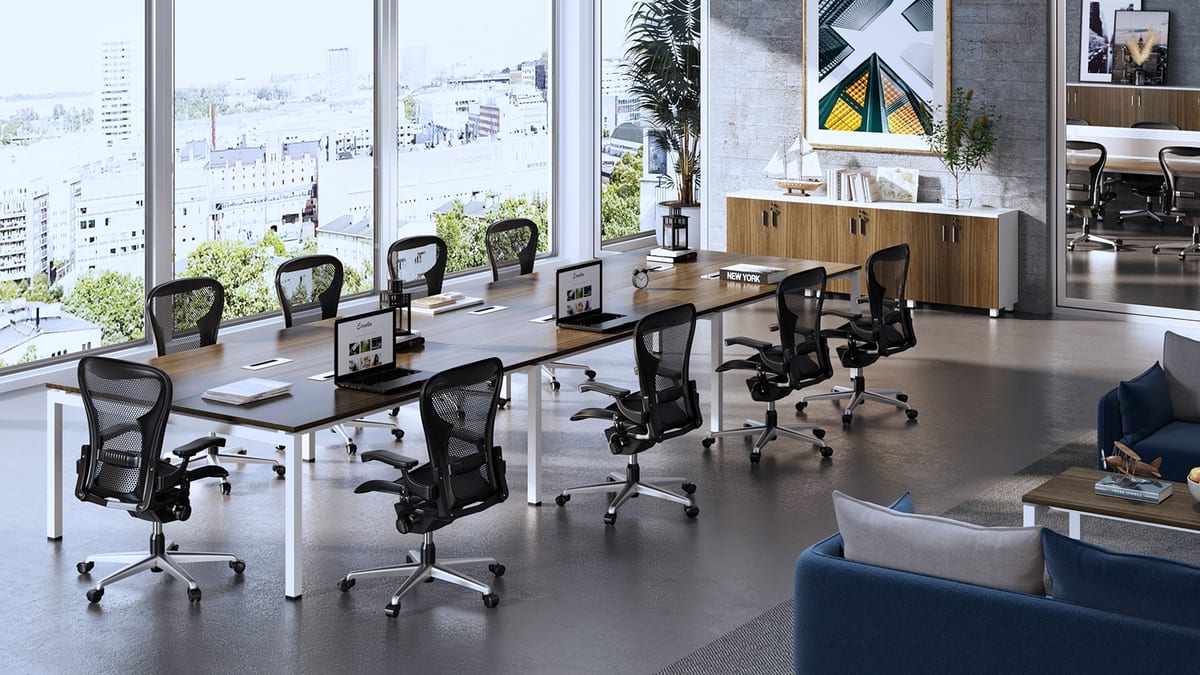
We do not define a furniture system by how many SKU appear in a catalogue.
A manufacturer could have hundreds of desks and still offer very little system capability.
For us, the first question is much more practical:
Can one coordinated product range furnish the main functional areas of a real company office?
Depending on the series and project, that may include executive and manager offices, staff workstations, meeting areas, storage, reception and office partitions.
Then we look at whether those products actually belong together.
Are the board colours and wood grains coordinated? Do the metal finishes work across the range? Are dimensions and structures compatible? Can products be adjusted when a real floor plan does not match catalogue dimensions exactly? And if the dealer needs the range again later, is there a reasonable path to reproduce or responsibly adapt it?
That is much closer to what we mean by a furniture system.
A useful distinction is:
A catalogue gives a dealer products to choose from. A furniture system gives the dealer products that can be used together.
Why Fragmented Sourcing Often Becomes Difficult Later
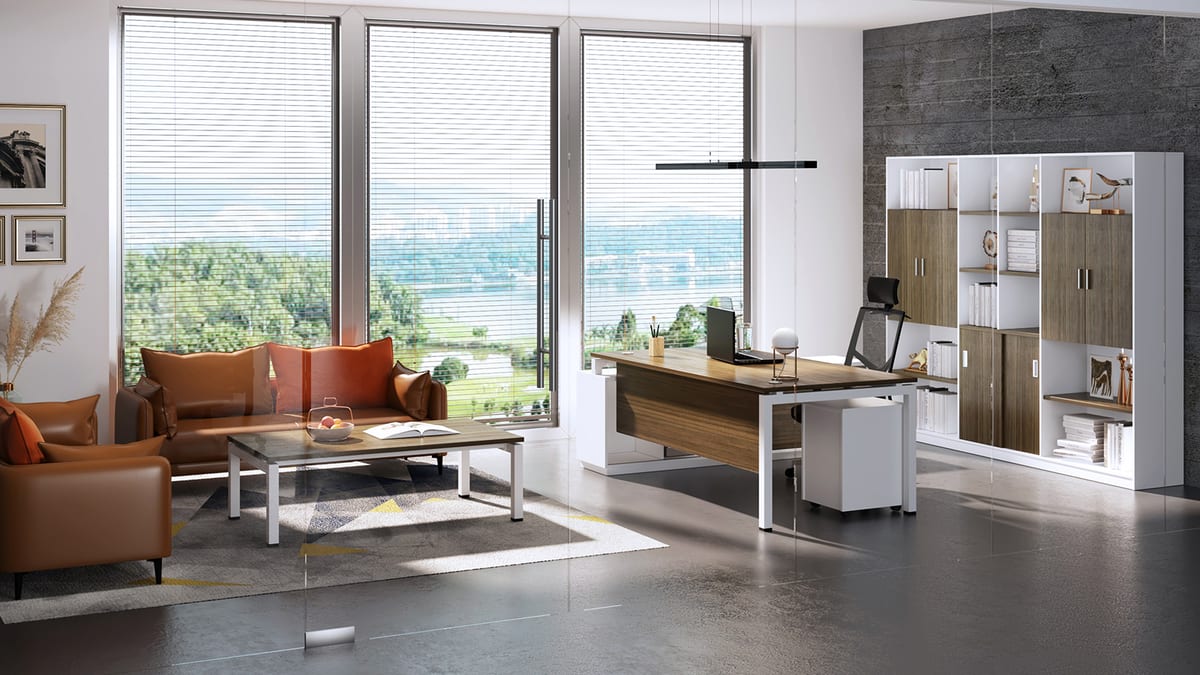
The first purchase is usually the easiest part of the relationship.
Imagine a dealer supplies furniture for an executive office. Two years later, that customer's business expands and another 20 employees are being added.
The new requirement might include workstations, a meeting room and more storage.
If the original furniture came from an isolated product range, the dealer may need to start matching everything again: new colour samples, alternative wood grains, different metal finishes, new drawings and possibly another factory.
None of these tasks is impossible.
But they create additional work around a customer the dealer has already spent time and money acquiring.
This is where Replenishment Risk becomes important. The furniture itself may still be perfectly usable, but the supply behind it can no longer support what the customer wants to do next.
We discuss this problem in more detail in Why Product Continuity Matters for Office Furniture Dealers, because continuity is not simply about whether an old desk can still be produced. It is about whether a dealer can continue supporting the business already built around that product.
The Value of a System Is Not That the Dealer Has to Buy More
This is where system sourcing is often misunderstood.
A complete range does not mean a dealer should buy every executive desk, workstation, meeting table, cabinet and reception desk in the catalogue.
We normally advise the opposite.
When a new dealer starts working with Xusheng, the first selection should come from products the dealer believes fit the local market.
What is already selling there?
Which price range is realistic?
What sizes are common?
What kind of offices does the dealer normally supply?
If several products look suitable, test those products first.
The rest of the system does not have to sit in the dealer's warehouse. It needs to be available when the market gives the dealer a reason to use it.
That distinction is important:
Choose a system-based supplier, but build a market-based inventory.
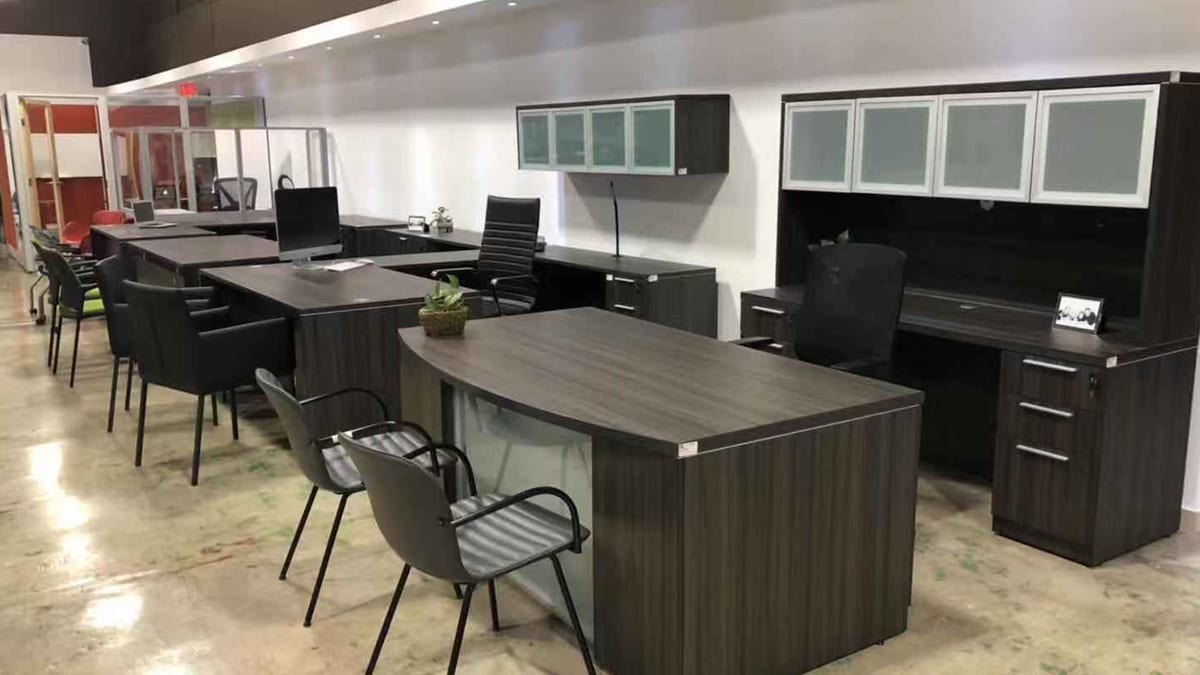
A dealer can begin with a small part of a furniture system and still benefit from knowing that meeting furniture, storage, workstations or other supporting products can be developed around it later.
System-based sourcing is therefore not about buying everything at once. It is about avoiding a situation where today's product selection unnecessarily limits tomorrow's options.
More SKU Can Actually Make Inventory Worse
There is a common assumption that a complete furniture system automatically makes inventory easier to manage.
In our experience, that is not always true.
Every additional SKU creates another stock decision. Add different sizes, colours and configurations and the number of decisions increases again.
This is why Xusheng has many products but does not expect one dealer to buy all of them.
Our product range exists because a dealer in Saudi Arabia may need something different from a dealer in Chile, Mexico, Qatar or another market. A broad manufacturer range gives different customers more choices; it is not a shopping list that every dealer should copy into their warehouse.
For ordinary stock purchases, we would rather see a dealer concentrate on products with a realistic chance of selling.
Complete-system purchasing makes much more sense when the demand already exists — for example, a corporate office project or government project with a defined furniture requirement.
When the requirement is real, range depth is useful.
When the requirement is uncertain, range depth should remain supplier capability, not automatically become dealer inventory.
A Four-Container Order We Chose Not to Produce All at Once
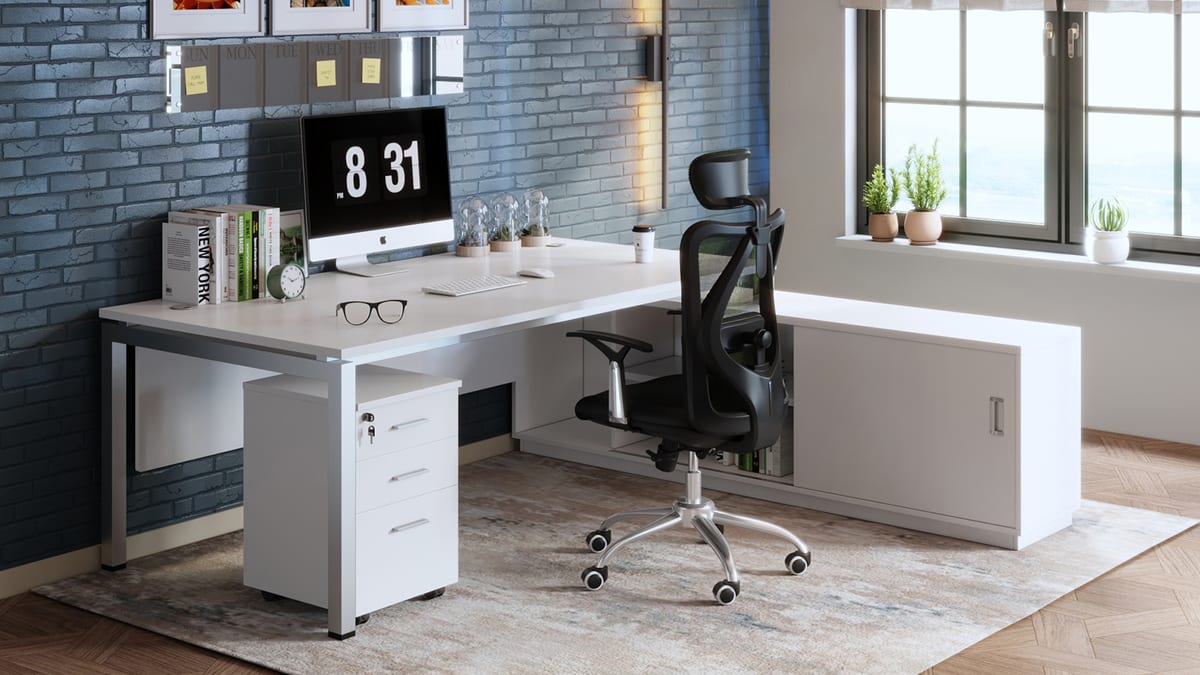
A case from Qatar is a good example of why we take this view.
A dealer had selected our ONLY straight office desk, which was selling strongly at the time. The customer ordered roughly one container of that model alone and planned another three containers of furniture.
The total planned business was worth approximately US$270,000.
For us as a manufacturer, accepting the full order and immediately purchasing materials for all four containers would obviously have meant more business.
But we were concerned about the amount of stock the customer was taking at one time.
We suggested starting with two containers instead.
The agreement was simple. When the dealer had sold approximately one-third of the initial stock, we would start producing the remaining two containers. Once sales reached roughly two-thirds, the remaining goods could be moved towards shipment.
The customer accepted.
Sales initially moved quickly. In around two months, approximately one-third had sold, so we started production of the remaining goods as promised. We did not want our production schedule to become the reason the dealer later ran out of stock.
Then the sales pace changed.
By the time production was complete, the customer had not reached the expected two-thirds level. The remaining furniture therefore stayed at Xusheng rather than being immediately pushed into the dealer's warehouse.
It was around six months after production of that second batch before the customer asked us to ship the remaining two containers.
There was nothing fundamentally wrong with the product. What changed was the speed of demand.
That experience reinforced something we already believed:
A best-seller tells you what the market is buying now. It does not tell you exactly how fast the market will buy six months from now.
For a dealer, tying too much capital to a current bestseller can therefore be risky even when the product itself is good.
The purpose of a broad furniture system should be to give dealers more options, not more stock.
Sometimes the Opposite Happens: A Small Product Enquiry Becomes a Complete Project
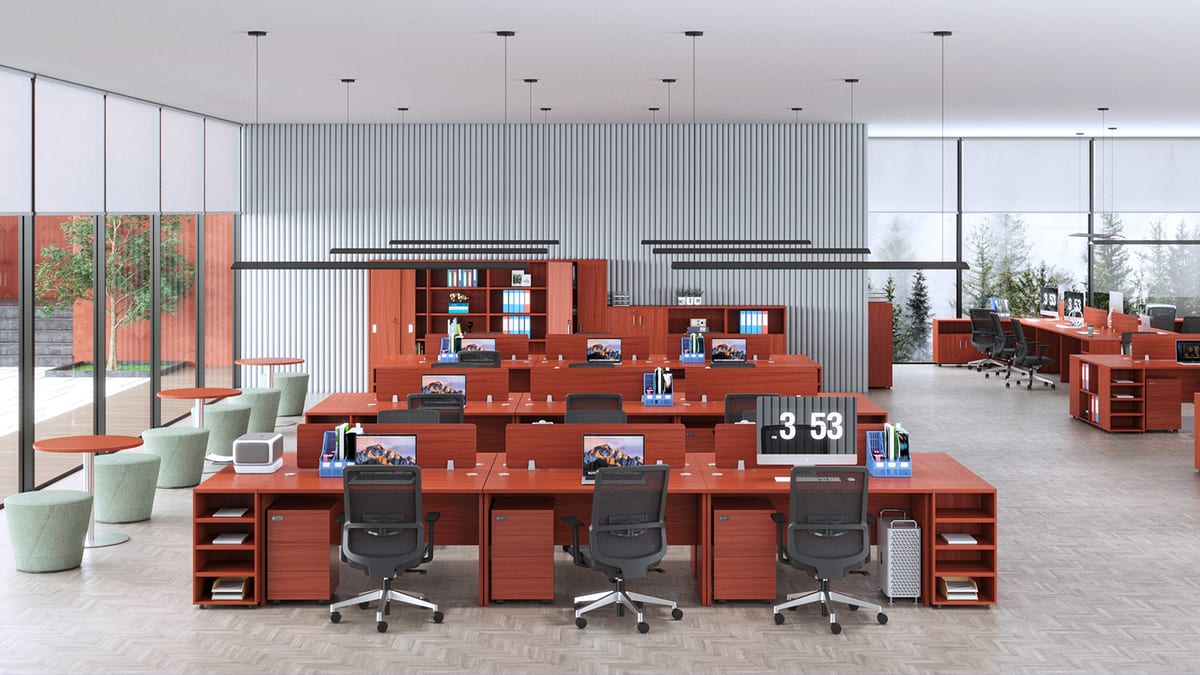
System capability becomes much more valuable when there is already a real project behind the enquiry.
We once worked with a dealer who initially came to us for a customised batch of office desks and filing cabinets.
After receiving the quotation, the customer felt the price was a little high and asked whether we could reduce it.
Instead of immediately changing materials or reducing the specification, our sales team continued asking about the actual project.
That discussion revealed that desks and cabinets were only part of the requirement.
The customer also needed office partitions.
Most of the partition products shown in our catalogue at the time were desk-mounted screens and workstation partitions. The customer therefore assumed that the type of office partition required for the project was something Xusheng could not provide and had planned to source it elsewhere.
When we showed the customer the partition solution we could make, the conversation changed.
We then learnt about the reception requirement and the furniture needed in the other parts of the office.
What began as an enquiry for desks and filing cabinets eventually became a complete furniture requirement for a 48-person company office.
The important part of that case was not that we persuaded the customer to buy more furniture.
It was that we stopped looking at the requirement as several separate products.
Once we understood the floor plan and the way the office would actually be used, standard products could be combined with project-specific adjustments. The customer also found that the overall purchasing cost was lower than the original plan of splitting the project between several suppliers.
That does not mean concentrated sourcing will always be cheaper.
But it does show why comparing the price of one desk is not always enough when the real requirement is an entire office.
A Catalogue Does Not Show Everything a Manufacturer Can Do
That 48-person project also exposed another issue we regularly see in B2B furniture sourcing.
Buyers naturally use catalogues to understand a factory's capability.
But a catalogue can only show a selection of products.
For project furniture, there may be reasonable adjustments to dimensions, board colours, structures, cabinet configurations, cable management, screens, packaging or other details based on the actual requirement.
So when a dealer cannot find an exact product in a catalogue, the next question should not automatically be:
“Which other supplier has it?”
It can be worth asking:
“Is this something your existing manufacturing system can reasonably adapt for my project?”
There are limits, of course. A factory should be equally willing to explain what it cannot responsibly make.
At Xusheng, our main focus remains panel-based and metal-frame commercial office furniture. We are not trying to turn every product request into something we claim to manufacture.
This matters because a real furniture system should be expandable, but it still needs manufacturing boundaries.
System-Based Sourcing Does Not Mean Buying Everything From One Supplier
Office chairs are a good example.
Office seating is not Xusheng core manufacturing area. If a dealer already has a reliable specialist chair supplier, we normally see no reason to change that arrangement simply to consolidate purchasing.
Where a customer strongly wants us to include chairs in a wider order, we can source them externally and help check the product. But we are also prepared to tell customers that purchasing directly from a specialist seating supplier may make more sense.
That may sound unusual in an article about system sourcing, but it is an important distinction.
The objective is not:
“Buy everything from one supplier.”
The objective is:
Keep the products that need to work together inside a supply structure capable of keeping them together.
Desks, workstations, meeting tables, storage, reception furniture and partitions can have strong relationships through colour, board finish, metal frame, dimensions, project layout and later replenishment.
An office chair is often much more independent.
A dealer should centralise where compatibility matters and keep specialist sourcing where specialist supply is genuinely better.
How to Tell Whether a Supplier Really Has an Office Furniture System
When we look at a furniture range, we would start with five practical questions.
Can the Series Furnish the Main Areas of a Real Office?
This is the first test.
Do not count SKU. Look at workspace coverage.
Can the same coordinated series reasonably support the areas your customers actually need?
A collection containing 30 variations of the same desk is not necessarily more complete than a smaller range covering workstations, executive areas, meetings and storage.
Do the Products Actually Match?
Check physical samples and finishes rather than relying only on renderings.
Wood grain, board surface, metal finish, edge details and design language need to make sense when the products stand next to one another in a real office.
Does the Range Work as a Space, Not Just as Individual Furniture?
Look at dimensions and configuration logic.
Can the storage work with the desk? Can workstations be planned efficiently? Do meeting products and executive products feel like they belong to the same environment?
Can the Products Be Adapted Around a Real Project?
Commercial floor plans rarely behave exactly like catalogue pages.
A useful system needs some room for sensible adjustment while maintaining structural safety, manufacturing consistency and commercial practicality.
Can the Supplier Support the Range Later?
No responsible manufacturer should promise that every board colour, component or finish will remain unchanged forever.
Upstream suppliers discontinue materials. Hardware changes. Markets move on.
The more useful question is whether the manufacturer keeps enough specification information to manage repeat orders and whether it has a responsible process when something changes.
That is where system sourcing connects directly with product continuity.
Product-Based, System-Based or Project-Based?
In practice, we do not think dealers need to choose one sourcing model for every situation.
Buying Situation | Approach We Would Consider |
New dealer testing a market | Select several suitable products from a broader system |
Proven local bestseller | Build stock gradually around actual sales |
Independent specialist category | Product-based sourcing can make sense |
Dealer showroom | Select representative products rather than every SKU |
Complete corporate office | Evaluate the requirement as a system/project |
Government or tender project | Follow the project specification and space requirement |
Uncertain trend product | Control the first quantity and watch sales |
Existing project requiring additions | Prioritise compatibility and continuity |
The decision becomes easier once the Dealer stops asking:
“Which sourcing model is better?”
and instead asks:
“Which parts of my business need to remain connected?”
One 8-Person Workstation or Two 4-Person Workstations?

There is another reason we prefer to understand the whole requirement before simply producing the purchase list.
Suppose a project needs seating for eight employees.
The customer might specify two four-person workstations.
That may be exactly the right solution.
But depending on the floor plan and functional requirements, one eight-person workstation may achieve the same seating capacity while using fewer shared frame components and less board material.
That can reduce cost without making the board thinner, weakening the steel frame or lowering the quality standard.
It is not always the right choice. The office layout may require two separate groups. Privacy, circulation or departmental organization may make the original configuration better.
The point is that a project should be evaluated as a project.
A purchase list tells the factory what the customer asked for.
A floor plan helps the factory understand what the customer is trying to achieve.
Those two things are not always identical.
What We Would Recommend to a Dealer Building a New Range
If we were planning a new range with a dealer, we would not begin by asking how many products from our catalogue we could put into the first container.
We would first want to understand the dealer's market.
Who are the customers?
Is the business mainly showroom retail, dealer distribution or commercial projects?
Which desk sizes sell?
What price level works?
What is already selling well?
Which categories are missing?
From there, a dealer can select a manageable starting range.
After the products reach the market, actual sales provide better information than assumptions. Products that perform well can be replenished. Other products from the same system can be introduced when there is a reason to do so.
For a real office project, the approach changes. Then it makes sense to look at the entire floor plan, furniture list and functional requirements together.
This is also why office furniture systems can help dealers move from simply quoting products towards supplying more complete workplace projects. We discuss that commercial side separately in How Office Furniture Systems Help Dealers Increase Project Conversion Rates.
The Better Sourcing Question
Product-based sourcing will continue to have a place in the office furniture business.
So will specialist suppliers.
And no dealer should carry a complete furniture system simply because the manufacturer has one.
The real advantage of system-based sourcing is having somewhere to go when the requirement becomes bigger than the product you sold first.
You may never need every product in the system.
You may never receive a second-stage order from a particular customer.
But if that requirement does appear, you are not starting again from zero.
That is why we prefer to think about the issue this way:
Build access to a complete system. Stock only what your market can sell.
For dealers sourcing from China, this decision is only one part of a much larger supplier evaluation process. Our Sourcing Office Furniture from China: The Complete Guide for Dealers covers the wider questions around supplier verification, specifications, quality control, first orders, packaging, replenishment and long-term supply.
Ultimately, a complete office furniture system should not encourage a dealer to buy more furniture.
It should give the dealer more ways to serve the market with the furniture they choose to buy.
Discuss Your Product Range With Xusheng
If you are evaluating a new office furniture range, you do not need to begin by choosing every product in our catalogue.
Tell us about your market, customer type, current bestsellers, target price range and purchasing plan.
We can help you review which products are worth testing first, which supporting products should remain available for future projects, and where another specialist supplier may genuinely be the better choice.
The objective is not to make the first order as large as possible.
It is to build a range that gives both sides a reason to keep doing business after the first order.
Primary CTA:
Discuss Your Sourcing Plan
Secondary CTA:
Explore Xusheng Furniture Systems
Frequently Asked Questions
What is system-based office furniture sourcing?
System-based sourcing means selecting furniture within a coordinated range that can cover multiple workplace requirements and remain compatible in design, materials, dimensions, project application and future supply. It does not mean buying every product in the range.
Is system-based sourcing better than buying individual office furniture products?
Not in every situation. Product-based sourcing can work well for independent categories, short-term opportunities or specialist products. System sourcing becomes more valuable when several furniture categories need to work together or may need future expansion and replenishment.
Does a dealer need to stock the complete office furniture system?
No. In most cases, dealers should stock products supported by their own market demand. The wider system can remain available for future projects, replenishment or range expansion.
Does buying from one office furniture supplier always reduce costs?
No. Consolidated sourcing can reduce costs in some projects through better product configuration, material use, packing or purchasing coordination, but this should be evaluated case by case. A specialist supplier may still be more appropriate for certain categories.
How can I tell whether a furniture range is really a system?
Check whether it covers the main functional areas of a workplace, whether products share compatible colour and materials, whether their dimensions work together, whether the range can adapt to real projects, and whether the supplier can responsibly support future production and changes.
Can system-based sourcing reduce inventory risk?
It can help preserve future sourcing options, but stocking too many system SKU can actually increase inventory complexity. The safer approach is to maintain access to a broad system while building inventory around products with proven market demand.
Should a dealer buy extra furniture just to fill a 40HQ container?
Not automatically. Container efficiency matters, but so do sales velocity and inventory exposure. Especially for first orders or unproven products, the cost of slow-moving stock may outweigh the saving achieved by filling another container.
Looking for a supplier?
Need a product, sample, or project quote?
Use the catalog to choose products, then send the list for manufacturing, dealer, OEM / ODM, or project support.