
How MOQ Works for Office Furniture Dealers: A Practical Guide to Planning Your First Order from China
Learn how office furniture dealers can understand MOQ, plan the right product mix, reduce inventory risks and build smarter purchasing strategies when sourcing from China through real supplier experience and dealer cases
When overseas dealers start sourcing office furniture from China, MOQ is often one of the first questions they ask.
“What is your minimum order quantity?”
It sounds like a simple question, but the answer is not only about numbers.
For an experienced office furniture dealer, MOQ is rarely the biggest challenge. They already understand their market, know which products sell well and usually place repeat orders based on actual demand.
The bigger challenge usually appears with new dealers:
● They want to offer enough products to attract customers;
● They want different desk styles, storage solutions and workstation options;
● But they do not want to hold too much inventory before testing the market.
This creates a common dilemma:
Should I buy more products to build a complete range, or should I buy fewer products to reduce inventory risk?
The answer is not simply lowering MOQ.
A more effective approach is building the right purchasing plan.
At Xusheng, we believe:
MOQ is not a limitation. The right MOQ is about buying the right products in the right quantity.
A reliable office furniture supplier should not only tell dealers the minimum quantity required. They should help dealers understand how to create an order structure that matches their market, budget and long-term growth plan.
1. What Does MOQ Actually Mean for Office Furniture Dealers?
MOQ means Minimum Order Quantity.
In simple terms, it is the smallest quantity a manufacturer normally accepts for a specific product or model.
For office furniture, MOQ exists because production involves:
● Material preparation;
● Production scheduling;
● Labour arrangement;
● Machine setup;
● Packaging;
● Quality control;
● Logistics planning.
A factory cannot always produce one desk in a special colour, another desk in a different configuration and another cabinet with different specifications while maintaining the same efficiency as a larger production run.
However, MOQ should not be misunderstood as a factory rule designed only to push customers to buy more.
A reasonable MOQ helps both sides.
For manufacturers:
● Production becomes more efficient;
● Material purchasing becomes more predictable;
● Production costs become more stable.
For dealers:
● Product pricing becomes more competitive;
● Quality consistency becomes easier to maintain;
● Future repeat orders become easier to manage.
This is why MOQ should be viewed as part of a purchasing strategy rather than simply a restriction.
2. Why Do Office Furniture Factories Set MOQ?
Different products require different production conditions.
For example, an executive desk, workstation system and storage cabinet may all belong to office furniture, but their production processes are different.
MOQ can be affected by:
Product Category
Different categories require different levels of preparation.
A workstation system may involve:
● Multiple panels;
● Screens;
● Cable management;
● Connecting structures;
● Shared components.
A storage cabinet may involve:
● Different door configurations;
● Hardware;
● Shelves;
● Locks;
● Different packing requirements.
Therefore, MOQ is not always identical across every product category.
Product Model
Even within the same category, different models may require different production arrangements.
A standard product that is already regularly produced may have a different MOQ compared with a new design or a highly customised model.
Customisation Level
Customisation also affects MOQ.
Examples include:
● Special dimensions;
● New colours;
● Custom structures;
● Private labels;
● Special packaging.
The more customised a product becomes, the more important it is to consider whether the quantity supports efficient production.
This is why a professional supplier should not answer every MOQ question with one fixed number.
The right question is:
What product, specification and market requirement are we planning for?
3. Xusheng MOQ Approach: Building a Commercially Reasonable Order
For standard office furniture products, Xusheng general MOQ is around:
30 pieces per model
However, this is not a universal rule applied without considering the situation.
MOQ can be evaluated based on:
● Product category;
● Product model;
● Customization requirements;
● Customer cooperation stage;
● Project requirements.
For example:
A new dealer purchasing standard products for market testing may need a different approach compared with:
● An established distributor placing regular replenishment orders;
● A contractor handling a large office project;
● A customer developing a private-label product range.
The purpose is not simply reaching a quantity target.
The purpose is creating an order that makes commercial sense.
A good first order should consider:
● What products can be sold in the target market;
● What products can create a complete office solution;
● What quantity is reasonable for inventory;
● What products should be tested first;
● How future replenishment will work.
4. The Biggest MOQ Mistake New Office Furniture Dealers Make
Many new dealers think the biggest problem is:
“The MOQ is too high.”
However, from practical experience, another problem appears more often:
They do not know how to structure their first order.
A new dealer may think:
“I want executive desks, manager desks, workstations, meeting tables, cabinets, reception desks and many other products because I want my showroom or catalogue to look complete.”
The idea is understandable.
However, purchasing too many products without understanding the market can create another problem:
● Too much inventory;
● Slow-moving products;
● Cash flow pressure;
● Storage costs;
● Difficulty identifying which products actually sell.
On the other hand, purchasing only one or two products may make it difficult to serve customers looking for complete office solutions.
The solution is not choosing between “many products” and “few products”.
The solution is choosing the right combination.
This is why successful dealers often start with a structured product mix.
5. How Xusheng Helps New Dealers Plan Their First Order
For new office furniture dealers, Xusheng does not simply provide a MOQ number and wait for the customer to decide.
The first step is understanding:
● The customer's market;
● Target customers;
● Sales channels;
● Budget;
● Product positioning.
Based on this information, Xusheng can help with:
Product Combination Planning
Instead of purchasing random products, dealers can build a more practical range.
For example:
Executive / Management Area
● Executive desks;
● Manager desks;
● Credenzas;
● Storage solutions.
Employee Workspace
● Single workstations;
● Double workstations;
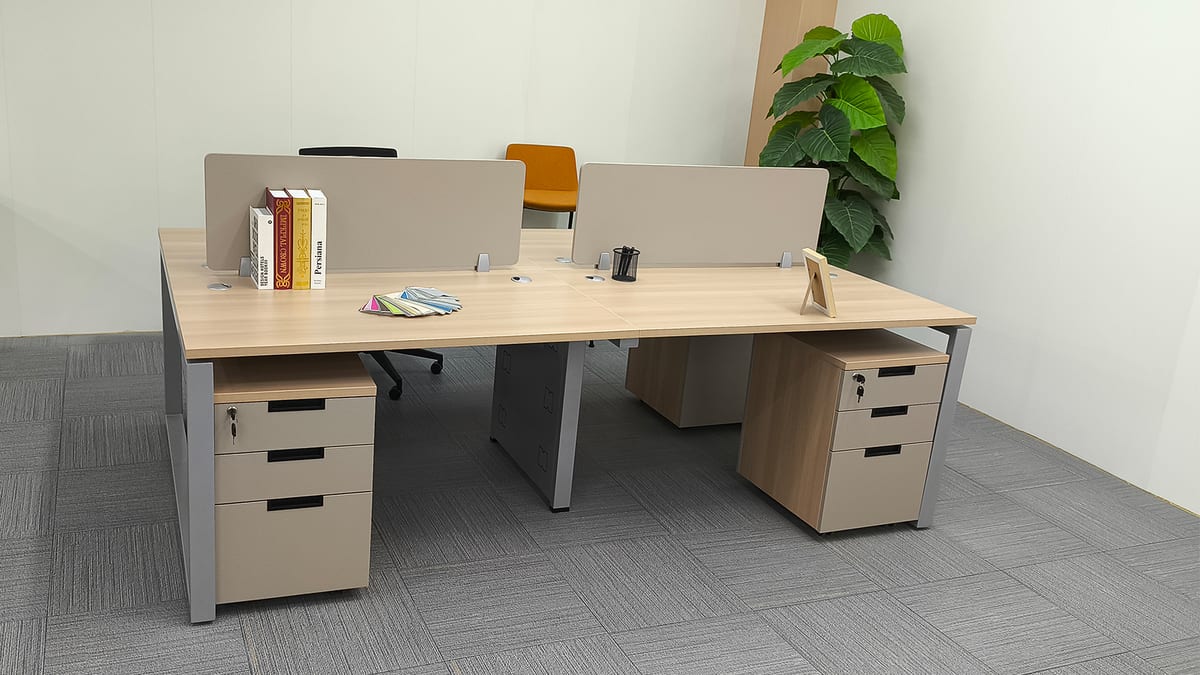
● Four-person workstations.
Meeting Area
● Meeting tables;
● Discussion tables.
Supporting Products
● Mobile pedestals;
● Filing cabinets;
● Storage cabinets.
This allows dealers to sell complete workplace solutions rather than isolated products.
Catalogue and Sales Support
New dealers may also need support beyond production.
Xusheng can provide:
● Product catalogue;
● Product images;
● CAD files;
● 3D support where required;
● Product information.
The objective is helping dealers introduce and sell the products after purchasing.
Mixed Container Planning
For new dealers, one important method of managing MOQ risk is mixed container purchasing.
Instead of ordering one full container of one product model, dealers can combine different products according to market needs.
This allows them to test different categories while maintaining a more balanced inventory structure.
However, mixed containers do not mean unlimited small quantities.
Each product still needs to consider reasonable production requirements.
The goal is not reducing MOQ at any cost.
The goal is creating a healthier first order.
6. Case Study: Helping a Vanuatu Dealer Build His First Office Furniture Order
A good example comes from a dealer in Vanuatu.
Before working with Xusheng, the customer was already selling furniture but wanted to expand into the office furniture category.
His challenge was common among new office furniture dealers:
He wanted many models to cover different customer needs, but ordering too many products created inventory concerns.
The customer needed a supplier who could help him decide:
● Which products should be prioritized;
● How many categories were necessary;
● How to use one container effectively;
● How to test the market without excessive risk.
Instead of simply recommending the largest possible order, Xusheng helped design a practical first purchase plan.
The support included:
● Product combination recommendations;
● Catalogue and image support;
● First-order structure planning;
● Mixed container planning;
● Sample confirmation;
● Future replenishment suggestions.
The first order was:
One 20HQ container
The product structure was approximately:
70% proven best-selling products + 30% new products for market testing
The main products included:
● Executive desks;
● Manager desks;
● CEO / director style desks;
● Single workstations;
● Double workstations;
● Four-person workstations;
● Two-drawer and three-drawer mobile pedestals;
● Meeting tables;
● Low and tall filing/storage cabinets.
The purpose of adding meeting tables and storage products was not only selling additional items.
It helped create a more complete office furniture solution and improved container utilization.
After the first order, the customer was satisfied with the product combination and continued cooperation.
Over time, the customer expanded from simpler straight desks into more complete office solutions, including:
● Reception desks;
● Coffee tables;
● Discussion tables;
● Additional product variations.
The journey changed from:
Buying individual office desks
to:
Building a complete office furniture system.
The lesson is simple:
A successful first order is not always the biggest order. It is the order that gives a dealer the best foundation to grow.
7. MOQ for Project Orders: Focus on the Complete Solution, Not Individual SKU
For office furniture projects, MOQ should often be viewed differently from regular dealer purchasing.
A project buyer or contractor is usually not purchasing one product model for resale.
Instead, they are solving a complete workplace requirement:
● Executive offices;
● Employee workstations;
● Meeting rooms;
● Reception areas;
● Storage areas;
● Collaboration spaces.
Therefore, the first question should not always be:
“How many pieces of each SKU do we need?”
A better question is:
“What is the most suitable furniture solution for this project?”
For project orders, Xusheng usually starts from the customer's actual requirements:
Customer Drawing → Space Analysis → Product Recommendation → Quotation → Production Planning
The customer provides the office layout or project drawings.
Then Xusheng reviews:
● Space utilization;
● Employee quantity;
● Product suitability;
● Budget requirements;
● Installation practicality.
If the original product selection is not the most efficient solution, Xusheng can suggest adjustments.
For example:
A customer originally planned to install:
Four separate four-person workstations
The calculation was:
● One four-person workstation: approximately USD 355;
● Four units: USD 1,420.
After reviewing the layout, Xusheng suggested using:
One eight-person back-to-back workstation solution
The function remained suitable for the customer's requirement, but the cost became approximately:
USD 1,360.
The customer saved around USD 60.
The important point is not the exact saving.
The value comes from understanding the customer's requirement first and then recommending the right solution.
A reliable supplier should not simply increase product quantity.
A reliable supplier should help dealers and project buyers make better purchasing decisions.
8. MOQ and Price: Why Quantity Affects Real Cost
A common misunderstanding among new dealers is:
“If I order fewer pieces, I should receive the same unit price.”
However, office furniture production does not work that way.
Quantity affects:
● Material purchasing;
● Production efficiency;
● Machine setup;
● Labour allocation;
● Packaging efficiency;
● Quality control efficiency.
A larger, well-planned production quantity usually allows manufacturers to organize resources more efficiently.
A very small order with special requirements may create additional cost because:
● Materials may need separate preparation;
● Production scheduling becomes less efficient;
● More adjustments are required;
● Packaging and handling become less economical.
This is why MOQ exists.
However, MOQ should not be used simply to increase the selling price.
The purpose is to create a reasonable production structure where both supplier and dealer can achieve better efficiency.
For dealers, the goal should not be:
“How can I force the lowest possible MOQ?”
The better question is:
“How can I create an order structure that gives me competitive pricing and reduces unnecessary inventory risk?”
This mindset becomes especially important when comparing suppliers.
A supplier offering a lower MOQ may not always create the lowest total business cost if the product range becomes fragmented, pricing becomes unstable or repeat orders become difficult.
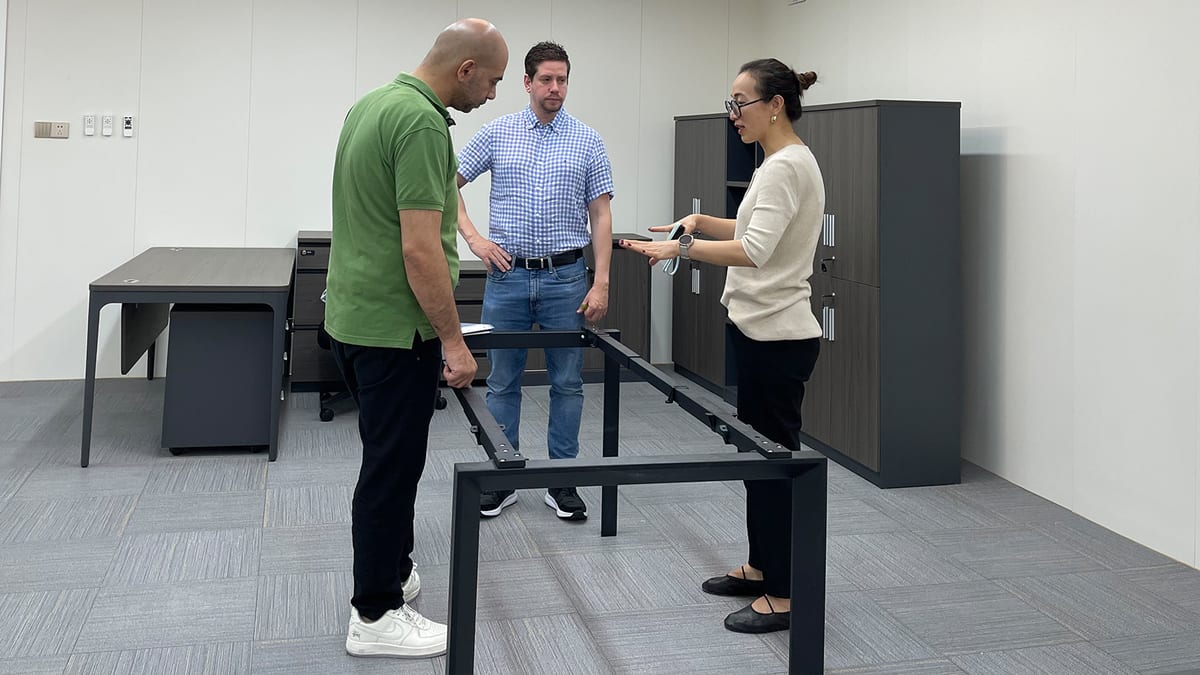
9. Why Experienced Dealers Usually Do Not Struggle With MOQ
For mature office furniture dealers, MOQ is rarely the biggest challenge.
The reason is simple:
They understand their market.
After selling products for a period of time, they know:
● Which desks sell faster;
● Which colors are preferred;
● Which workstation sizes are suitable;
● Which products should be replenished;
● Which products should be reduced or discontinued.
Therefore, experienced dealers usually order according to real market demand.
They may:
● Purchase popular products above MOQ quantities;
● Reduce products with slower sales;
● Continue successful models through repeat orders.
For them, MOQ becomes part of purchasing planning.
It is no longer a barrier.
This is also why long-term dealer relationships become more efficient.
The supplier understands the customer's product history, and the dealer understands what works in their market.
This creates a more predictable supply cycle.
This is also why long-term dealer relationships become more efficient. The supplier understands the customer's product history, and the dealer understands what works in their market. This is where product continuity matters for office furniture dealers.
A dealer does not only need a supplier who can meet the first order quantity.
They need a supplier who can support the products that continue selling in their market.
10.MOQ Does Not Replace Market Understanding
One of the biggest mistakes a new dealer can make is choosing products only because they meet MOQ.
A product should not be selected simply because:
● It is easy to order;
● It has a low MOQ;
● The supplier recommends it.
A better selection process considers:
Market Demand
Will customers in your market actually need this product?
Product Positioning
Does this product match your target customers?
For example:
● Small businesses;
● Corporate offices;
● Government projects;
● Contractors;
● Retail customers.
Product System
Can this product work together with other products?
A successful office furniture dealer normally does not sell only one desk.
Customers often need:
● Desks;
● Storage;
● Meeting tables;
● Reception furniture;
● Workstations.
This is why building a product system is often more valuable than simply collecting many individual products. Dealers should consider product-based vs system-based office furniture sourcing when planning their purchasing strategy.
11. MOQ Strategy: Start Small, But Think Long Term
A smaller first order does not mean a small business ambition.
Many successful dealer relationships begin with a carefully planned first shipment.
The purpose of the first order is to:
● Test market response;
● Understand customer preferences;
● Build confidence;
● Establish sales channels;
● Identify best-selling products.
After that, purchasing decisions become easier.
The dealer knows:
● Which products deserve larger quantities;
● Which products should be replaced;
● Which products should become part of a permanent catalogue.
At Xusheng, we have seen customers develop from simple product purchasing into complete office furniture system partnerships.
The process usually follows:
First order → Market feedback → Product adjustment → Repeat purchase → Product expansion
This is a healthier way to grow than trying to create a complete product range before understanding the market.
12. Common MOQ Mistakes Office Furniture Dealers Should Avoid
Mistake 1: Buying Too Many SKU Without Market Validation
A large product catalogue does not automatically create sales.
Too many products in the first order may create:
● Inventory pressure;
● Slow-moving stock;
● Reduced cash flow flexibility.
Mistake 2: Choosing Products Only Based on MOQ
The easiest product to order is not always the best product to sell.
Market suitability should come first.
Mistake 3: Ignoring Product Combination
A dealer may purchase desks but forget supporting products.
A better product mix can create more sales opportunities.
Mistake 4: Treating MOQ as a Negotiation Problem Only
The objective is not always reducing quantity.
The objective is creating a commercially reasonable order.
Mistake 5: Ordering Without Considering Future Replenishment
A successful product should be available again.
This is why supplier selection should include:
● Specification records;
● Product continuity;
● Stable production;
● Long-term cooperation.
13. The Right MOQ Question to Ask a Supplier
Instead of only asking:
“What is your MOQ?”
A more useful conversation includes:
● Why is this MOQ required?
● Can different products be combined?
● Which products are suitable for my market?
● How should I structure my first order?
● Which products are recommended for testing?
● How can future replenishment work?
● Can this product become part of a long-term range?
The quality of the supplier's answer can tell you a lot.
A factory that only provides a number is answering a purchasing question.
A supplier that helps you plan the order is thinking about your business.
14. MOQ and Building a Long-Term Office Furniture Business
The strongest office furniture dealers are not built by purchasing the largest first order.
They are built by making better purchasing decisions repeatedly.
The right supplier relationship helps dealers:
● Start with a practical product combination;
● Reduce unnecessary inventory risk;
● Understand market demand;
● Expand successful products;
● Build a complete office furniture system.
At Xusheng, our goal is not simply to accept an order that meets MOQ.
Our goal is to help dealers create a purchasing structure that supports long-term growth.
Because the final question is not:
“How many pieces can you order today?”
The more important question is:
“Can this order help you build a sustainable office furniture business tomorrow?”
Conclusion: MOQ Is Not About Buying More. It Is About Buying Better.
For overseas office furniture dealers, MOQ is often misunderstood.
It is not simply a factory requirement.
It is a connection between:
● Production efficiency;
● Product strategy;
● Inventory management;
● Pricing;
● Market demand;
● Long-term business growth.
A new dealer does not need to begin with the largest order.
They need the right order.
The right products.
The right quantity.
The right supplier support.
A good supplier does not only produce furniture.
It helps dealers make better purchasing decisions.
That is how MOQ becomes not a limitation, but a foundation for building a stronger office furniture business.
Primary CTA:
Discuss Your Sourcing Plan
Secondary CTA:
Explore Xusheng Furniture Systems
FAQ
Frequently asked questions
01What is the typical MOQ for office furniture from China?
MOQ depends on the product category, model, specifications and customisation requirements. For standard office furniture products, Xusheng’s general MOQ is around 30 pieces per model, while samples and project orders can be evaluated separately.
02Can office furniture dealers mix different products in one order?
Yes. Mixed orders can help dealers create a more balanced product range, especially for first purchases. However, each product still needs to consider reasonable production requirements.
03Is a lower MOQ always better for office furniture dealers?
Not necessarily. A lower MOQ may reduce initial inventory pressure, but the dealer should also consider pricing stability, product consistency, future replenishment and whether the product fits their market.
04How should a new office furniture dealer plan the first order?
A new dealer should focus on a balanced product combination rather than purchasing too many random models. The order should consider market demand, target customers, budget and future expansion opportunities.
05Does MOQ affect office furniture pricing?
Yes. Quantity can affect material purchasing, production efficiency, packaging and overall cost structure. A well-planned MOQ usually helps create more stable pricing.
06Can project orders avoid normal MOQ requirements?
Project orders are usually evaluated differently because they focus on the complete solution rather than individual SKU quantity. Suppliers can review drawings, space requirements and project needs to create a suitable proposal.
07How can dealers reduce MOQ risk?
Dealers can reduce MOQ risk by: - Starting with proven products; - Using mixed containers; - Testing selected new products; - Working with suppliers who provide product planning support.
08Why do experienced dealers handle MOQ more easily?
Experienced dealers understand their market demand. They know which products sell well and can order based on real sales performance instead of guessing.
Looking for a supplier?
Need a product, sample, or project quote?
Use the catalog to choose products, then send the list for manufacturing, dealer, OEM / ODM, or project support.