
How to Choose an Office Furniture Supplier for the Next 5–10 Years
Learn how office furniture dealers can identify a supplier worth trusting for 5–10 years by evaluating continuity, quality consistency, problem solving, market support and supply-chain change management.

How to Choose an Office Furniture Supplier for the Next 5–10 Years
Choosing an office furniture supplier for one order is relatively straightforward.
You compare the product, specification, price, sample, lead time and perhaps the factory itself. If everything looks reasonable, you place a trial order and see what happens.
Choosing a supplier for the next five or ten years is a different decision.
By then, the question is no longer simply whether the factory can make a good desk.
A dealer may eventually put that supplier's products into a showroom, catalogue and website. Salespeople learn the range. Samples are prepared. Inventory is built. Customers begin recognising certain finishes and product styles. Successful products are reordered, and some are used in commercial projects.
The more successful the relationship becomes, the more difficult it can be to replace the supplier behind it.
That is why we believe the most important long-term sourcing question is:
Can I safely build my future customer relationships around this supplier's products and supply system?
Price still matters. Quality still matters.
But neither one, on its own, answers that question.
A Good First Order Does Not Prove a 10-Year Supplier

Most dealers know how to evaluate a new supplier.
Ask for the catalogue. Check the factory. Review samples. Compare specifications. Start with a manageable order.
That is necessary.
But a first order mainly tells you whether the supplier can execute one order under close attention.
It does not tell you what will happen when you place the fifth container.
It does not tell you whether the board colour will quietly change.
It does not tell you how the supplier behaves when a component disappears from the market.
And it certainly does not tell you whether the supplier will still understand your business after your product range, customers and sales volume have grown.
This is why the criteria should change as the relationship develops.
Before the first order, you are looking for signals.
After two or three years of real business, you should be looking for evidence.
Part One: Five Early Signals Before You Commit More Business
There is no way to know with certainty that a new supplier will still be a good partner ten years from now.
But there are behaviours that reveal quite a lot before the relationship becomes large.
1. Will the Supplier Tell You When Something Is Not Suitable?
One of the most useful things a supplier can say is:
“We don't recommend doing it that way.”
Of course, that answer needs a reason.
Suppose a buyer requests a steel structure that is too light for the intended commercial use. Or the target price can only be achieved by changing a specification that the dealer believes is still included.
Perhaps the requested delivery date is unrealistic.
Or a particular desk may simply be poorly suited to the market the dealer has described.
The easiest way to win the purchase order is often to say yes first and solve the consequences later.
That is not always the behaviour you want from a long-term supplier.
At Xusheng, there are specifications and requests we would rather discuss or reject than produce exactly as requested if we believe they create an obvious structural, quality or commercial problem.
The same applies to cost reduction.
We can look at dimensions, structures, hardware, non-core features, product combinations or loading arrangements to see whether unnecessary cost can be removed.
What we do not want to do is quietly reduce material standards simply to make our quotation look more attractive.
A useful test for a new supplier is therefore not only:
“How flexible are they?”
Ask yourself:
“Are they willing to disagree with me when they believe saying yes will create a problem later?”
2. Do They Explain What Happens Behind the Product?
A beautiful sample is useful.

But a long-term dealer needs to understand more than the sample.
Ask what board specification is being used. Ask about the steel structure, hardware, edge banding and packaging. Ask how the product is inspected and how the approved specification is carried into bulk production.
You do not need to become a furniture engineer.
You are looking for transparency.
Can the supplier show real production?
Can it explain the important manufacturing steps?
Can it tell you what is inspected?
Can it explain what happens if bulk production does not match the agreed requirement?
At Xusheng, for example, incoming materials are checked before they move into production. Panel furniture then goes through processes including cutting, edge banding and drilling before trial assembly, finished-product inspection and packaging.
For trial assembly, finished packed products can be selected, unpacked and assembled in the same condition in which the customer will receive them. That gives us a chance to find packaging, hardware, dimensional or assembly issues before the dealer does.
The important point is not that every manufacturer needs to use exactly the same process.
It is that the supplier should be able to explain its own process clearly enough for the dealer to judge it.
If you are still at this early verification stage, How to Choose an Office Furniture Manufacturer in China: What Commercial Buyers Should Verify Before Placing an Order covers factory verification, samples and pre-order checks in more detail.
3. Watch What Happens When the First Small Problem Appears
A supplier with no problems sounds ideal.
In practice, we would rather know how a supplier behaves when something does go wrong.
Furniture contains too many variables to build a long-term sourcing strategy around the assumption that nothing will ever happen.
A panel may be damaged. Hardware may be missing. A drilling position may be wrong. Packaging may fail during transport. A finish may need to be checked.
The first reaction tells you a lot.
Does the conversation immediately become an argument about responsibility?
Or does the supplier first confirm the problem, trace the order and work out what is needed to put the product right?
Our own after-sales process normally starts with photos or video from the customer. We check the original order and production information, confirm the affected parts or products, and then determine the appropriate replacement.
Our working principle is simple:
Solve the product problem first, then address the wider commercial impact.
This does not mean every claim automatically becomes free compensation, or that every transport problem belongs to the factory.
It means the first objective should be understanding what happened and getting the product back to the condition the customer expected.
A small problem early in the relationship can therefore be surprisingly useful.
It shows you how the supplier may behave when the problem is larger.
4. Ask How They Would Repeat the Product Two Years From Now
This is a question more dealers should ask before increasing their dependence on a supplier:
“If I reorder this product in two or three years, what information will you use to reproduce it?”
Listen carefully to the answer.
Does the supplier keep product drawings?
Material specifications?
Colour references?
Hardware information?
Packaging requirements?
Private-label details?
Approved samples or other production records?
No record-keeping system can prevent an upstream manufacturer from discontinuing a board colour or hardware component.
But good records give the supplier a reference point when the next order arrives.
Without them, “same as last time” becomes surprisingly subjective.
For a dealer building a showroom range or local brand, repeatability matters because the value of a successful product increases with every order.
The more customers have bought it, the more disruptive an uncontrolled change becomes.
5. Is the Supplier Trying to Understand Your Business — or Only Your PO?
There is a difference between asking:
“What model do you need?”
and asking:
“What kind of customers are you selling to?”
Both questions matter, but they lead to different conversations.
When we speak with a new dealer, information about the market can be as useful as the product list.
Which country is the furniture going to?
Does the dealer mainly sell through a showroom, distribution network or commercial projects?
Which products already sell well?
What price range is realistic?
Is the dealer building its own brand?
Is the order for stock or a specific project?
A supplier that understands these things can give a much more useful recommendation.
It can also sometimes recommend less.
That is important.
If the decision that is better for the dealer results in a smaller order for the factory today, what does the supplier do?
For us, this is one of the strongest early indicators of whether a relationship has the potential to become long term.
Part Two: After 2–3 Years, Stop Looking at Promises
Once a dealer has been buying from the same supplier for two or three years, the evaluation should change.
There is now real history.
At this point, factory presentations, certificates and sales promises should carry less weight than what has actually happened across multiple orders.
If you are considering moving a supplier from:
Approved Supplier
to:
Core Long-Term Supplier
or eventually:
Strategic Supply Partner
we would look at five results.
1. Replenishment and Product Continuity
We would put this first.
Look back at the products you bought two or three years ago.
Can you still order them?
If not exactly, can the supplier responsibly support the existing range?
Are the board colours and wood grains still reasonably controlled?
Have metal frames, hardware or dimensions changed without explanation?
Can matching storage or supporting furniture still be supplied?
When something has been discontinued upstream, did the supplier tell you and offer a sensible alternative?
This is different from asking whether a model number still exists.
A product can keep the same name while enough of its specification changes to make it difficult to use beside an earlier order.
For dealers, that matters because customers do not necessarily think in factory production cycles.
They may simply call and say:
“We need another 12 workstations like the ones you supplied before.”
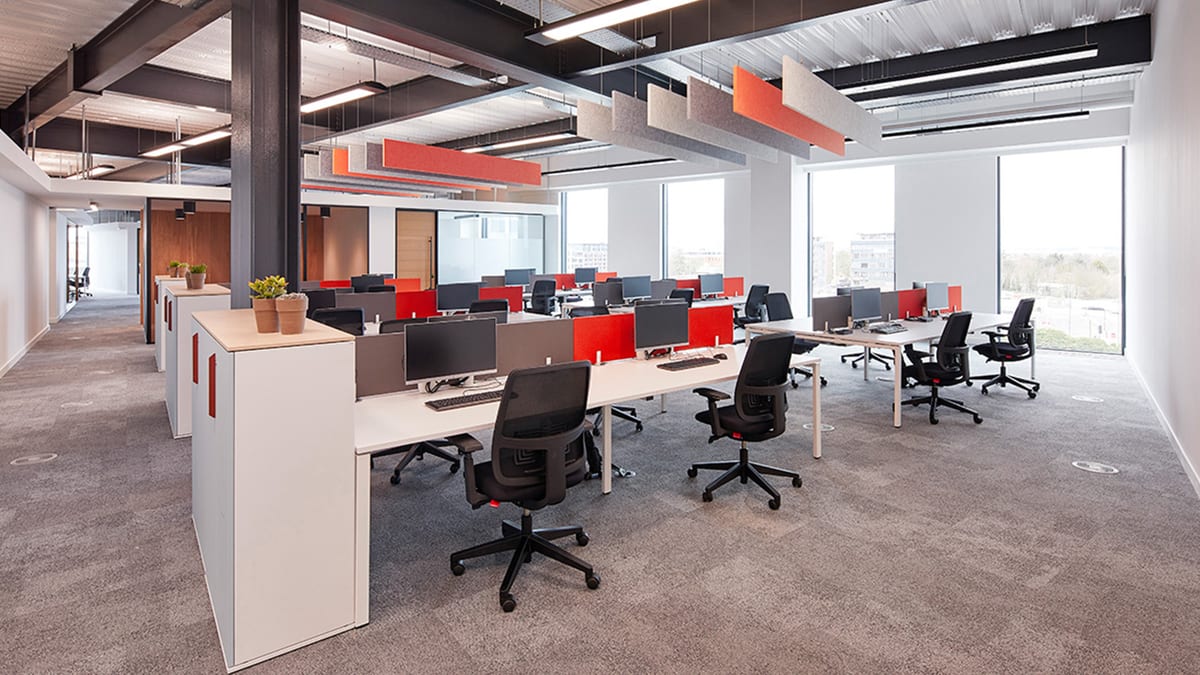
That request becomes the dealer's problem if the supply system behind the original product has disappeared.
Our article Why Product Continuity Matters for Office Furniture Dealers goes deeper into this issue, including what happens when colours, components and matching products change over time.
The important point here is that long-term stability does not mean nothing ever changes.
That promise would be unrealistic.
It means changes are controlled, communicated and dealt with before they become the dealer's problem.
2. Has Bulk Quality Remained Consistent?
A first sample can be excellent.
So can the first container.
The more useful question after three years is what happened across different production batches.
Compare the first order with later ones.
Did the agreed board specification remain consistent?
Did the steel structure quietly become lighter?
Was cheaper hardware introduced without approval?
Did edge banding, drilling or packaging become less consistent as order volume increased?
Are colours being controlled reasonably from batch to batch?
This is what we mean by Quality Continuity.
It is related to Sample-to-Bulk Consistency, but the time horizon is longer.
Sample-to-Bulk Consistency asks:
“Did production match the approved sample?”
Quality Continuity asks:
“After multiple orders, is the supplier still making the product to the standard I agreed?”
A supplier should not need its customer to rediscover the specification every time a repeat order is placed.
3. Look at How Past Problems Actually Ended
After several years, do not ask:
“Have we had any problems?”
You already know the answer.
Ask:
“How did our problems end?”
Did the dealer eventually absorb the loss?
Were replacement parts produced?
Did the factory spend most of the discussion explaining why it was not responsible?
Did the same issue happen again?
Was anything changed in production or inspection after the problem was identified?
Most importantly, did the way the supplier handled the issue help the dealer protect the relationship with the end customer?
A supplier that makes a mistake and corrects the underlying process may ultimately be more dependable than one that has simply been lucky enough not to encounter a difficult situation yet.
After two or three years, problem resolution is no longer a theoretical capability.
There should be evidence.
4. Has the Supplier Grown With Your Market?
Continuity alone is not enough.
Imagine working with a supplier for ten years and discovering that the catalogue, product thinking and market understanding have barely changed.
The old products may still be available, but your competitors and customers have moved on.
A long-term supplier needs to balance two things that can easily conflict:
protect what is already working, while continuing to develop what the dealer may need next.
At Xusheng, new products are developed regularly rather than waiting for an old range to fail first. But we do not believe every new product should automatically be recommended to every dealer.
A new executive desk may suit one market and be irrelevant to another.
A finish performing well in one region may have little value somewhere else.
Customer requests are useful inputs, but one customer's request alone should not define the entire product-development direction.
We look at existing product performance, market changes, successful structures and what may be missing from a dealer's current range.
Over time, a supplier should know more about your business than it did on the first order.
It should begin to understand which products you reorder.
Which ones you stopped buying.
Which price bands work.
Which project types you frequently encounter.
Where there are gaps in the range.
If, after three years, every new-product conversation still begins with nothing more than:
“Here is our latest catalogue. Which models do you like?”
the relationship may be stable, but it has probably not yet become strategic.
5. How Has the Supplier Managed Supply-Chain Change?
Every long-term furniture supplier will eventually face a change it did not create.
A board manufacturer stops producing a colour.
A hardware supplier changes a model.
Raw-material prices move sharply.
A supplier's quality declines.
A component becomes difficult to source.
A finish that was popular several years ago is no longer commercially relevant.
The question is not whether this will happen.
It is how the manufacturer handles it.
We experienced this with a customer who had previously worked with Xusheng for around two years and then stopped purchasing for more than two years because of changes in the customer's family and business situation.
When the customer returned, they wanted to restart with one of the products they had sold successfully before.
By then, the original board colour had been discontinued upstream.

More importantly, the old product itself was no longer the version we believed was most suitable for the current market. We had already improved the design, board finish and hardware.
Simply saying “the old product is discontinued” would have been easy.
Reproducing an outdated specification at any cost would not necessarily have helped the customer either.
So we recommended the upgraded version.
The new board, grain and hardware cost more than the old specification. Because the customer was restarting the business after a long interruption, we agreed to supply that initial batch at product cost while clearly explaining that the upgraded product should not continue to be sold at the old retail price.
The customer covered the normal freight and related costs.
The batch sold in roughly three months.
The customer then placed another order and voluntarily settled the product price difference from the previous batch based on the new quotation.
What mattered to us in that case was not reproducing yesterday's product at any cost.
It was helping an existing customer restart with something we believed could still be sold successfully.
That is how we think about continuity.
Sometimes continuity means reproducing the previous specification.
Sometimes it means finding the closest available material.
And sometimes it means helping the dealer move to a commercially sensible successor.
Long-Term Stability Does Not Mean Nothing Changes
This deserves its own distinction because it is easy to misunderstand.
A supplier promising:
“We will keep everything exactly the same for ten years.”
may sound reassuring.
But furniture manufacturing depends on upstream board producers, steel, hardware, coatings, packaging suppliers and other parts of the supply chain.
Some things will change.
The more useful long-term promise is:
“If something important changes, you will know about it before we make the decision for you.”
At Xusheng, if an old board finish or component is no longer available, the first step is to check whether the original specification can still be sourced.
If not, we look for the closest suitable alternative.
Samples can then be compared and confirmed with the customer.
If there is no satisfactory equivalent, another solution needs to be discussed.
We would rather make an approved change than an invisible downgrade.
This is the broader idea behind Dealer Supply Continuity, which also forms part of our Sourcing Office Furniture from China: The Complete Guide for Dealers.
The Supplier Should Sometimes Help You Buy Less
One of the most revealing moments in a supplier relationship occurs when the dealer wants to place an order that the factory believes is too large.
Factories make money by producing furniture.
Turning down volume is therefore not the obvious commercial response.
But inventory that cannot sell is not good business for the dealer, and in the long run it is rarely good business for the manufacturer either.
We have had situations where customers planned larger purchases and we recommended staging production or reducing the initial quantity until market demand became clearer.
The logic is straightforward.
If we sell four containers today but the dealer spends the next year trying to clear unwanted inventory, the order may look successful on our sales report while the relationship itself becomes weaker.
We would rather see the customer sell, reorder and continue.
That does not mean a supplier should tell the dealer how to run the business.
The dealer understands the local market better than the factory does.
But a long-term manufacturing partner should be prepared to point out a risk when it sees one.
Project Support Is Another Long-Term Test
As dealers grow, their requirements often become more complicated.
A product quotation may become a 50-person office.
A showroom customer may become a corporate project.
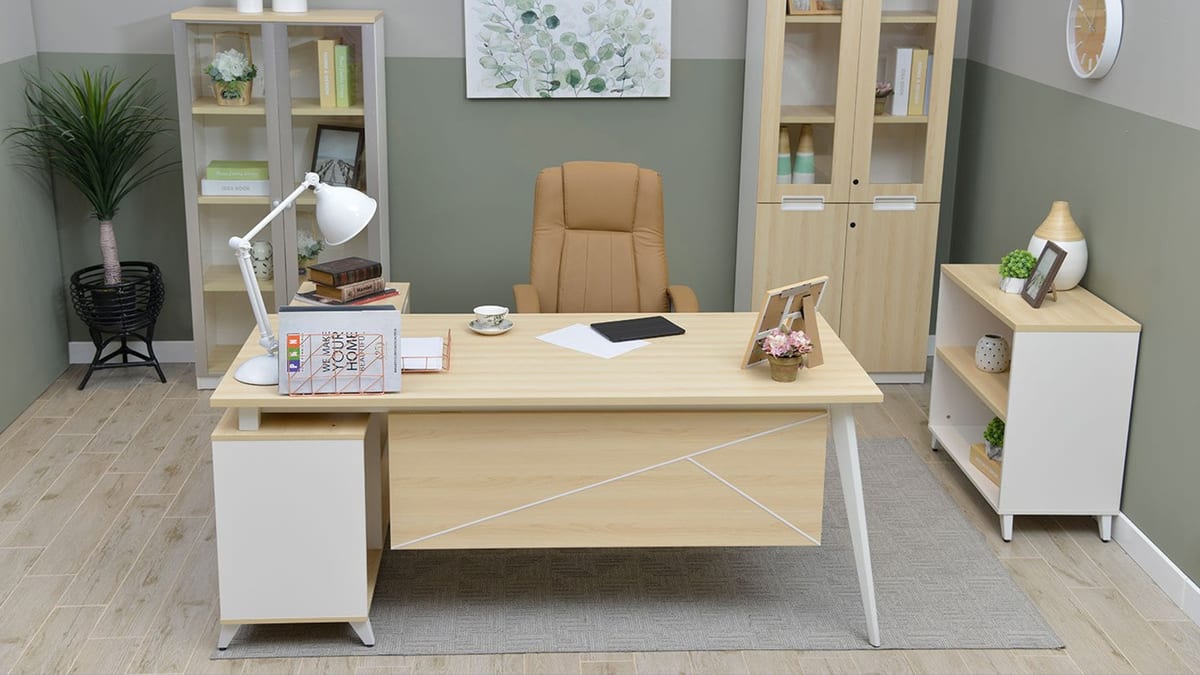
A simple furniture list may arrive with a floor plan, budget and installation requirement.
At that stage, the value of the supplier is no longer limited to making what appears on the purchase order.
Can the supplier help review the floor plan?
Can it recommend product configurations?
Can dimensions be adjusted?
Can it support CAD layouts or 3D visualisation where required?
Can it prepare quantities, BOM and quotations?
Can production and container planning be coordinated around the project?
Can installation drawings be provided?
A supplier does not need to replace the dealer's designer, contractor or project manager.
But the support behind the product should become stronger as the dealer's business becomes more demanding.
This is one of the differences between a factory that remains an approved vendor and one that gradually becomes part of the dealer's supply infrastructure.
Approved Supplier, Core Supplier or Strategic Supply Partner?
We find it useful to separate long-term suppliers into three levels.
Relationship Level | What It Means |
|---|---|
Approved Supplier | The supplier has demonstrated acceptable product, price, communication and order execution. |
Core Long-Term Supplier | The dealer is comfortable placing repeat business, carrying the range and relying on the supplier for continuity and replenishment. |
Strategic Supply Partner | The supplier understands the dealer's market well enough to support product decisions, projects, range development and supply-chain changes over time. |
A supplier should not move from the first level to the third simply because the dealer places a larger order.
The upgrade should be based on evidence.
Has the product remained stable?
Have repeat orders worked?
Were problems resolved properly?
Has the supplier handled changes transparently?
Are recommendations becoming more relevant to the dealer's market?
Has the supplier demonstrated that it can sometimes put the dealer's long-term commercial interest ahead of the value of the current PO?
Trust should increase only after evidence increases.
The Hidden Risk of Making One Supplier Too Important

There is also a risk on the dealer's side.
A strong supplier relationship can make purchasing easier.
Fewer suppliers can mean simpler communication, more coordinated products, easier replenishment and stronger knowledge of each other's working methods.
But as one supplier becomes responsible for more of the dealer's range, the consequences of supplier failure become larger.
This is Supplier Concentration Risk.
A useful question is:
If 30%, 50% or more of my product range eventually comes from this factory, what happens to my business if the supplier fails?
What happens if quality drops?
What if delivery becomes unreliable?
What if key products disappear?
What if communication deteriorates after the supplier becomes comfortable with the relationship?
The answer is not necessarily to spread every product across many factories.
That can create a different set of problems.
Instead, the more important the supplier becomes, the stronger the evidence should be before the dealer gives it more responsibility.
A 2–3 Year Long-Term Supplier Review
If you have already worked with a supplier for several years, this is the review we would suggest.
What to Review | Questions to Ask | What Good Evidence Looks Like |
|---|---|---|
Replenishment & Continuity | Can older products still be supported? How were discontinued materials handled? | Repeat orders remain compatible or changes are explained and approved |
Quality Continuity | Has quality remained close to the agreed standard across different batches? | No unexplained material downgrades or gradual decline |
Problem Resolution | What happened when something went wrong? | Problems were investigated, corrected and less likely to repeat |
Market & Product Support | Does the supplier understand what works in your market? | Recommendations become more relevant over time |
Supply-Chain Change Management | How were component, material or cost changes handled? | Early communication, alternatives and approval rather than silent substitution |
Project Capability | Can the supplier support more complex requirements as your business grows? | Useful configuration, drawing, quotation and production support |
Commercial Behaviour | Has the supplier ever advised against an order or specification that benefited them financially? | Evidence that the relationship is not managed one PO at a time |
Price should still be reviewed.
But after several years, we would not put “lowest price” at the top of this table.
The purpose of the review is to determine whether the supplier has protected the business built around its products.
The Question We Would Ask After Three Years
If we had to reduce the entire evaluation to one question, it would be this:
Has this supplier proved that it can protect not only my purchase orders, but also the product range, inventory value and customer relationships I have built around those orders?
That is a much higher standard than:
“Did the containers arrive?”
And it should be.
By the time a supplier becomes a core part of the business, the dealer has much more at risk than the value of the next shipment.
What a 5–10 Year Supplier Should Actually Provide
A long-term office furniture supplier does not need to be perfect.
It does need to be dependable in the areas that become more important with time.
Products should remain reasonably repeatable.
Quality should not gradually decline.
Changes should be communicated.
Problems should lead to solutions.
Product development should continue without destroying successful existing ranges.
Recommendations should become more relevant as the supplier learns the dealer's market.
And when the decision that is better for the dealer earns the supplier less money today, the supplier should still be capable of having that conversation.
That is a much stronger definition of reliability than simply saying:
“We have good quality and good service.”
For a dealer, the supplier that deserves more business is the one that has gradually made the dealer feel safer giving it more business.
Discuss a Long-Term Office Furniture Supply Partnership With Xusheng
If you are evaluating a Chinese office furniture manufacturer for more than one shipment, tell us about your market rather than sending only a product list.
Share the products you currently sell, your customer type, target price range, purchasing model, project requirements and the categories you may want to develop next.
We can discuss suitable products, specifications, samples, customisation, mixed-container planning, project support and how successful ranges can be replenished over time.
We do not believe a dealer should decide on a ten-year supplier after one conversation.
Start with the product.
Test the order.
Watch what happens when something changes.
Then decide how much more of your business the supplier has earned.
Primary CTA:
Discuss Your Sourcing Plan
Secondary CTA:
Explore Xusheng Furniture Systems
Frequently Asked Questions How do I choose an office furniture supplier for a long-term partnership?
Start with product quality, specifications, factory capability and trial-order performance, but also evaluate how the supplier handles problems, repeat orders, discontinued materials, quality consistency and changing market requirements. Long-term trust should be based on repeated evidence.
How long should I test an office furniture supplier before making them a core supplier?
There is no fixed period. Several successful orders across different production batches are more useful than time alone. After two or three years of real purchasing history, dealers should have enough evidence to review continuity, quality, problem resolution and supply-chain management more seriously.
Is the cheapest office furniture supplier suitable for long-term cooperation?
It can be, if the lower price comes from legitimate manufacturing efficiency and the supplier can still maintain the required specification, quality and support. The problem is not low price itself; it is a low price achieved through changes the dealer does not understand or approve.
What is the most important long-term supplier KPI for an office furniture dealer?
We would place replenishment and product continuity near the top because they affect existing inventory and customer relationships. Quality continuity, problem resolution, market support and supply-chain change management should then be reviewed alongside it.
Should office furniture remain exactly the same for five or ten years?
Not necessarily. Materials, components and market preferences change. A stronger supplier manages those changes transparently, keeps specifications where reasonably possible and proposes suitable alternatives when an original component is no longer available.
What is the difference between an approved supplier and a strategic supply partner?
An approved supplier can reliably fulfil orders. A core supplier supports repeat purchasing and continuity. A strategic supply partner goes further by understanding the dealer's market and supporting product decisions, projects, range development and supply-chain changes.
Is relying heavily on one office furniture supplier risky?
It can be. As one supplier represents more of the dealer's range, supplier concentration risk increases. Dealers should increase dependence only after the supplier has demonstrated consistent quality, continuity, problem-solving ability and reliable change management.
What should I review after working with a furniture supplier for 2–3 years?
Review whether old products remain supportable, whether bulk quality has remained consistent, how previous problems were resolved, how supply-chain changes were communicated, whether product recommendations have improved and whether the supplier can support more complex projects as your business grows.
Looking for a supplier?
Need a product, sample, or project quote?
Use the catalog to choose products, then send the list for manufacturing, dealer, OEM / ODM, or project support.