
How to Compare Office Furniture Quotations from Chinese
A lower factory quotation is not always a better buying decision. This guide shows office furniture dealers how to compare specifications, included components, current costs and purchasing options clearly.
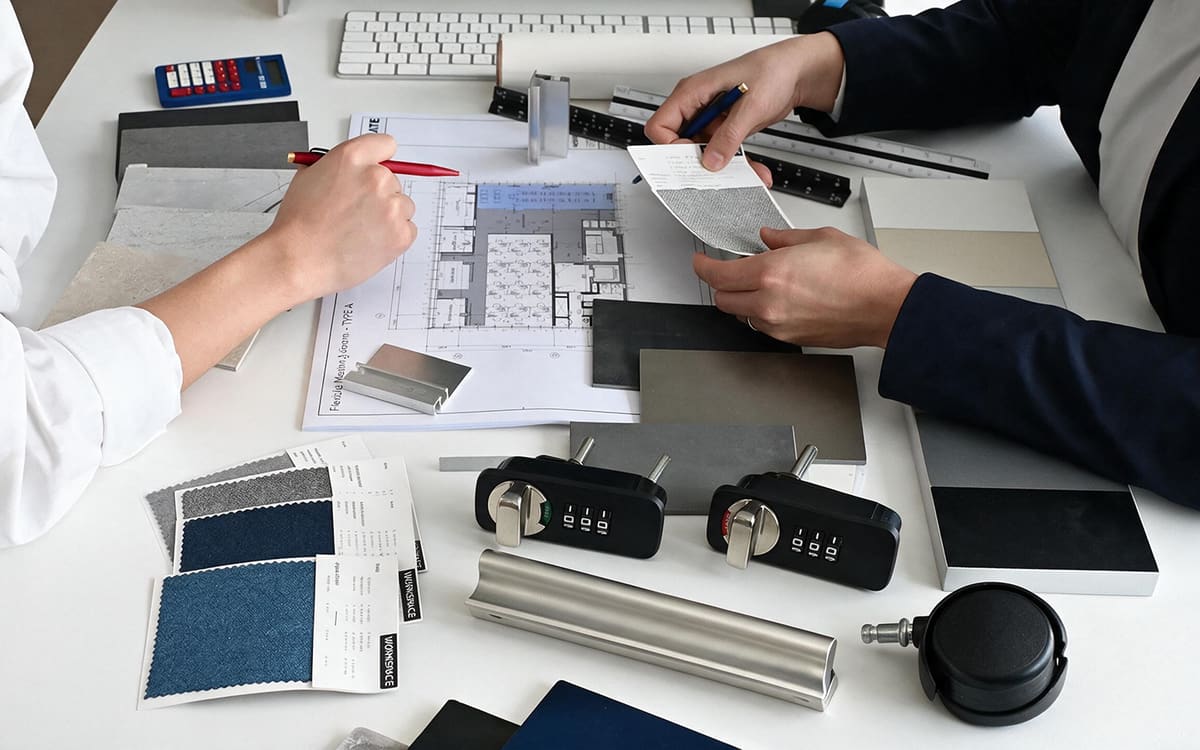
Introduction:
Three Office Furniture Quotations, Three Different Prices
Imagine you are an office furniture dealer preparing to purchase a new range of executive desks, workstations and storage cabinets from China.
You send the same product photographs and general requirements to three manufacturers.
A few days later, the quotations arrive.
Supplier A offers the lowest unit price. Supplier B is noticeably more expensive. Supplier C falls somewhere between the two.
The products appear similar. All three manufacturers say their prices are competitive.
Which quotation should you choose?
For many dealers, the first instinct is to compare the unit prices. That is understandable. Your purchasing cost affects your selling price, profit margin and ability to compete in your local market.
However, the lowest quoted price does not necessarily represent the best purchasing decision.
One quotation may include accessories that another excludes. Two desks may look identical but use different board materials, steel frames or hardware. A supplier may also have calculated the price using a standard catalogue configuration rather than the customised product you actually requested.
Even when the specifications are comparable, differences in packaging, production arrangements and delivery conditions may still matter.
At Xusheng Furniture, we work with overseas office furniture dealers, importers, wholesalers and project buyers who often compare several Chinese manufacturers before making a decision.
Our approach is straightforward: understand the product first, identify the differences that can be verified, and then decide whether the price makes sense for the customer's requirements.
We do not believe a higher price automatically means better quality. Nor do we assume a cheaper manufacturer must be using inferior materials.
The important question is whether the quotation reflects the product you need.
This guide explains how to compare office furniture quotations fairly, what information to check, how customisation and material costs affect pricing, and how dealers can make more informed purchasing decisions.
1. Compare Like for Like Before Comparing Prices
The first rule of quotation comparison is simple:
Make sure the manufacturers are quoting for comparable products.
A quotation is only meaningful when you understand what is included in the price.
Suppose two suppliers offer a similar-looking executive desk.
Both products have a rectangular desktop, a side cabinet and a cable management system. The photographs look almost identical.
However, one supplier has included the side cabinet and cable box in the quoted price, while the other has priced only the main desk.
The lower quotation is not necessarily cheaper. It may simply cover fewer components.
The same issue can arise with workstations, meeting tables, filing cabinets and mobile pedestals.
When a customer shares competing quotations with Xusheng, we normally begin by checking the available product information.
This includes the dimensions, board specifications, steel frame, hardware, accessories, packaging and any customisation requirements.
We then identify differences that could affect the quoted price.
If the competitor's quotation does not contain enough information, we explain which details still need to be confirmed.
For customers with genuine purchasing requirements who are willing to examine the differences, we can also provide our own product specifications as a reference.
This helps the buyer compare the available proposals more accurately.
We do not need to claim that another manufacturer's product is inferior. The purpose is to understand what each quotation actually covers.
What should you compare first?
Start with the following:
● Product model and configuration
● Overall dimensions
● Board material and thickness
● Steel frame specifications
● Hardware and fittings
● Included accessories
● Colours and finishes
● Packaging requirements
● Customisation details
● Product quantities
Once these details are clear, the price comparison becomes much more useful.
Without them, you may be comparing two different products simply because their photographs look alike.
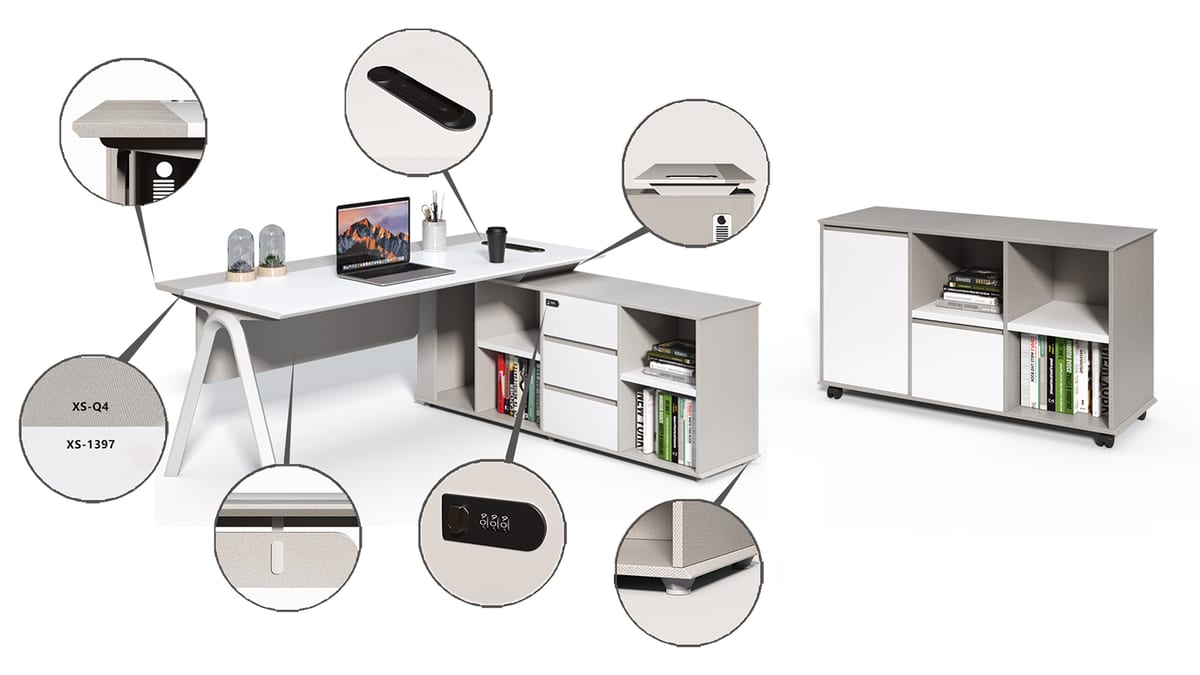
2. Understand Why Similar-Looking Products Can Have Different Prices
Office furniture prices are affected by many product details that are difficult to identify from photographs alone.
Consider a modern office desk with a melamine desktop and metal frame.
Its appearance may be simple, but the quotation can be affected by the board specification, edge banding, frame construction, fittings and accessories.
Two suppliers may use different specifications while presenting almost identical product images.
Board materials and dimensions
Check the board material, thickness and finish.
A desk with a different desktop thickness may require a different amount of material. However, thicker does not automatically mean better for every design.
The appropriate specification depends on the product structure and intended application.
Steel frames and construction
For metal-framed office furniture, check the relevant steel specifications and construction details.
The frame design, dimensions, connections and surface treatment can all matter.
However, a heavier frame is not necessarily the most suitable choice if the design does not require it.
Hardware and accessories
Drawer runners, hinges, locks, connectors, cable management components and other fittings may differ between quotations.
These items are not always visible in a product photograph.
Ask the manufacturer to confirm what is included.
Packaging
Packaging can also affect the quotation.
Different carton requirements, internal protection methods, labels and branding arrangements may result in different costs.
A dealer importing furniture for resale should understand how the products will be packed, not simply how they look when assembled.
For a more detailed discussion of these technical differences, read why similar-looking office desks have different prices.
That article explains the product-level factors behind pricing. Here, our focus is how dealers should use that information when comparing actual supplier quotations.
3. A Higher Specification Is Not Always a Better Purchasing Decision
It is tempting to assume that the supplier offering the thickest board, heaviest frame or most expensive fittings must have the better product.
That is not always the case.
A specification should be judged against the intended use of the furniture.
For example, an office desk intended for a general commercial workspace may not need the same configuration as a product designed for a more demanding application.
Likewise, a dealer selling to a price-sensitive market may need a different product range from one supplying higher-end corporate projects.
At Xusheng, we consider several factors when recommending product specifications.
We look at the furniture's intended application, the dealer's target market, the expected selling price, the actual usage requirements and the available budget.
These factors help determine which specifications are necessary.
The aim is not to make every product as expensive as possible.
It is also not to reduce every specification until the product reaches the lowest possible price.
Both approaches can be unsuitable.
Ask what the additional specification provides
If Supplier A offers a more expensive fitting than Supplier B, ask what the difference means in practice.
Does it provide a function the customer needs?
Does it affect the product's intended use?
Will the dealer's customers recognise or value the difference?
Is it necessary for the proposed market position?
If the additional specification offers a meaningful benefit, the higher cost may be justified.
If it does not, a simpler configuration may be more appropriate.
This is particularly relevant for dealers building a product range.
A product that is technically more expensive to manufacture is not automatically easier to sell.
The correct specification is the one that meets the required performance, appearance and commercial positioning.
4. What If the Specifications Are Similar but the Prices Still Differ?
Sometimes a dealer compares the available specifications and finds no obvious explanation for the price difference.
The products have similar dimensions, materials and fittings.
Yet one supplier remains more expensive.
In this situation, there are additional factors worth investigating.
Manufacturing arrangements
Different manufacturers may have different production processes, equipment, purchasing arrangements and operating costs.
These differences can influence pricing.
However, one supplier cannot reliably explain another factory's internal cost structure without evidence.
Quality-control arrangements
Ask what quality checks are performed during production and before packing.
The supplier should be able to explain its own process.
A higher price does not prove that better quality control is included. The buyer needs actual information.
Packaging requirements
Check whether the quotations include equivalent packaging.
A supplier may have allowed for a different carton specification or protection method.
Customisation scope
Confirm whether both suppliers have priced the same customised dimensions, materials, fittings and branding requirements.
A quotation based on a standard product may not be comparable with one based on an approved custom design.
Delivery capability
Ask whether the manufacturer can realistically meet the proposed production schedule.
An attractive price and delivery date are only useful if the supplier can fulfil the agreed order.
At Xusheng, if we cannot establish why another supplier's quotation is lower, we do not invent an explanation.
We can explain our own product specifications, manufacturing arrangements and quotation basis.
Where practical, customers can also inspect our finished products and assess the materials, construction and workmanship themselves.
A supplier should explain what it knows, not speculate about what another factory might be doing.
5. What Information Should an Office Furniture Quotation Include?
A useful quotation should provide enough information for the buyer to understand the product and purchasing requirements.
A product name, photograph and unit price may be sufficient for an initial discussion.
However, they are not always enough for a confirmed order, especially when customisation is involved.
At Xusheng, quotation and related order information can include the product model, dimensions, materials, colours, hardware, packaging, customisation, quantity, delivery schedule, weight, volume and detailed component information.
The exact documentation depends on the product and order.
For a standard catalogue desk, the required information may be relatively straightforward.
For a customised workstation or executive desk, more details need to be agreed before the final quotation is calculated.
Office furniture quotation checklist
Item | What the dealer should verify |
|---|---|
Product model | Exact model or approved design |
Dimensions | Confirmed measurements |
Board materials | Material type, thickness and finish |
Metal structure | Frame and relevant structural specifications |
Hardware | Locks, hinges, runners and connectors |
Accessories | Included cable management, pedestals and other components |
Colours | Confirmed board and metal finishes |
Customisation | All agreed changes to the standard product |
Packaging | Packing method and protection requirements |
Branding | Logo, carton markings and labels |
Quantities | Quantity for each product model |
Delivery | Estimated production schedule |
Weight | Relevant product and packing weight information |
Volume | CBM or other relevant logistics information |
Not every manufacturer will use the same quotation format.
That is not necessarily a problem.
What matters is whether the information is complete enough to support a fair comparison.
If a requested accessory is missing from the quotation, ask whether it is included.
If the packaging is not described, ask what has been priced.
If the product has been customised, confirm that the quotation reflects the latest approved design.
These checks reduce the risk of discovering differences after the order has been placed.
6. How Xusheng Prepares an Office Furniture Quotation
At Xusheng, our normal quotation process begins with understanding the customer's product requirements.
We generally provide our catalogue so the customer can review the available models.
The customer selects the products and confirms the relevant specifications, including dimensions, colours, materials and hardware.
For standard products, this may be a relatively straightforward process.
Customised products require additional discussion.
The customer explains the requested changes, and our designer prepares drawings for review.
The customer then checks the drawings and provides feedback.
We continue reviewing the design until the relevant dimensions, fittings and other product details are agreed.
Packaging, logos, labels and branding requirements are also confirmed.
Once these details have been settled, we confirm the final quantities and product combination.
The detailed quotation is then calculated using the agreed requirements.
Our typical quotation workflow
1. Product selection: The customer reviews the catalogue and selects suitable models.
2. Specification confirmation: Dimensions, materials, colours and hardware are discussed.
3. Drawing review: For customised products, drawings are prepared and reviewed.
4. Packaging and branding: Cartons, labels, logos and related requirements are confirmed.
5. Order planning: Final quantities and the product combination are agreed.
6. Detailed quotation: The price is calculated using the confirmed requirements.
This describes the process for developing a properly defined order.
It does not mean every preliminary price enquiry requires a completed drawing and packaging plan.
An indicative price may help a customer decide whether to continue discussing a product.
However, the final quotation should correspond to what will actually be manufactured.
This distinction is important when comparing manufacturers.
One supplier may have quoted a standard catalogue product.
Another may have included changes to dimensions, hardware or packaging.
Before treating the two prices as directly comparable, confirm that they refer to the same product requirements.
7. Why Office Furniture Quotations Can Change Over Time
Office furniture quotations are not necessarily permanent prices.
The amount quoted depends on the product configuration and the costs applicable when the calculation is made.
At Xusheng, we calculate prices according to the customer's confirmed specifications and current material purchasing costs.
If the customer changes the material, dimensions, number of fittings, packaging or logo requirements, we recalculate the quotation.
Material purchasing prices can also change.
When relevant material costs increase, the calculated price may rise.
When they decrease, the quotation may also be lower.
This is the principle behind our approach to live pricing.
We do not rely on an outdated fixed price when the relevant requirements or purchasing costs have changed.
Does every quotation have a fixed validity period?
In practice, a quotation has a time-sensitive basis because it reflects the specifications and costs used when it was calculated.
However, Xusheng does not apply one universal validity period to every quotation.
Customers generally review the proposal, confirm the requirements and proceed with the contract and order at an appropriate time.
When a new quotation or revised calculation is needed, we review the applicable specifications and material purchasing costs.
For dealers, this means an earlier quotation should not automatically be treated as permanently valid.
If a price has changed, ask the supplier to explain the reason.
Was the product specification revised?
Did the customer add fittings or change the packaging?
Have relevant material purchasing costs changed?
The objective is to understand the basis of the new quotation.
A price revision should be considered in the context of the actual product and costs, rather than automatically being viewed as unreasonable.
8. How Customisation Can Change the Quoted Price
Customisation is common in office furniture sourcing.
A dealer may want different desk dimensions, a particular board finish, a revised cabinet configuration or packaging carrying its own brand.
These changes can affect the quotation.
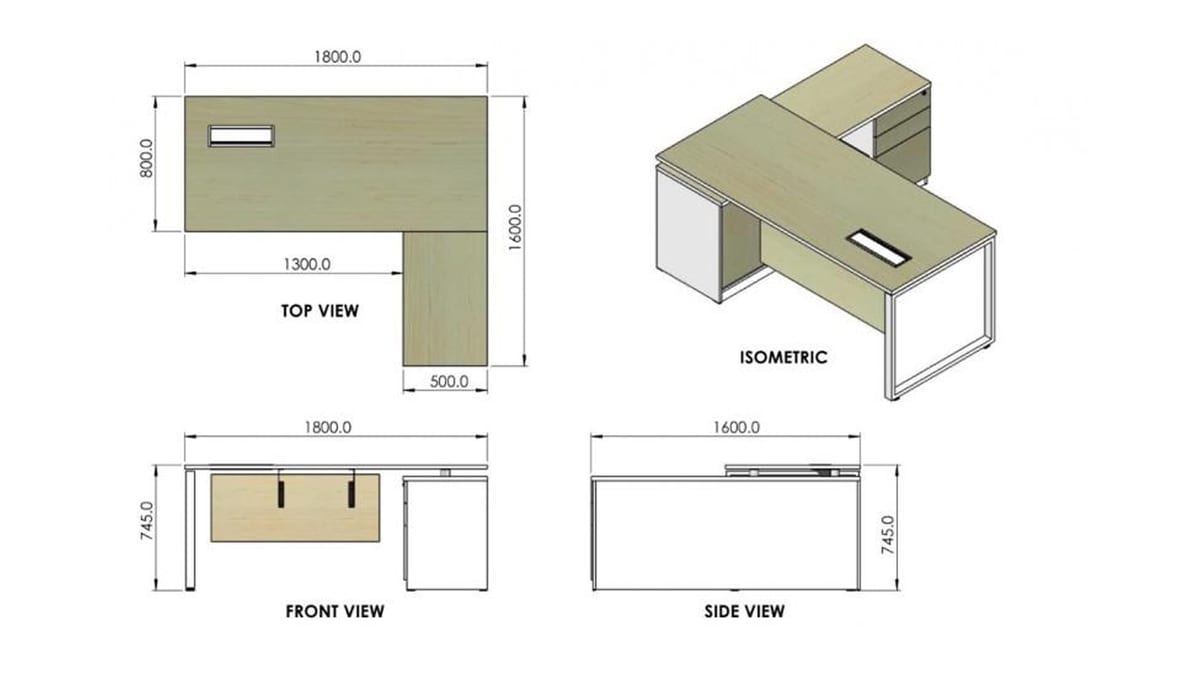
For example, changing a desk's dimensions may alter the material requirements.
Adding a lock, cable box or other fitting changes the product configuration.
Special packaging or labels may introduce additional requirements.
The important point is that the final price should reflect the final product.
At Xusheng, if a customer changes an agreed specification, we calculate the quotation again using the revised details.
We do not assume that a previously discussed price automatically covers every later modification.
Confirm the latest version
When comparing quotations for customised products, check that each manufacturer is working from the same version of the design.
A drawing may have been revised several times.
The customer may have changed the dimensions or requested different fittings.
If one supplier is pricing an earlier drawing while another is pricing the latest version, the quotations are not directly comparable.
The dealer should therefore confirm:
● Which drawing or configuration has been quoted
● Whether all requested changes are included
● Whether the hardware and accessories are correct
● Whether packaging and branding have been considered
● Whether the final quantities have been confirmed
This is particularly important for dealers developing their own branded furniture ranges.
The quotation should match the product they intend to sell, not merely the product originally discussed.
9. Reduce Costs by Reviewing the Configuration, Not Just Negotiating the Price
When a customer says that a quotation is above budget, there may be several possible responses.
The simplest is to ask the manufacturer for a discount.
However, that is not always the most effective approach.
Sometimes the product itself can be configured more efficiently.
At Xusheng, we first consider whether the proposed specifications, product combination or layout can be adjusted without compromising the customer's essential requirements.
This may involve removing unnecessary premium features, reviewing suitable materials or reconsidering the arrangement of furniture within a project.
The purpose is to improve the purchasing proposal rather than simply reduce the number on the quotation.
Review unnecessary features
A product may include features that are not required for the intended market.
If removing or changing those features does not affect the customer's essential requirements, an alternative configuration may be worth considering.
Review the product combination
A dealer may be purchasing several types of desks, workstations and storage products.
The proposed combination should reflect actual market demand and the available budget.
Changing the mix may sometimes be more useful than negotiating a small discount on every item.
Review the layout
For project orders, the original furniture arrangement may not be the most efficient option.
A different workstation configuration may better suit the space or the customer's practical requirements.
However, any alternative must be checked against the actual seating requirements, dimensions and intended use.
A cheaper layout is not a suitable alternative if it fails to provide the required workspace.
Know when a price target is unrealistic
There are limits to cost optimisation.
If a customer's target price cannot be achieved while maintaining the necessary product specifications, we explain the situation.
We do not believe it makes sense to accept an order by promising a product that cannot realistically meet the agreed requirements.
Sometimes the right decision is to adjust the budget.
Sometimes it is to choose another product.
And sometimes a different manufacturer is a better fit.
10. Why Dealers Should Compare the Whole Purchasing Proposal
A quotation comparison should not always stop at the individual product level.
Many dealers purchase several categories of office furniture together.
A typical order may include executive desks, manager desks, workstations, meeting tables, filing cabinets and pedestals.
The unit prices matter, but so does the overall product combination.
For example, a dealer may select a large number of similar desk models without considering whether the local market needs that much variety.
Another dealer may be planning an office project and selecting furniture before the final layout has been reviewed.
In both situations, the manufacturer may be able to help the customer reconsider the proposal.
This does not mean the supplier should decide what the dealer must buy.
The dealer understands its customers and market.
The manufacturer's role is to explain the available product options and identify practical considerations.
Questions to consider
Does the product combination match the dealer's target customers?
Are there unnecessary overlaps between models?
Do the selected workstations meet the project's actual requirements?
Are the materials and finishes appropriate for the intended selling price?
Could another configuration provide the required function more efficiently?
These questions can reveal opportunities that are not visible in a simple unit-price comparison.
A lower price for an unsuitable product is not necessarily a saving.
A suitable purchasing plan should support the dealer's actual sales and project requirements.
11. Consider the Relationship Between MOQ, Product Mix and Quotation
Minimum order quantity can affect how a dealer plans its purchasing budget.
A manufacturer may have different production requirements depending on the product, materials and customisation.
At Xusheng, the general MOQ is around 30 pieces per model, although actual arrangements depend on the order and customer requirements.
Established dealers often place orders based on their ongoing market demand and replenishment plans, rather than purchasing only to meet a minimum quantity.
For a new dealer, however, the initial product combination deserves careful consideration.
Buying too many models can spread the purchasing budget across a large range.
Buying too few may limit the dealer's ability to test customer demand.
The correct approach depends on the market, available stock capacity and sales plan.
Do not compare unit prices without checking quantities
A supplier may quote a particular price based on a certain order quantity.
Another supplier may be pricing a different quantity.
Before comparing the figures, establish whether the same quantity and product combination have been used.
If a dealer changes the quantities significantly, the quotation may need to be reviewed.
The same applies when the dealer adds customised models or changes the materials.
MOQ should therefore be considered alongside the actual purchasing plan, not as an isolated number.
A dealer should understand what quantity is being quoted, why that quantity has been proposed and whether it is suitable for the business.
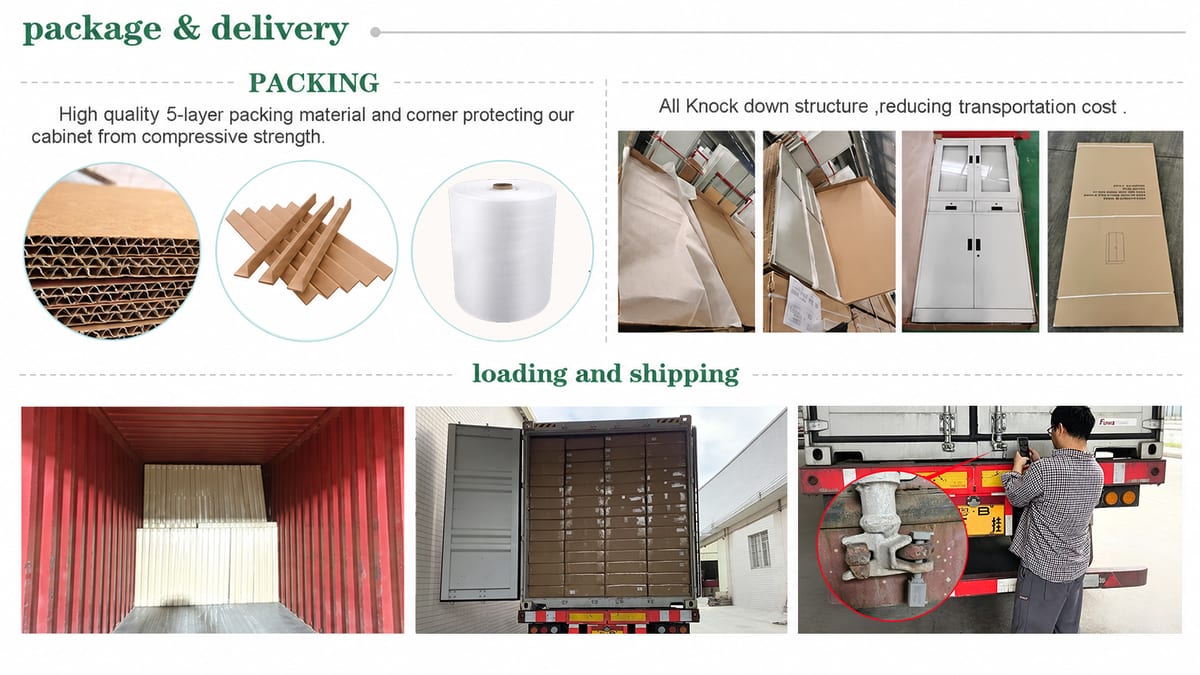
12. Packaging and Logistics Information Matter Before the Order Is Confirmed
Packaging is sometimes treated as a minor detail during price discussions.
For imported office furniture, it deserves more attention.
A dealer needs to know how the products will be packed and whether the proposed packaging meets the order requirements.
At Xusheng, relevant quotation and order information can include product weight and volume data.
These details help customers plan shipments and understand the proposed product combination.
However, the factory unit price should not be confused with the total landed cost of importing the furniture.
Depending on the agreed trade terms, freight, insurance, customs charges, destination handling and inland transport may need to be calculated separately.
This article focuses on comparing manufacturers' quotations, but those costs remain relevant to the
purchasing decision.
Check the packaging basis
Ask whether the products are supplied flat-packed or assembled.
Confirm the carton and internal protection requirements.
Check whether customer-specific labels or markings are included.
If the products have been customised, verify that the packing information corresponds to the confirmed configuration.
Check weight and volume information
Product dimensions alone do not always tell the buyer how much shipping space will be required.
The packing method and carton arrangement can affect shipment planning.
When comparing suppliers, make sure the relevant weight and volume information is available.
If one quotation includes a different packaging method, the dealer should consider that difference rather than comparing unit prices alone.
Avoid assuming that a cheaper product means a cheaper shipment
A lower factory price may still be attractive.
However, the dealer needs sufficient logistics information to understand the wider purchasing implications.
The appropriate calculation will depend on the actual order and shipping arrangements.
13. Check Whether the Proposed Delivery Schedule Is Realistic
Price is important, but a quotation also needs to reflect an achievable production plan.
A supplier may offer an attractive price and a very short lead time.
Before accepting the proposal, the dealer should understand whether the schedule is realistic for the confirmed order.
Production requirements can vary according to the models, quantities, materials and degree of customisation.
At Xusheng, we assess the relevant requirements before making delivery commitments.
We do not believe in promising a schedule that cannot reasonably be achieved simply to secure an order.
For dealers, this matters because purchasing decisions often connect to showroom plans, stock replenishment or customer projects.
A quotation based on unrealistic assumptions can create problems later.
Questions worth asking
Has the manufacturer reviewed the actual product quantities?
Are the required materials and finishes confirmed?
Have the customised drawings been approved?
Are packaging and branding requirements included?
Does the proposed schedule reflect the current production requirements?
If the order changes after the quotation, the schedule may also need to be reviewed.
The goal is to confirm a realistic plan before production begins.
A low price is not particularly useful if the supplier cannot deliver the agreed product under the conditions the customer requires.
14. What If Another Manufacturer Is Genuinely Cheaper?
A lower quotation is not automatically a warning sign.
Different manufacturers have different product ranges, production arrangements, purchasing costs and market positioning.
A supplier specialising in economical office furniture may offer a configuration that is entirely suitable for a price-sensitive market.
Another manufacturer may focus on products with different specifications or commercial requirements.
Neither approach is automatically better.
At Xusheng, if another supplier's proposal genuinely fits the customer's needs and budget better than ours, we can acknowledge that.
We do not believe every enquiry must result in an Xusheng order.
If the customer's requirements cannot be met within the available budget without compromising essential product expectations, accepting the order may not be the right decision.
Sometimes a supplier positioned at a different price level is more appropriate.
This is not a reason to avoid competition.
It is a recognition that dealers serve different markets and need different products.
What should the dealer do?
First, confirm that the lower quotation includes the required product configuration.
Second, establish whether any important specifications or conditions differ.
Third, assess whether those differences matter for the intended application.
If the cheaper product meets the requirements and the supplier can fulfil the order, the lower quotation may be a reasonable choice.
The purpose of comparison is to make an informed decision, not to justify choosing the most expensive supplier.
15. How to Compare Three Office Furniture Manufacturers Fairly
When comparing several quotations, use a single comparison sheet.
This makes it easier to identify missing information and prevents the unit price from becoming the only deciding factor.
Supplier comparison template
Comparison item | Supplier A | Supplier B | Supplier C |
|---|---|---|---|
Product model | Check | Check | Check |
Dimensions | Check | Check | Check |
Board specification | Check | Check | Check |
Frame specification | Check | Check | Check |
Hardware | Check | Check | Check |
Accessories | Check | Check | Check |
Colours and finishes | Check | Check | Check |
Customisation | Check | Check | Check |
Packaging | Check | Check | Check |
Logo and labels | Check | Check | Check |
Quantities | Check | Check | Check |
Weight and volume | Check | Check | Check |
Production schedule | Check | Check | Check |
Quotation timing | Check | Check | Check |
Unit price | Record | Record | Record |
Outstanding questions | List | List | List |
Replace each 'Check' field with the actual information supplied by the manufacturer.
Do not assign a higher score simply because one specification is more expensive.
Instead, record the difference and assess whether it matters.
For example, if two suppliers use different hardware, identify the functions and requirements involved.
If one supplier includes additional accessories, establish whether the customer needs them.
If the packaging differs, consider the relevant shipment requirements.
If the quotation was prepared using an earlier product drawing, request an updated calculation.
Once the information has been brought onto a comparable basis, the dealer can review the prices more fairly.
Avoid artificial scoring systems
It may be tempting to give each supplier a numerical score for price, materials, packaging and service.
Such a system can be useful internally, but the weighting should reflect the dealer's actual priorities.
A project contractor may place particular importance on the confirmed specification and delivery schedule.
A wholesaler may focus on a product's suitability for regular stock replenishment.
A local brand owner may need consistent finishes and branding arrangements.
There is no single scoring formula that works for every buyer.
The comparison should support the purchasing decision rather than replace commercial judgement.
16. Common Mistakes Dealers Make When Comparing Quotations
Several avoidable mistakes can make office furniture quotation comparisons less reliable.
Mistake 1: Comparing photographs instead of specifications
Similar appearance does not guarantee identical construction or included components.
Ask for the relevant product information.
Mistake 2: Assuming the highest specification is always necessary
More expensive materials or fittings may not provide additional value for every application.
Consider the intended use and target market.
Mistake 3: Ignoring missing accessories
A quotation may appear cheaper because some components have not been included.
Confirm the full product configuration.
Mistake 4: Comparing different order quantities
Unit prices may be based on different quantities or purchasing arrangements.
Bring the comparison onto a consistent basis.
Mistake 5: Treating an indicative price as a final quotation
An early estimate may not include all the requirements of a customised product.
Confirm the final specifications before placing the order.
Mistake 6: Assuming an old quotation remains unchanged
Material purchasing costs and product requirements may change.
Ask for an updated calculation when necessary.
Mistake 7: Focusing only on the unit price
Packaging, delivery conditions, product suitability and the overall purchasing arrangement also matter.
Mistake 8: Asking the supplier to meet an unrealistic price without changing the requirements
A lower target price may require a different configuration.
The supplier should explain what can reasonably be adjusted.
Mistake 9: Believing every negative claim about a competitor
A manufacturer may not have enough information to explain another supplier's price.
Look for verifiable differences rather than assumptions.
Mistake 10: Choosing a supplier that does not fit the market
A product may be well made but unsuitable for the dealer's target selling price or customer requirements.
The right supplier is the one whose products and capabilities match the business.
17. Think Beyond the First Quotation
Some dealers purchase furniture for individual projects.
Others are building a product catalogue, showroom collection or stock programme that they intend to develop over several years.
These different business models may influence how quotations should be assessed.
For a one-off project, the immediate product requirements may be the main consideration.
For a dealer developing a long-term range, product compatibility and future availability may also matter.
A customer purchasing workstations today may later require matching meeting furniture, storage or manager desks.
A dealer may also need to replenish popular models after the first shipment.
These requirements do not automatically make a more expensive quotation better.
However, they may influence which manufacturer is the most suitable business partner.
At Xusheng, we encourage dealers to consider how the proposed products fit their actual sales plans.
A purchasing arrangement should support the customer's business rather than force an unsuitable product range.
For a broader view of these decisions, read sourcing office furniture from China.
The guide covers supplier selection, specifications, quality control, order planning and longer-term sourcing considerations.
Dealers may also find it useful to compare product-based vs system-based office furniture sourcing when deciding whether to buy individual models or develop a more coordinated product range.
The appropriate approach depends on the dealer's market, inventory capacity and customer requirements.
A quotation is one part of that wider decision.
18. Five Questions Every Dealer Should Answer Before Confirming an Order
Before accepting a quotation, there are five questions worth reviewing.
1. Do I know exactly what I am buying?
Confirm the models, dimensions, materials, hardware, accessories, packaging and customisation requirements.
The quotation should correspond to the product you expect to receive.
2. Have I compared the suppliers on the same basis?
Check whether the quotations include equivalent specifications, quantities and conditions.
Where they differ, understand the implications.
3. Is the product suitable for my market?
Consider the intended use, expected selling price, customer requirements and available budget.
Avoid unnecessary specifications, but do not compromise essential performance.
4. Is the quotation based on current and confirmed information?
Check whether the product details have changed since the quotation was prepared.
If necessary, request an updated calculation.
5. Can the supplier realistically fulfil the order?
Review the production requirements, customisation details and proposed schedule.
A quotation should represent an achievable purchasing arrangement.
If these questions can be answered clearly, the dealer is in a stronger position to make a decision.
If important information remains missing, it is worth resolving those details before confirming the order.
Conclusion: The Best Quotation Is the One That Fits Your Business
Comparing office furniture quotations from Chinese manufacturers requires more than placing unit prices side by side.
First, establish whether the products are comparable.
Check the dimensions, materials, structure, hardware, accessories, packaging and customisation requirements.
If the specifications differ, understand whether those differences matter for the intended application.
If the specifications are similar, review the remaining conditions and ask the suppliers to explain what they can verify.
Then consider whether the proposed products and purchasing arrangement suit your market and budget.
At Xusheng Furniture, our quotations are calculated according to confirmed product requirements and current material purchasing costs.
We help customers review specifications, understand relevant differences and consider practical alternatives where appropriate.
We also recognise that Xusheng is not the right supplier for every order.
If another manufacturer offers a more suitable product for the customer's needs and budget, we would rather acknowledge that than make promises we cannot fulfil.
For overseas dealers, a good purchasing decision should support the business beyond the moment the quotation is accepted.
Compare the product first. Understand the price difference. Then choose the supplier and configuration that make sense for your customers.
Primary CTA:
Discuss Your Sourcing Plan
Secondary CTA:
Explore Xusheng Furniture Systems
FAQ
Frequently asked questions
011. How do I compare office furniture quotations from Chinese manufacturers?
Start by checking whether the quotations include comparable product dimensions, materials, structures, hardware, accessories, packaging, quantities and customisation requirements. Then review delivery conditions and other relevant purchasing details. The aim is to understand what each supplier is offering before comparing the prices.
022. Why do Chinese office furniture manufacturers quote different prices for similar products?
The products may have different specifications, fittings, accessories or packaging requirements. Manufacturers may also have different production costs and purchasing arrangements. A fair comparison requires reviewing the available information rather than assuming that the lowest quotation means inferior quality.
033. Does a higher office furniture quotation mean better quality?
Not necessarily. A higher price may reflect different specifications or costs, but it does not automatically prove better quality. Dealers should assess whether the product meets their actual requirements and whether the additional specification provides a useful benefit.
044. What information should I provide to obtain an accurate office furniture quotation?
Provide the product models or drawings, dimensions, materials, colours, hardware, accessories, quantities, packaging, branding and relevant delivery requirements. Customised products may require drawing review and additional confirmation before the final quotation is calculated.
055. Why does Xusheng recalculate quotations when specifications change?
Changes to materials, dimensions, fittings, packaging or branding can affect manufacturing costs. Xusheng recalculates the quotation according to the revised requirements and the applicable material purchasing costs.
066. Does Xusheng have a fixed quotation validity period?
Xusheng calculates quotations using the confirmed product requirements and material purchasing costs applicable at the time. There is no single universal validity period for every quotation. When a revised quotation is needed, the relevant specifications and costs are reviewed.
077. Can I reduce office furniture purchasing costs without reducing essential quality?
Sometimes. Reviewing unnecessary features, adjusting the product configuration, reconsidering the layout or improving the purchasing arrangement may reduce costs. However, the proposed changes must still meet the customer's essential product requirements.
088. Should I always choose the cheapest office furniture supplier?
No. The cheapest supplier may be the right choice if its product and conditions meet your requirements. However, a lower price is not useful if important components are missing or the product is unsuitable for your market.
099. Can Xusheng help me compare quotations from other manufacturers?
For customers with genuine purchasing requirements, Xusheng can review the available product information, explain identifiable differences and provide its own specifications as a reference. We do not make unsupported claims about another manufacturer's costs or quality.
1010. What if another manufacturer offers a better quotation than Xusheng?
If another supplier genuinely offers a product that better fits your requirements and budget, that may be the more suitable choice. Xusheng does not believe in accepting orders that cannot realistically meet the customer's expected product requirements.
Looking for a supplier?
Need a product, sample, or project quote?
Use the catalog to choose products, then send the list for manufacturing, dealer, OEM / ODM, or project support.