
Office Furniture Manufacturer vs Trading Company in China: Which Is Better for Overseas Dealers?
Should office furniture dealers buy from a Chinese manufacturer or trading company? Compare product control, sourcing support, communication risks and costs through Xusheng’s real 120-desk Italian dealer case.
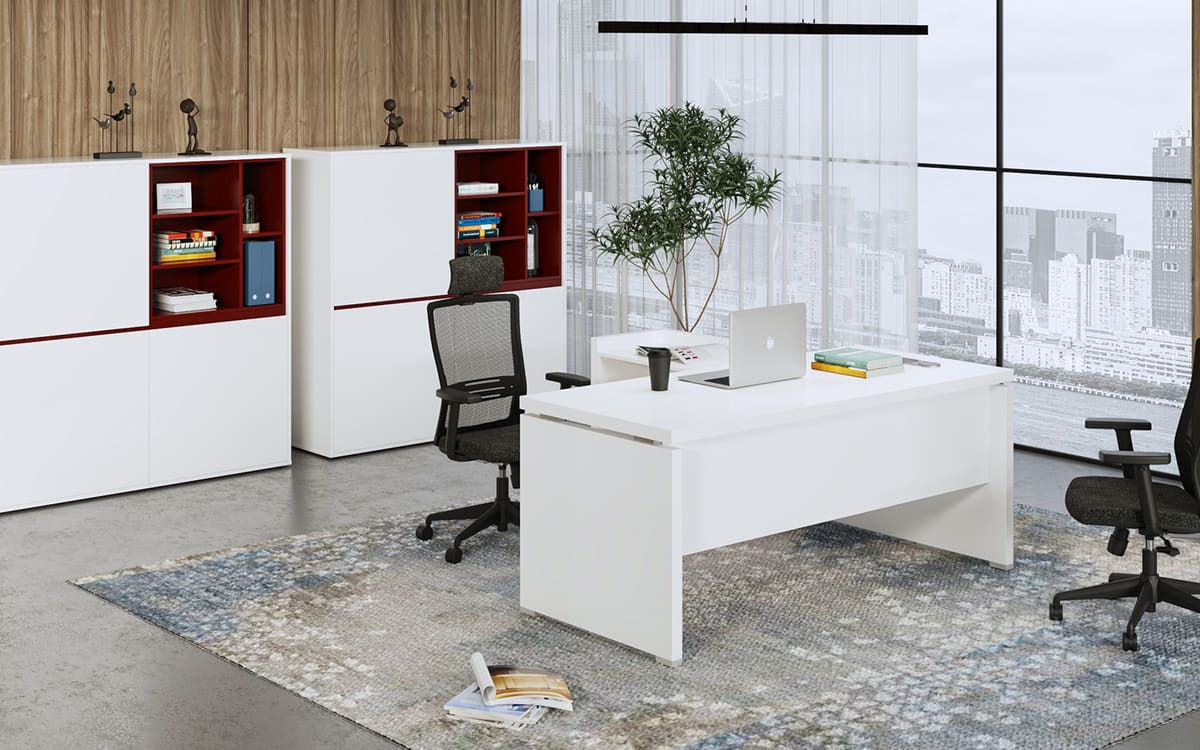
Office Furniture Manufacturer vs Trading Company in China: Which Is Better for Overseas Dealers?
When an overseas office furniture dealer starts sourcing from China, one of the first decisions is whether to work directly with a manufacturer or buy through a trading company.
At first glance, the choice seems straightforward. A manufacturer makes the furniture. A trading company buys it from factories and sells it to overseas customers.
But that distinction tells you surprisingly little about how well either supplier will handle your business.
A manufacturer may understand the construction of a desk but have limited experience coordinating products outside its own range. A trading company may not operate a production line, yet have strong relationships with several specialist factories and manage complex purchasing requirements efficiently.
Both models can work.
The more useful question is what happens when your order becomes complicated.
Who checks whether your drawings are practical? Who notices that a product configuration could create problems for your sales team? Who confirms material specifications before production? And when you need to reorder the same furniture two years later, who can tell you whether the original components are still available?
These are the questions that matter to dealers building a sustainable product range.
At Xusheng Furniture, we have worked with overseas dealers who previously sourced through trading companies, as well as buyers who need products from several manufacturers. Our experience has taught us that choosing between a manufacturer and a trading company is less about removing a middleman and more about understanding where product knowledge, manufacturing control and purchasing responsibility actually sit.
1. What Is the Difference Between an Office Furniture Manufacturer and a Trading Company?
An office furniture manufacturer is directly involved in producing furniture. Depending on its capabilities, this may include board processing, component preparation, machining, assembly, quality inspection, packaging and production management.
A trading company typically purchases products from one or more manufacturers and supplies them to overseas customers. Its role may include sourcing, quotation coordination, supplier communication, quality inspection, consolidation and export arrangements.
The distinction is not always visible from a product catalogue.
A manufacturer may offer furniture made partly by specialist component suppliers. A trading company may have exclusive manufacturing partnerships and a dedicated quality-control team.
That is why buyers should avoid making assumptions based on a company's name or website.
Comparison | Direct Manufacturer | Trading Company |
|---|---|---|
Main role | Manufactures and manages its own product range | Sources and coordinates products from manufacturers |
Product knowledge | Often closer to construction, materials and production | Depends on the technical capability of its team and partner factories |
Customisation | Can discuss production feasibility more directly | Coordinates customisation with the relevant factory |
Product selection | Usually strongest within its manufacturing specialisation | May offer broader categories from multiple suppliers |
Quality control | Direct access to its own production processes | Relies on supplier management, inspection and agreed controls |
Multi-factory coordination | May be limited outside its product range | Often a core service |
Repeat orders | Can maintain production records for its own products | Depends on record-keeping and continuity across partner factories |
Accountability | Direct for the manufacturing work it controls | Depends on contractual responsibility and supplier oversight |
Neither column guarantees a better outcome.
A capable trading company can manage suppliers better than a poorly organised manufacturer. Equally, a manufacturer that understands your product requirements can sometimes prevent problems that would be difficult to resolve through several layers of communication.
The difference becomes clearer when you examine a real order.
2. A Real Case: How an Italian Dealer Improved a 120-Desk Order
Several years ago, an Italian office furniture dealer was purchasing through a trading company that communicated with Xusheng on its behalf.
The arrangement was workable, but technical discussions took longer than they needed to. Product requirements had to pass through an intermediary before reaching the people responsible for manufacturing.
One particular order showed why this mattered.
The original requirement: 120 office desks with side cabinets
The dealer wanted to purchase 120 office desks with matching side cabinets.
Initially, the requirement communicated to Xusheng was for 120 conventional desks with side cabinets.
After the quotation stage, the configuration changed.
The trading company informed us that the customer now required:
● 60 desks with left-hand side cabinets.
● 60 desks with right-hand side cabinets.
From a production perspective, we could have followed those instructions.
But when we considered how the furniture would eventually be sold and installed, we saw a more practical option.
Xusheng proposed a left- or right-hand interchangeable design
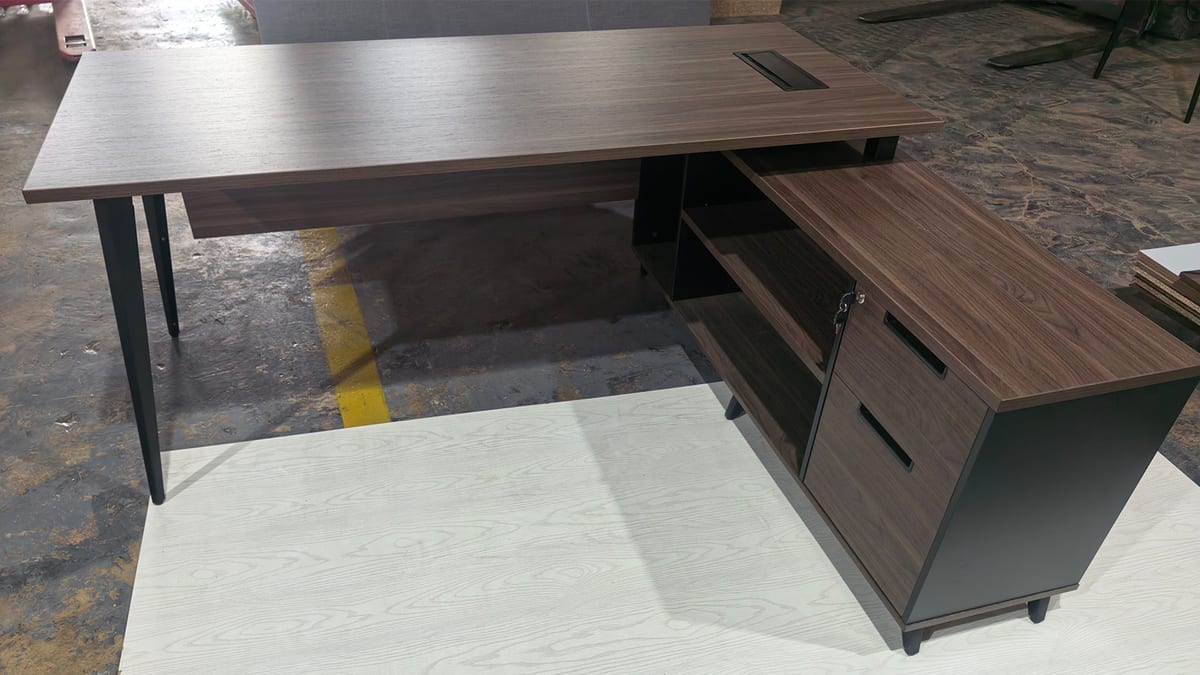
Instead of manufacturing separate left-hand and right-hand configurations, we proposed a side cabinet design that could be installed on either side of the desk.
The revised solution would allow the same product to work in different office layouts without requiring the dealer to specify two separate versions.
Importantly, the modification did not increase the product cost.
For a dealer, that is more than a small design improvement.
Imagine a customer orders ten desks for an office. During the final layout confirmation, several workstations need to face the opposite direction.
With fixed left-hand and right-hand models, the dealer must check whether the correct versions are available.
With a reversible configuration, the same desk and side cabinet can be arranged to suit either position.
It gives the dealer more flexibility without adding another configuration to manage.
The customer accepted the proposal
The Italian dealer accepted our recommendation, and Xusheng delivered the complete order of 120 office desks using the interchangeable side cabinet design.
The customer was very satisfied with the solution.
He later visited our factory in person to see the product and its construction. The ability to use the same side cabinet on either side made a particularly strong impression on him.
Over time, our relationship developed into a long-term partnership.
The customer has now worked with Xusheng for approximately five to ten years. His purchasing range, which initially included executive desks and storage furniture, later expanded to include office workstations.
We cannot attribute every subsequent purchasing decision to that one design improvement.
What the case does show is how direct technical involvement can change the result of an order.
The original request was to manufacture two different configurations.
The better solution was to question whether two configurations were necessary at all.
What overseas dealers can learn from this case
A trading company is not necessarily wrong to relay a customer's instructions. Accurate coordination is part of its job.
But when the discussion involves product construction, it helps to have the people who understand the manufacturing process involved early.
For dealers, the value of direct manufacturer communication is not simply that an email might receive a faster reply.
It is the opportunity to identify a better product solution before production begins.
That can affect installation, inventory management, customer service and future orders.
Suggested image placement: Immediately after this case study. Use an authentic photograph of the delivered reversible side-cabinet desk, preferably showing both installation directions. A real factory-inspection photograph would provide additional evidence.
3. When Buying Directly from an Office Furniture Manufacturer Makes More Sense
Direct manufacturer sourcing tends to become more valuable when the dealer's business depends on specific product details rather than occasional purchases.
When you need product customisation
A dealer developing a local product range may need adjustments to desk dimensions, board finishes, metal frames, storage configurations, cable-management components or packaging.
Each change needs to be assessed against the original construction.
A slightly different tabletop size, for example, may affect frame positioning, support, packing dimensions or component compatibility.
When the manufacturer participates directly in those discussions, it can explain what is practical, what needs testing and which changes may create unnecessary cost or risk.
That does not mean every customisation request should be accepted.
Sometimes the most useful response is to explain why a proposed change would weaken the structure or complicate installation.
When you sell a consistent office furniture system
Many established dealers do not sell isolated desks.
They supply executive offices, staff workstations, meeting rooms and storage areas as part of one coordinated range.
This creates requirements that go beyond matching colours in a catalogue.
The dealer may need consistent board finishes, compatible storage units, repeatable hardware specifications and products that can be expanded as the end customer's office changes.
A manufacturer specialising in an integrated office furniture system can be particularly useful here because it understands how the products fit together.
For dealers evaluating the broader sourcing model, our guide to Sourcing Office Furniture from China: The Complete Guide for Dealers explains how product selection, supplier evaluation and repeat purchasing fit into the same decision.
When you expect regular replenishment
A desk sold today may need a matching cabinet next year or replacement components several years later.
This is where access to original specifications becomes important.
Dealers should ask who retains the approved drawings, board finish references, hardware configurations and packaging requirements.
They should also ask what happens when a material or component is discontinued.
At Xusheng, we retain order specifications to support repeat purchasing. If an original finish or component is no longer available, our approach is to check the available options and discuss suitable alternatives with the customer rather than quietly substituting a different specification.
There are limits to what any manufacturer can guarantee. Upstream suppliers change their product ranges, and some finishes or fittings eventually disappear.
The important distinction is whether those changes are managed transparently.
We explore this issue in more detail in Why Product Continuity Matters for Office Furniture Dealers.
When technical responsibility needs to be clear
A manufacturer can often examine a problem directly against the approved production specification.
If a customer reports incorrect dimensions, missing hardware or a cabinet-door issue, the supplier should be able to trace the relevant order, review the evidence and identify a suitable corrective action.
For an overseas dealer, this can reduce uncertainty about who is responsible for investigating a problem.
However, direct factory purchasing only helps if the manufacturer has a functioning after-sales process. The word manufacturer is not a substitute for one.
4. When an Office Furniture Trading Company May Be the Better Choice
There are also situations where buying through a trading company makes good commercial sense.
Based on our experience, three are particularly relevant.
When you need products from several specialist factories
A dealer supplying a complete commercial building may require office desks, seating, sofas, specialist storage, reception furniture and other items.
One factory may not manufacture all those categories.
A capable trading company can source products from several specialists and coordinate them under one purchasing arrangement.
For buyers who value broad product coverage over deep involvement in a single furniture system, that can be useful.
When you want someone to coordinate multiple manufacturers
Managing several suppliers involves more than placing purchase orders.
Someone must align production schedules, confirm specifications, organise inspections, coordinate packing information and arrange shipment consolidation where appropriate.
A trading company with experienced purchasing and logistics staff may perform that work efficiently.
The dealer pays for coordination, but also avoids having to manage every supplier relationship independently.
The relevant question is whether the service is valuable enough to justify its cost.
When your team has limited experience sourcing from China
A new importer may not know how to assess factories, compare specifications, arrange inspections or manage communication across different suppliers.
An experienced trading company can help bridge those gaps.
It may also provide a single point of contact when several factories are involved.
The key is transparency.
The trading company should be clear about its role, the manufacturing arrangements, the inspection process and who will be responsible if something goes wrong.
A good intermediary adds expertise and coordination. It should not make essential product information harder to obtain.
5. Is Buying Directly from a Factory Always Cheaper?
Not necessarily.
Direct purchasing may remove one layer of commercial margin, but that does not automatically make the total purchasing cost lower.
A dealer working with several manufacturers may incur additional costs for communication, supplier visits, inspections, shipping coordination and internal purchasing administration.
A trading company may consolidate those activities and negotiate effectively across its supplier network.
Equally, a dealer buying a substantial quantity of a consistent office furniture range may find direct manufacturer sourcing more efficient.
The right comparison is not simply:
Factory quotation versus trading company quotation.
It is the full cost of obtaining the correct furniture, in the required condition, at the agreed time, with an acceptable level of future support.
Cost or Risk | What Dealers Should Compare |
|---|---|
Unit price | Same materials, dimensions, hardware and finishes |
Customisation | Development charges, drawing revisions and sample costs |
Inspection | Who checks the goods, how and at whose expense |
Coordination | Time spent managing specifications and suppliers |
Packaging and freight | Packing method, carton volume and shipping arrangements |
After-sales | Replacement procedures and responsibility for defects |
Inventory | Whether products require separate configurations or stock |
Replenishment | Ability to reorder compatible products later |
Our Italian customer's desk order is a useful example.
The reversible side-cabinet design did not increase the manufacturing cost. Its practical value came from reducing the need to manage separate left-hand and right-hand configurations.
That benefit would not necessarily appear in a simple quotation comparison.
For dealers, the lowest quoted unit price and the lowest cost of operating a product range are not always the same thing.
6. A Real Manufacturer Does Not Need to Produce Every Component In-House
This is an important distinction, particularly in office furniture manufacturing.
Commercial furniture involves several specialist supply chains.
Boards, decorative finishes, metal components, drawer slides, locks, edge banding, packaging materials and upholstery may come from different suppliers.
It would be misleading to suggest that every genuine manufacturer produces all these components itself.
What matters is understanding which operations the supplier performs, which it manages through manufacturing partners and which products it sources from specialist suppliers.
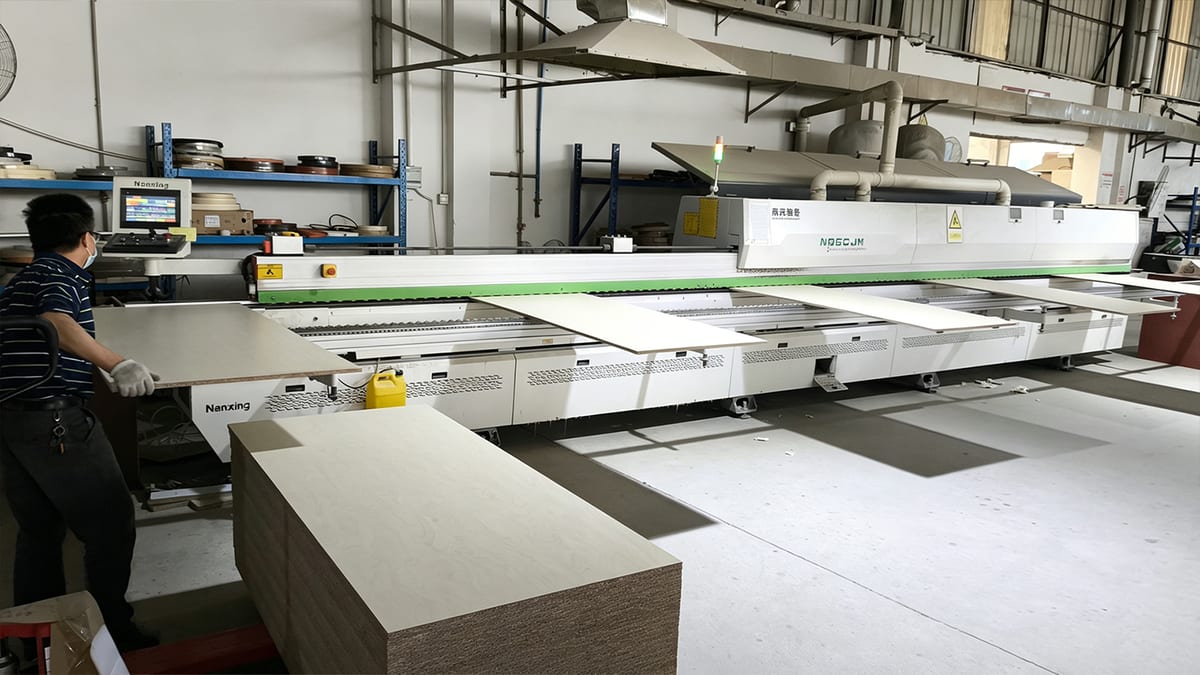
At Xusheng, our work includes board cutting, edge banding, drilling, trial assembly, quality inspection, packaging and order management.
We also work with upstream suppliers for materials and components, including certain metal parts and hardware.
When a project requires furniture outside our core manufacturing scope, we distinguish those sourced products from the furniture we manufacture ourselves.
That distinction matters because a dealer should know where the relevant production knowledge and accountability sit.
Consider two suppliers.
One claims to manufacture everything but cannot explain where its components come from or how changes are controlled.
The other clearly identifies its own manufacturing processes, names the categories it sources and can demonstrate how it checks incoming materials and finished products.
The second supplier may offer the dealer a more useful level of transparency, regardless of how its business is labelled.
7. How to Verify Whether a Supplier Actually Controls Manufacturing
Before placing a significant order, dealers should move beyond company descriptions and ask for evidence.
A supplier's website, showroom and catalogue are useful starting points. They are not sufficient proof of manufacturing capability.
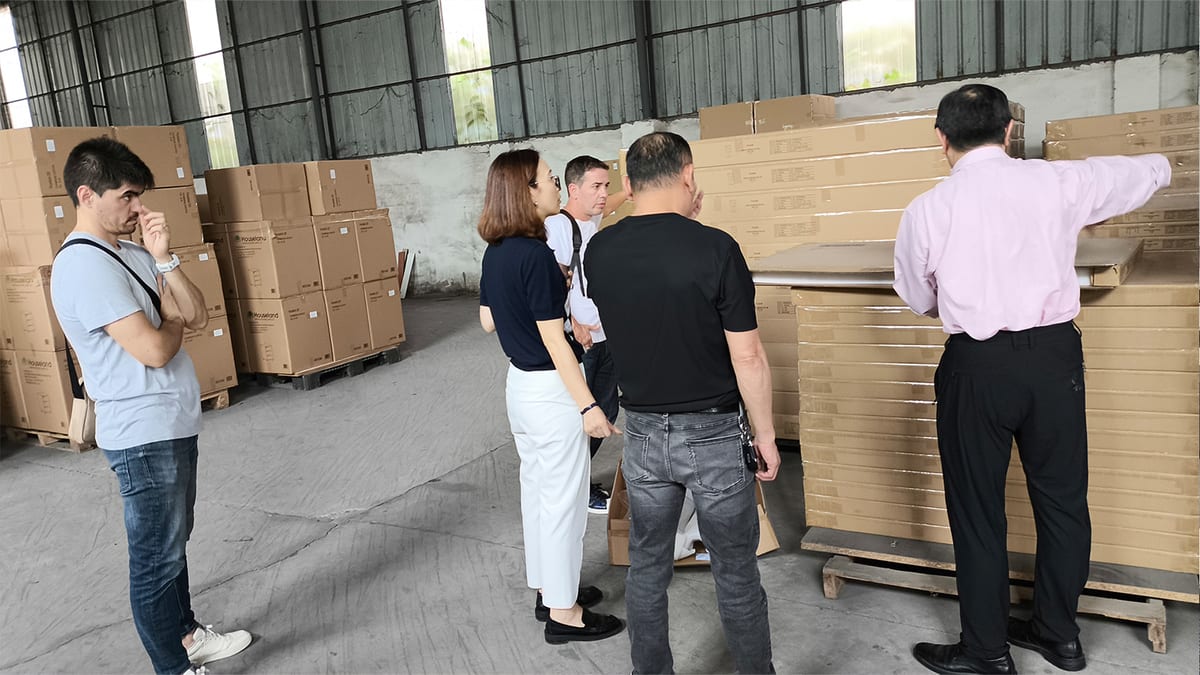
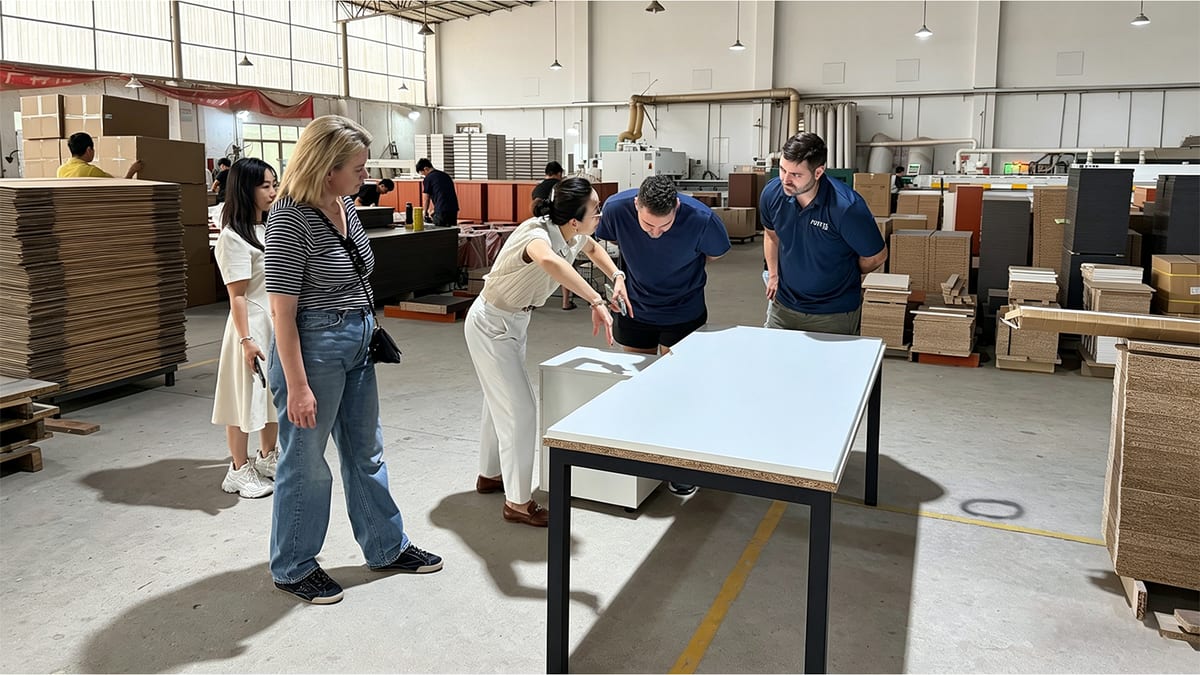
At Xusheng, overseas customers can verify our operations through factory visits, live video walkthroughs, production photographs, technical documentation, samples, order-progress updates and independent inspections.
We recommend applying similar checks to any prospective supplier.
Start with a real product
Choose a desk, workstation or storage unit that you are genuinely considering purchasing.
Ask the supplier to explain its construction, materials, dimensions, hardware and assembly method.
Then request the relevant drawings or specification documents.
This tests whether the supplier understands the product beyond its appearance.
Follow the product through production
During a factory visit or live video inspection, ask to see the processes relevant to that product.
For panel-based office furniture, these may include cutting, edge banding, drilling, trial assembly, quality inspection and packing.
Ask how the production team checks that the product matches the approved specification.
If a supplier is a trading company, ask which partner factory performs those operations and how the trading company verifies the result.
Check the sample against the quotation
A sample should represent the specification you intend to purchase.
Check dimensions, materials, board finishes, edge banding, hardware, stability, assembly and packaging.
If the supplier proposes a change, ask for the revised specification to be documented before bulk production.
Ask how the supplier handles a problem
A useful test question is:
If ten desks arrive with incorrect components, what happens next?
A credible supplier should be able to explain how it collects evidence, checks the original order, investigates the issue and arranges a practical resolution.
The answer should be specific enough to show a process, not just a promise.
Verify the evidence independently where necessary
For larger or more sensitive orders, buyers can arrange third-party inspections or factory audits.
Ask to inspect the actual products and order records relevant to your purchase, rather than relying entirely on general company presentations.
For a more detailed verification process, see How to Verify an Office Furniture Factory in China Before Placing an Order.
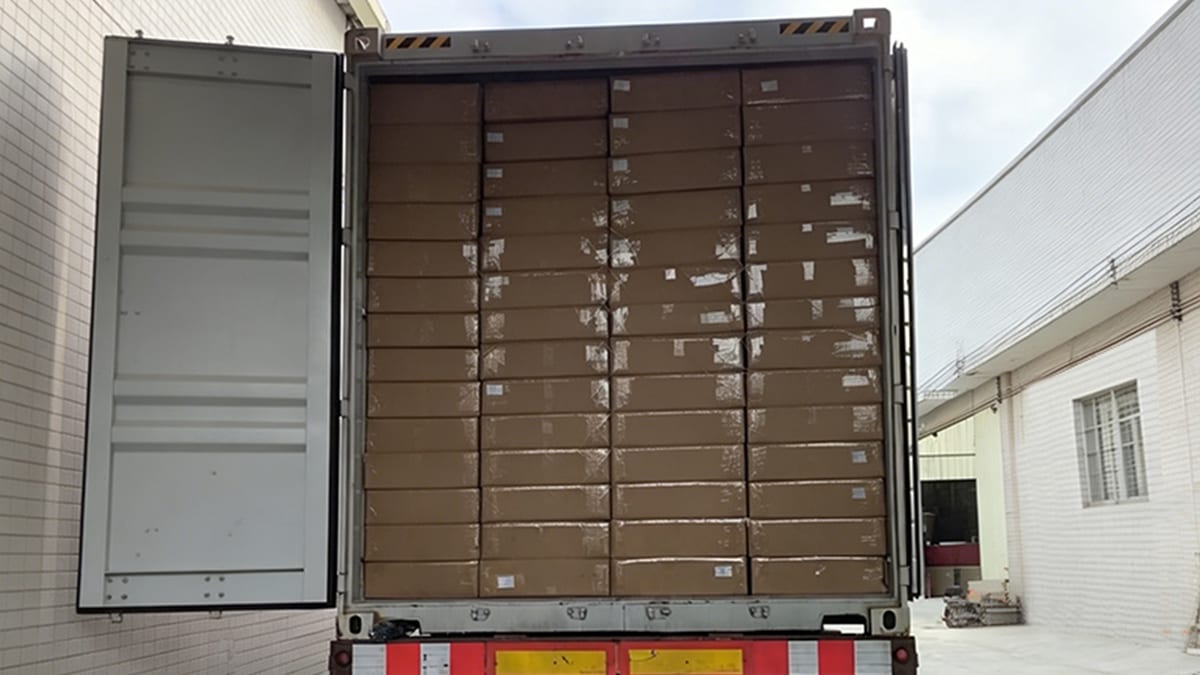
Suggested image placement: After this section. Use authentic photographs of Xusheng's board processing, trial assembly, QC and packed orders, ideally from one identifiable production workflow.
8. Five Questions That Help Dealers Choose the Right Sourcing Model
Before deciding between a manufacturer and a trading company, consider these five questions.
Question | What the Answer Tells You |
|---|---|
1. Am I buying a focused furniture system or many unrelated categories? | A focused system may favour a specialist manufacturer; broad multi-category purchasing may benefit from a trading company. |
2. How much product customisation will I need? | Frequent structural or technical changes make direct access to manufacturing knowledge more valuable. |
3. Who will coordinate suppliers and inspections? | If your team cannot manage several factories, an experienced intermediary may add value. |
4. Will I need compatible repeat orders? | Long-term replenishment requires reliable specification records and change management. |
5. Who takes responsibility when something goes wrong? | Clear accountability matters more than the supplier's business label. |
For some dealers, the answer will be a direct manufacturer relationship.
For others, a trading company will be the more practical purchasing partner.
Some businesses use both.
They work directly with a core manufacturer for their main office furniture range while sourcing specialist categories through other suppliers or purchasing partners.
That can be a sensible arrangement, provided product responsibilities and quality requirements remain clear.
9. What We Believe Matters Most After Years of Working with Overseas Dealers
At Xusheng, we have seen how much attention buyers give to the first quotation.
That attention is understandable. Dealers must protect their margins, compete in their local markets and manage purchasing budgets.
But a quotation cannot tell you everything about a supplier.
It does not show whether the supplier will notice a design problem before production. It does not prove that a matching cabinet will still be available for a future project. It does not explain how replacement parts will be handled or who will investigate a specification discrepancy.
Our Italian customer's 120-desk order illustrates something we consider important.
The customer asked for two different side-cabinet configurations.
We looked at the underlying requirement and proposed one adaptable design instead.
The result was not a more expensive desk or a more complicated product.
It was a practical solution that made the furniture easier for a dealer to sell and configure.
That is the kind of contribution we believe a manufacturer should aim to make.
Not every order requires a design change. Sometimes the customer's original specification is already the right one.
The point is that the supplier should understand the difference.
10.Conclusion: Choose the Supplier That Fits Your Business, Not Just the Label
So, is it better to buy office furniture directly from a manufacturer or through a trading company in China?
If you are building a consistent office furniture range, need regular customisation and expect repeat orders over several years, working directly with a capable manufacturer can offer meaningful advantages.
If you need products from several specialist factories, want consolidated purchasing or require help coordinating the Chinese supply chain, a capable trading company may be the better fit.
Neither model should be accepted without verification.
Ask what the supplier actually manufactures, what it sources, who approves technical changes and who takes responsibility for the finished order.
Most importantly, consider what your business will need after the first shipment.
The right supplier should not only help you purchase furniture today. It should help you continue serving your customers when their requirements change.
Work with Xusheng Furniture
Xusheng works with overseas office furniture dealers, importers, wholesalers and project suppliers looking for coordinated commercial furniture ranges.
Our core products include executive desks, office workstations, meeting tables and office storage, with customisation options based on our existing furniture systems.
If you are evaluating a manufacturing partner, share your target market, product requirements, estimated quantities and any relevant drawings.
We can review the specification, discuss feasible customisation options and help you assess whether our manufacturing capabilities suit your business.
Primary CTA:
Discuss Your Sourcing Plan
Secondary CTA:
Explore Xusheng Furniture Systems
FAQ
Frequently asked questions
011. Is it cheaper to buy office furniture directly from a manufacturer in China?
Not always. Direct sourcing may reduce intermediary margins, but buyers should also consider inspection, coordination, freight, customization and after-sales costs. Compare equivalent product specifications and total purchasing costs rather than unit prices alone.
022. What is the main advantage of buying directly from an office furniture manufacturer?
Direct access to manufacturing knowledge can make it easier to discuss product construction, customization, quality requirements and repeat orders. The benefit depends on the manufacturer's actual technical and operational capabilities.
033. When should an office furniture dealer use a trading company?
A trading company may be useful when purchasing from multiple specialist factories, consolidating different furniture categories or managing suppliers without an experienced in-house sourcing team.
044. Can a real office furniture manufacturer outsource components?
Yes. Manufacturers commonly purchase materials and components from specialist suppliers. Buyers should verify which processes are performed in-house, which are managed externally and how the manufacturer controls specifications and quality.
055. How can I tell whether a Chinese office furniture supplier is a real manufacturer?
Request a factory visit or live video walk-through, inspect relevant production processes, review technical drawings and quality-control records, and check actual products against approved specifications. Independent inspections can provide additional assurance.
066. Is a trading company less reliable than a manufacturer?
Not necessarily. Reliability depends on the supplier's technical knowledge, supplier management, inspection procedures, communication and accountability. A capable trading company may outperform a manufacturer with weak processes.
077. Which sourcing model is better for long-term office furniture dealers?
Dealers building a consistent, replenish able furniture range may benefit from a direct relationship with a manufacturer. Dealers requiring many unrelated product categories may benefit from a trading company. Some use a combination of both.
Looking for a supplier?
Need a product, sample, or project quote?
Use the catalog to choose products, then send the list for manufacturing, dealer, OEM / ODM, or project support.